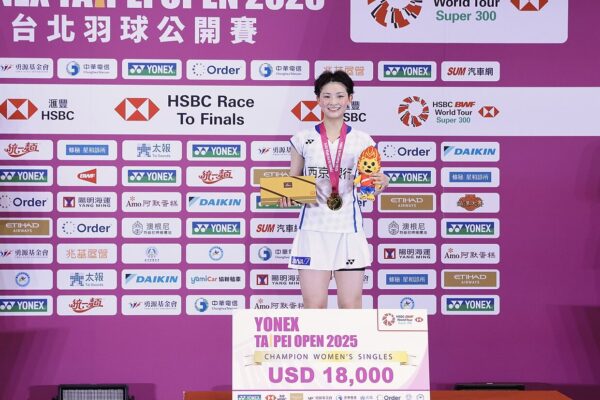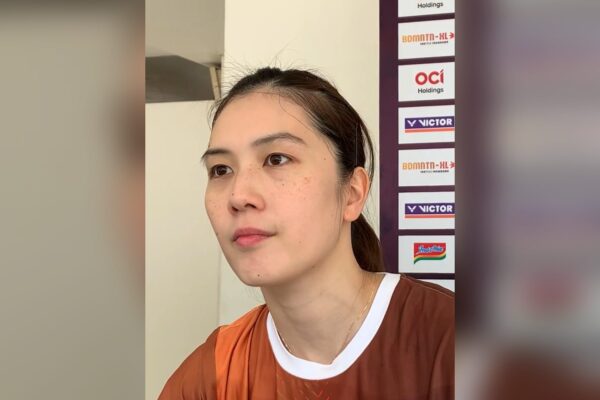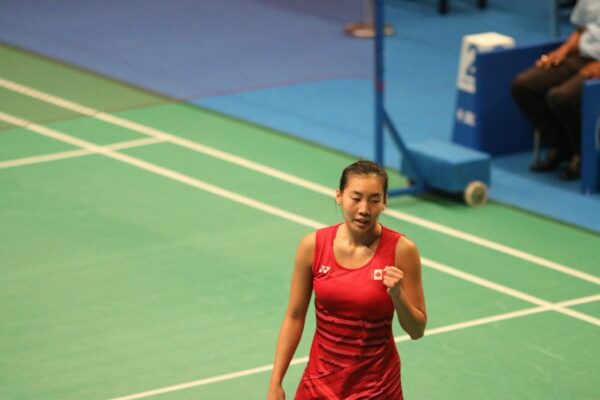

Three flags run through Beiwen Zhang’s career: China, Singapore and the United States. Few women’s singles players have built a path quite like that-moving countries young, losing federation support, then piecing together a top-10 career through independent travel, self-funding and stubborn durability.
From Anshan to Singapore
Beiwen Zhang was born on July 12, 1990, in Anshan, Liaoning, China. She started playing badminton at 8, in the highly structured training culture that has produced generations of Chinese players. Her route, though, soon bent away from the usual script.
At 13, she moved to Singapore on her own to pursue better opportunities in the sport. That early relocation shaped both her game and her character. Zhang would go on to represent Singapore in international competition, but the larger theme was already visible: she was willing to leave comfort behind if it meant staying in badminton.
One childhood detail has followed her into adulthood because it says something about her temperament. She has spoken about being afraid of water after difficult swimming lessons as a child and never properly learning to swim. It is a small, human contrast in the story of an athlete who later built a life around constant movement and pressure.
Her early international appearances came while she was still a teenager. She competed at the Singapore International series level in the mid-2000s, and one of her first notable results was a bronze medal with Singapore in the mixed team event at the 2007 World Junior Championships.
The Singapore years, and a break with the system
Zhang represented Singapore from the late 2000s into the early 2010s. In 2009, she was part of the Singapore team that won bronze in the women’s team event at the Southeast Asian Games, a solid result in a region where women’s singles has long been fiercely competitive.
But her time there did not end smoothly. Reports at the time said her contract with the Singapore Badminton Association was not renewed after a dispute that included a curfew issue. However it is framed, the split was a major turning point. For many players, losing a national setup at that stage would have meant drifting out of the top level.
For Zhang, it became the start of a different kind of career.
Starting over with the United States
She began representing the United States in 2014, and later became a U.S. citizen in 2021. The change of flag did not bring instant security or the backing of a powerhouse system. Instead, it marked the beginning of the most distinctive phase of her career: a largely self-directed run through the international circuit.
The breakthrough came quickly. In 2014, she won the U.S. Open Grand Prix Gold, then added titles at the Brazil Open Grand Prix and Dutch Open Grand Prix. Those were not the biggest events on the calendar, but they mattered. They showed that Zhang was no longer simply rebuilding after her exit from Singapore; she was becoming one of the strongest women’s singles players outside the traditional superpowers.
That rise was built on volume as much as peaks. She kept entering tournaments, kept traveling, kept collecting ranking points. In a sport where many elite players move inside well-funded national programs, Zhang’s career often looked more like that of an independent professional in tennis-managing logistics, expenses and schedule while trying to stay competitive with players backed by larger systems.
Breaking into the top 10
Her best ranking arrived on June 22, 2017, when she reached world No. 9 in women’s singles. For an American badminton player, that was a significant milestone. It confirmed that her results were not just good by Pan Am standards, but strong enough to place her among the leading players in the world game.
The climb was supported by deep runs at major events. In 2016, she reached the final of the French Open Superseries, finishing runner-up to Tai Tzu-ying. That was one of the biggest finals of her career and a clear sign that she could trouble the sport’s top tier.
Around that period, Zhang also became known for the practical toughness behind the results. In 2018, she turned to crowdfunding to help cover costs for the World Championships in Nanjing. The amount raised was modest by the standards of global sport, but the episode captured something essential about her career. While many rivals arrived with full national support teams, Zhang often had to build her own route to the same tournaments.
Titles, setbacks and the long middle of a career
Her first BWF World Tour title came at the 2018 India Open, where she beat Olympic champion Carolina Marín in the final. It remains one of the best wins on her résumé: a major title, a high-level field and a final against one of the era’s defining players.
There were also near-misses and stretches where consistency mattered more than silverware. Zhang never won a medal at the BWF World Championships, but she was a regular presence in the later rounds. She reached the quarterfinals in 2018, 2019, 2022 and 2023, finishing in the last eight each time. That record says plenty about her level. She was not a one-season outlier; she stayed relevant across different phases of the women’s singles landscape.
Her style helped. Zhang is right-handed and plays with an attacking instinct, but her game has never been only about first-strike badminton. She uses pace changes well, can disguise direction, and competes with a kind of controlled edge that makes opponents work through every rally. Even when she is under pressure, there is usually resistance in the match. That has been one of the constants of her career.
Olympics and the Achilles setback
At the Tokyo Olympics, held in 2021, Zhang reached the round of 16. It was a strong showing, but the tournament is remembered even more for what came with it: an Achilles injury that forced her out of action for months.
For a women’s singles player whose game depends on movement and recovery steps, that was a serious interruption. Achilles injuries can alter careers, especially for players already deep into their professional years. Zhang returned after roughly seven months away, which in itself fit the pattern of her career. She has rarely had the easiest route, but she has kept finding a way back onto court.
That comeback phase produced another strong run. In 2023, she won the Australian Open and the Hylo Open. The Australian Open title made her the first American player to win that tournament in women’s singles, another unusual line in a career full of them.
She also competed at the Paris Olympics and again reached the round of 16, giving her two Olympic appearances that ended in the knockout stage, even if no medal followed.
Team results and her place in U.S. badminton
Zhang’s career has been defined mainly by singles, but team events have added context. With the United States, she helped the team win silver at the 2023 Pan Am Mixed Team Championships and silver at the 2024 Pan Am Female Cup.
Those results matter less for prestige than for what they show about her role. For years, she has been one of the central figures in American badminton on the international stage-the experienced singles player who gave the U.S. a chance to compete deeper into events than it often had before.
She has also continued to train internationally, including periods in Singapore under coach Ding Chao. That arrangement suits the shape of her career: American representative, Asian training base, global schedule.
Off the court: independent by necessity
Las Vegas has been her home base in the United States, but “home base” is the key phrase. Zhang’s professional life has long been built around airports, tournament halls and short training blocks in different places.
During the pandemic period, she coached junior players, adding another layer to a career that has often required flexibility beyond competition. She has also said publicly that she would like to help grow badminton in the United States after her playing career. That is her stated intention, not a fixed plan, but it fits the way she has carried the sport for years.
Some personal details have surfaced through interviews. Her parents, according to Zhang, get too nervous to watch her matches. It is the kind of family note that makes sense in context: elite badminton can look graceful from the stands, but for the people closest to the player it often feels like strain, waiting and helplessness.
There have also been reports that she considered retirement more than once before deciding to continue. Those reports align with the shape of her career, though private deliberations are always best treated cautiously unless she states them directly. What is clear is the public record: after setbacks, she kept returning.
A career that never followed the standard map
Plenty of players win more titles than Beiwen Zhang. Fewer have had to assemble a career in quite the same way.
She left China young, represented Singapore, then rebuilt herself under the U.S. flag. She reached world No. 9, made a Superseries final, won the India Open, reached two Olympic round-of-16s, and stayed competitive long enough to add major titles well into the later stages of her career. Just as important, she did much of it without the institutional cushion many top rivals take for granted.
That is what makes her story stand out in women’s singles. Not myth, not miracle-just a long, hard, unusually self-made career.
FAQ
What country does Beiwen Zhang represent?
She represents the United States. Earlier in her career, she represented Singapore after growing up in China.
What is Beiwen Zhang’s highest world ranking?
Her career-high ranking in women’s singles is world No. 9, reached on June 22, 2017.
Did Beiwen Zhang win an Olympic medal?
No. She reached the round of 16 at both the Tokyo Olympics and the Paris Olympics, but did not win a medal.
What are Beiwen Zhang’s biggest titles?
Her most notable titles include the 2018 India Open, the 2023 Australian Open and the 2023 Hylo Open. She also won several Grand Prix-level titles, including the 2014 U.S. Open Grand Prix Gold.
Where was Beiwen Zhang born?
She was born in Anshan, Liaoning, China.
Is Beiwen Zhang known for training independently?
Yes. She has often competed with a more independent setup than many top players, including periods of self-funding and self-managed travel.
Photo: Fauziananta, CC BY 4.0, via Wikimedia Commons