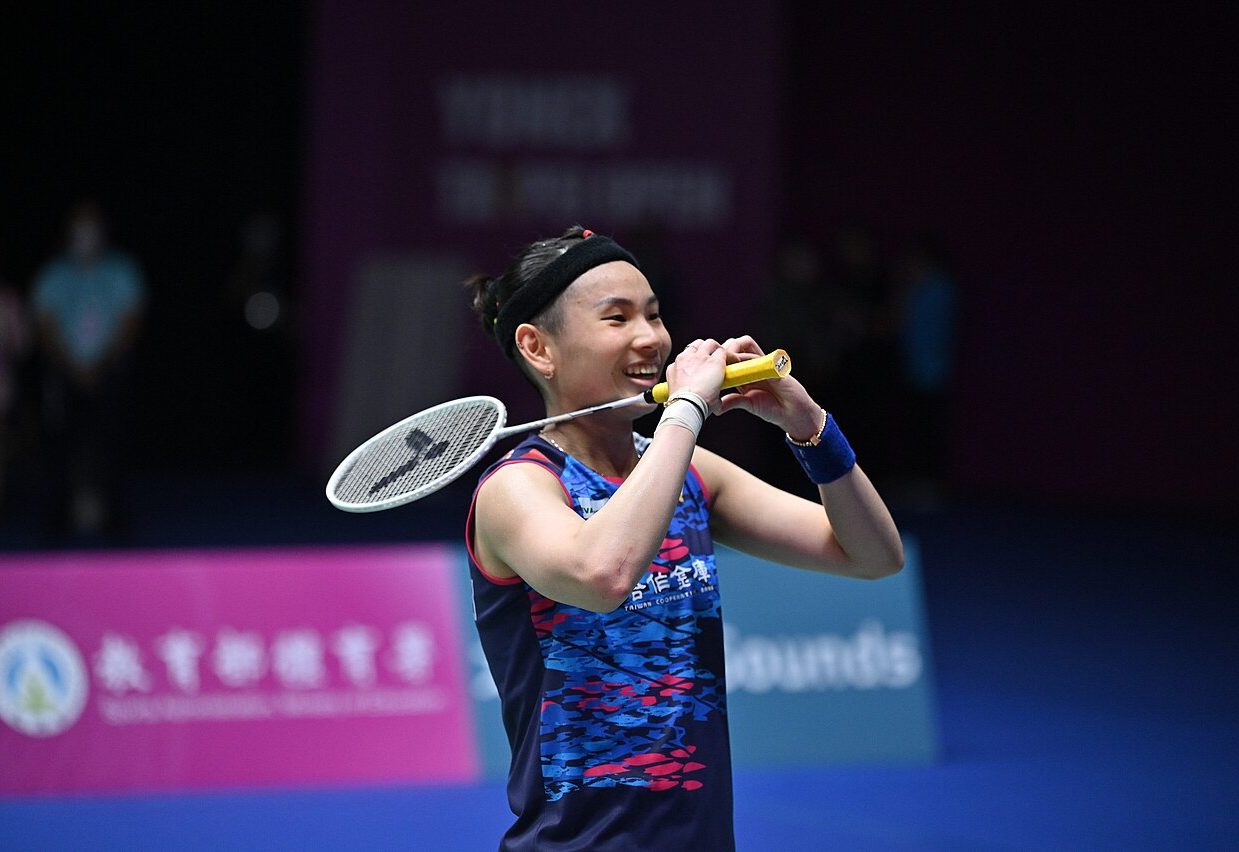
A 214-week stay at world number one sounds like the neatest way to sum up Tai Tzu-ying. It is also a little misleading. Numbers can tell you how long she ruled the rankings; they do not quite capture what it felt like to watch her play. Opponents would set their feet for one shot and find the shuttle going somewhere else entirely.
Growing up in Kaohsiung
Tai Tzu-ying was born in Kaohsiung on June 20, 1994, and badminton was part of the family long before it became her profession. Her parents, Tai Nan-kai and Hu Jung, both played, and her sister Tai Ching Chieh was close enough to the game to become a training partner. Kaohsiung remained more than a hometown. It was also the base from which she built an international career.
She started young, with accounts placing her first steps in the sport during elementary school. By then, the family setting had already given her a feel for the game, but the speed of her progress was unusual. She reached Taiwan’s first division while still in sixth grade, an early sign that she was not moving through the usual timetable.
There are small details from those years that have stuck to her story. One is the often-repeated anecdote that she was the only child in her kindergarten class who could cross a horizontal bar using her arms. Another is that during hard training blocks she reportedly did not complain much, aside from asking for weekends off. Those stories are impossible to measure, but they fit the picture of a player whose athletic gifts and feel for movement showed up early.
Her senior international debut came in 2007 at the Vietnam International, when she was only 13. Two years later, she took silver at the 2009 Asian Junior Championships. That same year she also won bronze in women’s singles at the East Asian Games, plus silver in the women’s team event. By the time most players are still known mainly as prospects, she was already collecting senior medals.
A teenager who did not play like everyone else
The first years on tour were less about instant domination than about recognition. Tai was clearly talented, but what made people pay attention was the style. Even as a teenager, she did not look like a player trying to copy the standard women’s singles template. She improvised. She disguised. She made rallies awkward for opponents who preferred clean patterns.
The breakthrough title arrived at the 2012 Japan Open Superseries. She won the tournament at 18 and became, at the time, the youngest women’s singles player to claim a Superseries title. It was an important result not only because of the trophy, but because it announced her to the wider badminton world as something more than a gifted junior who had moved up early.
She backed it up in 2013 by winning the Malaysia Open Grand Prix Gold. That season also brought a silver medal in women’s singles at the Summer Universiade and bronze in the mixed team event. Around the same period, she added another East Asian Games team silver in 2013.
The results mattered, but so did the pattern. She was no longer just dangerous on a good week. She was becoming a regular factor deep in tournaments.
Climbing into the elite
By 2014, Tai had moved from promising to established. She won the Hong Kong Open Superseries and then took the BWF Super Series Finals, beating Wang Yihan in the title match. It was the first of four year-end finals crowns, a total that would become a record in women’s singles.
She also won bronze in women’s singles at the 2014 Asian Games, a reminder that her rise was not limited to the regular tour. Team events and multi-sport competitions were becoming part of her story too.
The next two seasons pushed her closer to the top of the sport. In 2016, she won the Indonesia Open, the Hong Kong Open and the Dubai World Superseries Finals. In December of that year, she reached world number one, becoming the first Taiwanese woman to do it in singles.
That ranking was not a brief visit. Tai Tzu-ying went on to spend 214 weeks at No. 1, the longest total for a women’s singles player in BWF rankings history. It is one of the central facts of her career, but it was earned in a way that matched her game: not through one overwhelming season alone, but through repeated excellence across different stretches of the calendar.
The years when everything clicked
If 2016 put her on top of the rankings, 2017 was the season that made her the central figure in women’s singles.
She won the All England for the first time, beating Ratchanok Intanon in the final. Soon after, she became the first Taiwanese player to win the Asian Championships, defeating Akane Yamaguchi for that title. She also took the Malaysia Open and Singapore Open, and at the Summer Universiade she won gold in women’s singles and gold in the mixed team event.
This was the period when rivals knew what was coming in broad terms and still struggled to stop it. Tai’s game was built on deception, but not the cheap kind that works only once. Her best points came from balance, touch and timing. She could hold the shuttle a fraction longer, show one option and play another, and do it without losing control of the rally.
In 2018, she added one of the biggest medals of her career: Asian Games gold in women’s singles. Four years earlier she had taken bronze. This time she left with the title. She also won a second All England crown in 2018, beating Akane Yamaguchi in the final.
The following season brought more tour success, including titles at the Malaysia Masters, Singapore Open and Denmark Open. There were disappointments too. At the 2019 Sudirman Cup, Chinese Taipei reached the quarter-finals, where Tai lost to An Se-young. That matchup would become one of the recurring threads of her later career.
Olympic silver and world medals
For all her titles, the Olympics had remained unfinished business. That changed at Tokyo 2020, staged in 2021 after the pandemic delay.
Tai reached the women’s singles final and won the silver medal, losing the gold-medal match to China’s Chen Yufei. It was not the ending she wanted on the day, but it completed a major gap in her résumé. For a player whose talent had long been obvious, the Olympic podium gave her career one of its most visible markers.
She had already won her third All England title in 2020, beating Chen Yufei in the final, and later that year she claimed the BWF World Tour Finals. The old Superseries Finals and the later World Tour Finals are part of the same year-end championship line, which is why her titles there are often counted together: 2014, 2016, 2020 and 2023.
At the 2021 World Championships in Huelva, she won silver, losing the final to Akane Yamaguchi. In 2022, at the World Championships in Tokyo, she took bronze. That same season brought more titles, including the Indonesia Open, the Thailand Open and another Taipei Open crown.
The closing stretch
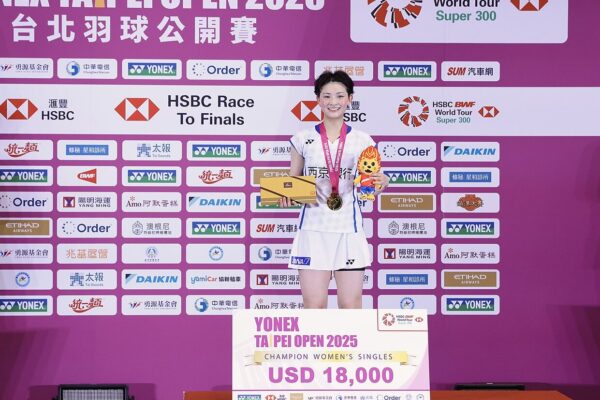
Even late in her career, Tai remained a threat to win major events. In 2023, she captured the BWF World Tour Finals for the fourth time, extending her record in women’s singles. She also won the Taipei Open again.
The rivalries had changed by then. Players such as Chen Yufei, Akane Yamaguchi and especially An Se-young were shaping the biggest tournaments around her. An beat her in the Korea Open final in 2023 and later in the French Open semi-finals in 2024. She had also been the player who stopped Chinese Taipei in the Sudirman Cup quarter-finals in both 2019 and 2023.
Tai won the India Open in 2024, beating Chen Yufei in the final, proof that even in the last phase of her career she could still put together a title run against the best in the field.
According to the biography provided here, Tai retired effective November 7, 2025. If that date is used, it should be noted simply as the stated retirement point rather than wrapped in speculation. Earlier retirement talk around the Olympic period was only rumor at the time. One report cited by MN2S in 2020 said she was reportedly considering stepping away after Tokyo, but that was not a confirmed decision then.
Why her game stood out
Some champions win by making the court feel smaller. Tai often made it feel larger.
She was a right-handed women’s singles player whose attack did not depend only on pace. Her signatures were disguise, late changes of direction, soft hands at the net and a backhand that could do more than just survive pressure. She could turn defense into attack in one touch, then follow with a shot that seemed to arrive from an angle the rally had not suggested.
That creativity worked because it rested on serious physical qualities. She moved well, recovered quickly and had the stamina to keep using her imagination deep into matches. The relaxed look of her stroke production could fool viewers into thinking it was casual. It was not. It was highly controlled.
For anyone searching for Tai Tzu-ying playing style, that is the clearest answer: she was unpredictable without being reckless, artistic without drifting away from the scoreline.
Off court: family, gear and public profile
Away from competition, family remained a constant part of the picture. Her parents came from badminton, her sister trained with her, and her father was known for sending encouraging messages after matches, win or lose. It is a small detail, but it says something about the support system around her.
Her equipment sponsorship was with Victor, and Tai Tzu-ying’s racket setup became a regular point of interest for fans. Publicly associated models included the Victor TI-99, the Thruster K TTY Ultima and P9200 series shoes. That kind of gear detail belongs to her sporting profile because readers often look for it, not because it explains the magic of her touch.
One public off-court issue surfaced in 2018 around an apparent sponsorship conflict involving Yonex and Victor. Because it was discussed publicly, it belongs in the record, but only as that: a sponsorship matter, not a personal scandal.
She also moved into a broader public role beyond badminton. According to the source text, she was appointed a Taiwanese ambassador-at-large on October 7, 2024, a sign of how widely her profile had grown.
Her documented career prize money has been listed at US$271,025 in the supplied biography, with the highest annual amount coming in 2016.
FAQ
Is Tai Tzu-ying retired?
According to the source biography, yes. Her retirement is listed as effective November 7, 2025.
How many Olympic medals does Tai Tzu-ying have?
One. She won women’s singles silver at the Tokyo Olympics, which were played in 2021.
How many All England titles did Tai Tzu-ying win?
Three: 2017, 2018 and 2020.
What was Tai Tzu-ying’s highest ranking?
World No. 1. She first reached that spot in December 2016.
What is Tai Tzu-ying known for on court?
Her deceptive shot-making, net control, backhand skill and ability to change direction late in rallies.
Who coached Tai Tzu-ying?
Lai Chien-cheng.
Photo: 臺北市政府體育局, Attribution, via Wikimedia Commons