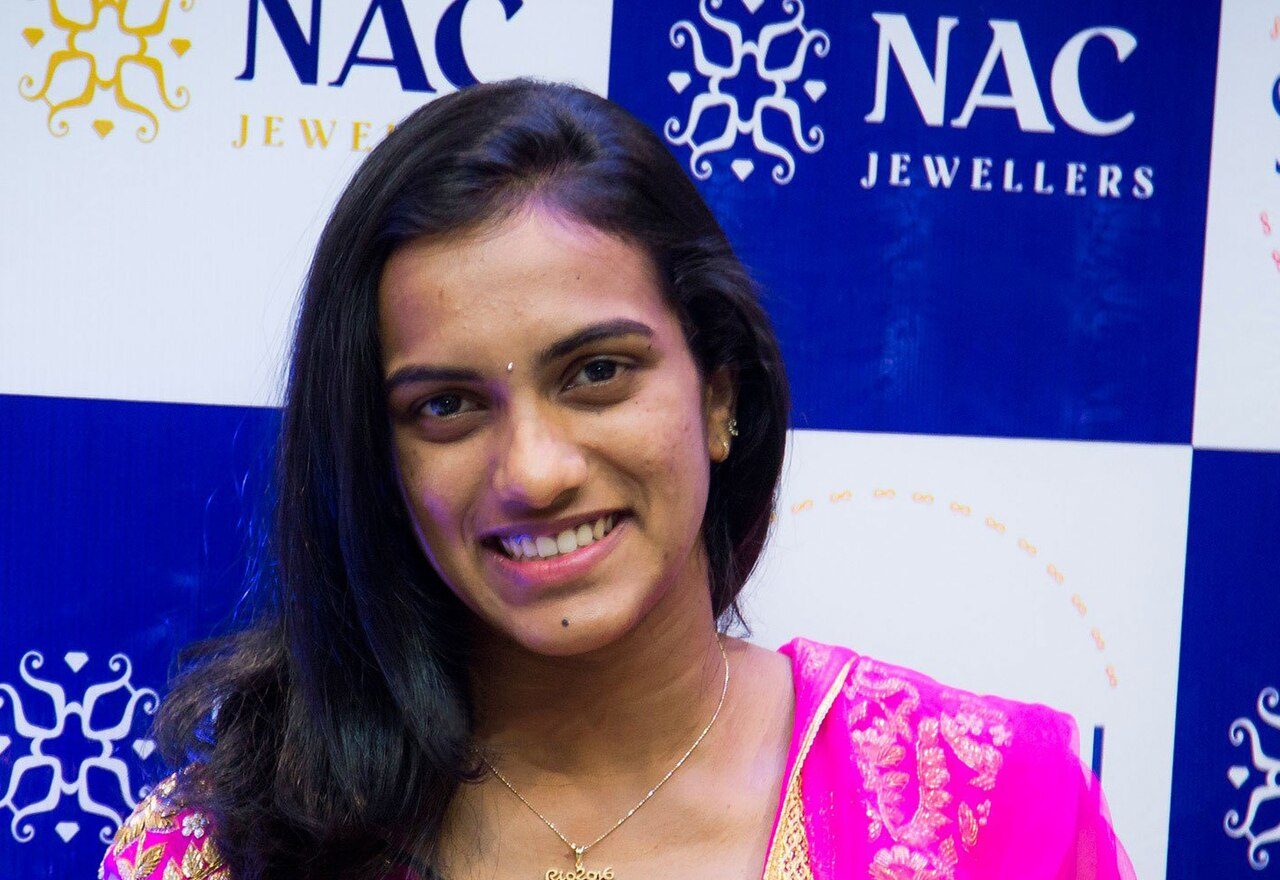
Two Olympic medals usually define a career. For PV Sindhu, they are only the headline.
PV Sindhu: the long build from Hyderabad to the biggest stages
Born Pusarla Venkata Sindhu in Hyderabad on July 5, 1995, she grew up in a household where elite sport was normal. Her parents, P.V. Ramana and P. Vijaya, were both national-level volleyball players, and Ramana received the Arjuna Award. Her elder sister, Divya, also played volleyball and handball at national level. The family background pointed one way. Sindhu chose another.
The trigger was Pullela Gopichand’s All England title in 2001, a victory that inspired a generation of Indian players. Sindhu took up badminton as a child, first training at the Indian Railway Institute of Signal Engineering and Telecommunications courts under Mehboob Ali, before moving to the Pullela Gopichand Academy in Hyderabad. The stories about the long daily commute became part of her early image, but what mattered more was the routine behind it: early starts, long sessions, and a game built carefully around discipline and physical endurance.
She was tall for a singles player, rangy, and naturally suited to covering ground. Even as a junior, there was a sense that her reach and hitting power could take her beyond domestic promise.
Junior titles and an early senior debut
Sindhu’s rise did not happen in one leap. It came through a steady run of junior results that made her one of India’s most watched prospects.
She won bronze at the Sub-Junior Asian Championships in 2009, then reached the final of the Iran Fajr International in 2010, taking silver. In 2011, she won girls’ singles gold at the Commonwealth Youth Games. A year later came one of the most important junior titles of her career: the Asian Junior Championships crown in 2012.
Around the same period, she was already stepping into senior events. Her senior international debut came in 2009, and by 2012 she had broken into the world’s top 20 while still in her teens. That ranking jump mattered. It marked the moment when Sindhu stopped being discussed mainly as a junior talent and started to look like a real threat in women’s singles.
World Championships bronze, then another
The first major proof arrived at the BWF World Championships.
In 2013, Sindhu won bronze, becoming the first Indian woman to medal in singles at the event. She backed it up in 2014 with another bronze. Those were not lucky runs or isolated upsets. They showed something that would become a theme throughout her career: she often looked most dangerous when the tournament got bigger and the pressure sharpened.
Those years also brought strong team results. She was part of India’s Uber Cup squads that won bronze in 2014 and 2016. At the 2014 Commonwealth Games, she took singles bronze, and at the Asian Games that year she won team bronze. The medals did not all come in the same spotlight as the World Championships, but they helped establish her as one of the central figures in Indian badminton.
Rio changed everything
An Olympic fortnight can alter how an athlete is seen at home and abroad. Rio did that for Sindhu.
At the 2016 Olympics, she put together the best run of her career to that point and reached the women’s singles final. She beat Nozomi Okuhara in the semifinals, then faced Carolina Marín for gold. Marín won the final in three games, but Sindhu left with silver and a place in Indian sporting history.
She became the first Indian woman to win an Olympic silver medal. At 21, she was also the youngest Indian Olympic medallist at the time. More than that, Rio turned her from a leading player into a national figure whose matches were followed well beyond badminton circles.
The rivalry with Marín gained shape there: Sindhu’s power and length against the Spaniard’s speed, left-handed angles and intensity. It was one of the defining contrasts of that era in women’s singles.
Later that same year, Sindhu won the China Open, one of the biggest titles of her tour career at the time. It was an important follow-up to Rio. Olympic medals can sometimes stand apart from the week-to-week tour. This title suggested her level was holding.
Near the top, again and again
In April 2017, Sindhu reached a career-high ranking of world No. 2. She also won the India Open and the Korea Open that year, confirming that the Olympic breakthrough was not a one-tournament spike.
At the World Championships, she kept coming back deep into the draw. She won silver in 2017 after a memorable final against Nozomi Okuhara, one of the longest and most physically punishing title matches the event has seen. In 2018, she returned to the final and took silver again.
By then, her World Championships record had become one of the strongest in the sport: bronze in 2013, bronze in 2014, silver in 2017, silver in 2018. It was a sequence built on consistency as much as brilliance. Few players stay that close to the top for that long without winning the title. Sindhu kept pushing until the missing piece finally arrived.
Another major title came in late 2018, when she won the BWF World Tour Finals. That made her the first Indian to win the season-ending championship. It did not carry the same emotional weight as an Olympic or world medal, but on the tour it was a significant achievement.
The world title that completed the set
In Basel in 2019, Sindhu won the BWF World Championships gold medal and became the first Indian to win a badminton world title.
The final was striking for its control. She beat Nozomi Okuhara 21-7, 21-7, a scoreline few would have predicted in a world final between two players so familiar with each other’s games. After years of coming close, she did not just win the title; she dominated the last match.
That victory remains the clearest single answer to why PV Sindhu matters in Indian badminton. Others had won major titles, Olympic medals and big tour events. No Indian player had become world champion in badminton before her.
A second Olympic medal
The challenge after Rio was obvious. One Olympic medal changes a career; repeating it is harder.
At the Tokyo Olympics, held in 2021 after the pandemic delay, Sindhu won bronze by defeating He Bingjiao in the medal match. With that result, she became the first Indian woman to win two Olympic medals and the first Indian woman to medal at two different Olympic Games.
It was not the same kind of run as Rio, and it did not end in the final, but it reinforced one of the strongest traits in her career: on the biggest stages, she usually found a way to stay in the conversation until the last weekend.
Team medals, Commonwealth success and the later phase
Even with the Olympic and world results taking most of the attention, Sindhu’s record in multi-sport events and team competitions remained strong.
At the 2018 Commonwealth Games, she won mixed team gold and singles silver. At the 2018 Asian Games, she took singles silver, becoming the first Indian to win a badminton singles medal at the Asian Games. In 2022, she won Commonwealth Games singles gold, adding another title that had previously eluded her.
She was also part of India’s bronze-winning squad at the 2023 Badminton Asia Mixed Team Championships and the women’s team that won gold at the 2024 Badminton Asia Team Championships.
Her ranking moved over time, as happens in every long elite career, but the larger shape of the story stayed intact: for more than a decade, Sindhu remained one of the reference points in women’s singles.
Playing style: reach, steep attack, big-match patience
At 1.79m, Sindhu has long brought a different physical profile to women’s singles. Her height gives her reach at the net, help in recovery, and, above all, the ability to create steep attacking angles from the rear court.
She is right-handed and at her best when rallies stretch just long enough for her to take control. Her game has often looked most effective when she absorbs pressure, keeps the shuttle deep, then suddenly turns defense into attack with one hard change of pace. The smash gets attention, but her movement through the forecourt and her ability to stay composed in long exchanges have been just as important.
Against faster retrievers such as Okuhara, she often tried to use her length and angle creation to open the court. Against explosive attackers like Marín, the contest was more about whether she could impose rhythm before the match sped away from her. Those tactical contrasts helped define some of her biggest matches.
Off the court: family, education and public profile
Away from competition, family has always been central to Sindhu’s story. That is not just a soft detail attached to a star athlete; it is part of the structure of her career. She came from a home that understood training, sacrifice and elite sport, even if the family’s original game was volleyball rather than badminton.
She has remained closely associated with Hyderabad, the city where she was born and developed as a player. She has also drawn attention for her education; Sindhu holds an MBA, a detail that sits a little outside the usual medal-and-ranking summary.
As for her private life, one fact is documented clearly: she married Hyderabad-based businessman Venkata Datta Sai in Udaipur in December 2024. Search interest around “PV Sindhu husband” often leads readers there, and that part is straightforwardly on record.
Commercially, she has been one of badminton’s most visible athletes. She has worked with major sponsors, including Visa, and appeared in Forbes’ lists of the world’s highest-paid female athletes. Forbes reported her earnings at $8.5 million in 2018, a figure that reflected not only prize money but also her market value beyond the court.
FAQ
How many Olympic medals has PV Sindhu won?
Two. She won silver at Rio 2016 and bronze at the Tokyo Olympics in 2021.
When did PV Sindhu become world champion?
She won the BWF World Championships in 2019.
What is PV Sindhu’s career-high ranking?
Her highest ranking was world No. 2, reached in April 2017.
Who are PV Sindhu’s parents?
Her parents are P.V. Ramana and P. Vijaya, both former national-level volleyball players.
What is PV Sindhu’s height?
She is 1.79 metres tall.
Did PV Sindhu win Olympic gold?
No. Her Olympic medals are silver and bronze.
Photo: https://silverscreen.in, CC BY-SA 3.0, via Wikimedia Commons