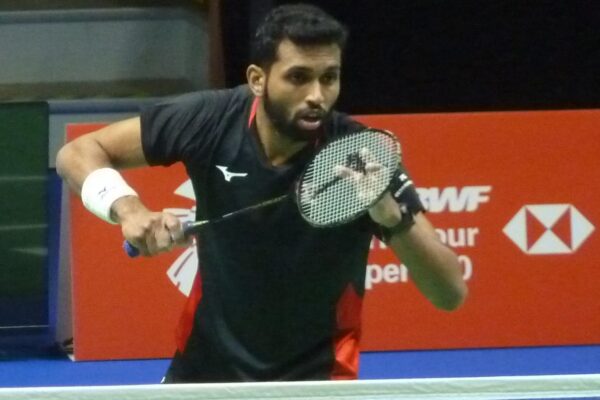

Four Super Series titles in a single season is the kind of number that changes how a player is seen. For Kidambi Srikanth, that burst came in 2017, when his speed through the forecourt and his steep jump smash carried him past much of the men’s singles elite. But his story in Indian badminton is bigger than one hot year. It runs from a small-town start in Andhra Pradesh to the top of the world rankings, through injuries, form dips and a World Championships silver that put him in another national first.
From Ravulapalem to the Gopichand Academy
Srikanth Nammalwar Kidambi was born on February 7, 1993, in Ravulapalem, Andhra Pradesh. Sport was already part of the household. His older brother, K. Nandagopal, played seriously and became a junior national champion, and that was Srikanth’s first window into badminton. He began by following his brother to the court and, in his early years, even played doubles with him.
He started playing in Guntur in 2001. At that stage, the game was less a fixed career plan than something he enjoyed and kept getting better at. The bigger turn came when his potential became hard to ignore. In 2008, he moved to Hyderabad to train at the Pullela Gopichand Badminton Academy, the center that shaped a generation of Indian players.
That move demanded more than talent. It meant distance from home, a stricter routine and family sacrifice. Published profiles over the years have noted that his parents leased family land to support the badminton careers of their sons. It is one of those details that explains the seriousness behind the rise. The academy’s culture was famously demanding, with early starts and long sessions, and Srikanth came through that system alongside players such as PV Sindhu and Parupalli Kashyap.
As a junior, he built a solid base rather than a wildly decorated one. He won titles at the All India Junior International and picked up medals at the 2011 Commonwealth Youth Games, taking silver in mixed doubles and bronze in boys’ doubles. Around this period, Gopichand steered him away from doubles and toward singles full-time, a decision that would define the rest of his career.
The first signs in the senior game
His senior international career began to gather pace in the early 2010s. The first title that really mattered came at the 2013 Thailand Open Grand Prix Gold, where he beat Boonsak Ponsana in the final. It was an important breakthrough: not yet a career-defining win, but enough to mark him as more than another academy prospect.
The result that changed his profile came the following year. At the 2014 China Open Super Series Premier, he beat Lin Dan in the final, 21-19, 21-17. That was not just a big upset on the day. It made him the first Indian man to win a Super Series Premier title, one of the landmark firsts that would keep appearing on his résumé.
He backed that up in 2015 with titles at the Swiss Open Grand Prix Gold and the India Open Super Series. By then, the outline of his game was clear. He liked to take the shuttle early, force the pace and finish rallies before opponents could settle. When the timing was right, he could look almost untouchable for stretches.
Rio, then the year everything clicked
The Olympic run in Rio offered another step forward. Srikanth reached the quarterfinals in 2016 before losing to Lin Dan, a result that left him tied for fifth place overall, the best Olympic finish of his career. In the same season, he won the Syed Modi International Grand Prix Gold and collected team honors with India, including a bronze at the Asian Team Championships and golds at the South Asian Games.
Then came 2017, the season most closely attached to the name Kidambi Srikanth.
He won the Indonesia Open, Australian Open, Denmark Open and French Open, becoming only the fourth men’s singles player to claim four Super Series titles in a calendar year after Lee Chong Wei, Lin Dan and Chen Long. The company mattered, but so did the way he played. In the Australian Open final against Chen Long, his attack repeatedly broke through one of the best defenders of the era. It was a sharp example of what made him dangerous: a quick first step, clean overhead preparation and a smash that came down steeply enough to end points outright.
That version of Srikanth was not simply a power player. His best badminton depended on timing and pressure. He rushed opponents at the net, used his wrist well in short exchanges and opened the court for the big finish. When his movement was crisp, he could make elite defenders look half a step slow.
The year was not perfect. He suffered an ankle injury at the 2017 Japan Open, and it interrupted his momentum. Even so, the season remains the fullest expression of his peak.
World No. 1 and a place in Indian badminton history
On April 12, 2018, Srikanth became the world No. 1 in men’s singles, the first Indian man to reach that ranking. It was the formal reward for the previous year’s surge and for a period of consistency near the top of the sport.
He added another major medal that season at the Commonwealth Games on the Gold Coast, winning mixed team gold with India and men’s singles silver. By then, he had become a central figure in the Indian men’s game: not just a title winner, but a player who had broken barriers that had stood for decades.
His career title list in singles includes the Thailand Open Grand Prix Gold, China Open, Swiss Open, India Open, Syed Modi International, Indonesia Open, Australian Open, Denmark Open and French Open. The total is often listed as 10 BWF titles in men’s singles.
A second act: World Championships silver and the Thomas Cup
After the peak came a more uneven stretch. Injuries and fluctuating form slowed him, and the ranking no longer moved in one direction. But his career did not flatten into a long fade. It produced another major chapter.
At the 2021 BWF World Championships in Huelva, Srikanth reached the men’s singles final and took silver after losing to Loh Kean Yew. That run made him the first Indian man to play a World Championships final. For a player whose best-known season had come several years earlier, it was a reminder that his game could still hold up deep into the biggest events.
The next year brought one of the most important team results in Indian badminton history. At the 2022 Thomas Cup in Bangkok, India won the title for the first time. Srikanth was part of that squad and won his singles matches in both the semifinal against Denmark and the final against Indonesia. He was often described as a senior figure in the team setup, though the official Thomas Cup format does not designate a match-day captain in the way some domestic team sports do.
He also won silver with India in the mixed team event at the 2022 Commonwealth Games and took bronze in men’s singles there.
Injuries, ranking drops and the harder years
The later phase of Srikanth’s career has been shaped as much by interruptions as by standout wins. Injuries affected his rhythm, and with rhythm went ranking points, confidence and seeding protection. He remained active on tour, but the consistency that had once carried him to world No. 1 became harder to sustain.
It is accurate to say that his form dipped significantly in the period after his biggest successes, and that those struggles contributed to him missing qualification for the Paris Olympics. What matters in his career arc is not just the drop itself, but how sharply it contrasts with the authority of his peak years.
Because rankings and prize-money totals change constantly, fixed figures age quickly. The lasting point is simpler: he spent time at the top of the sport, then had to navigate the far less glamorous work of staying relevant once injuries and inconsistency set in.
Playing style, strengths and the rivals who measured him
At his best, Kidambi Srikanth played front-foot badminton. He liked short rallies on his terms. The jump smash was the signature shot, but it worked because of everything around it: fast approach steps, early shuttle contact, disguise in the forecourt and the confidence to attack again if the first blow came back.
He was also a player of momentum. When he found rhythm, points could rush by in clusters. When timing slipped, the same aggressive instincts could leave him exposed. That tension was part of his appeal and part of his career story.
His era was stacked with great men’s singles players, and the head-to-head records reflect that. He finished with losing records against Lee Chong Wei, Lin Dan and Chen Long. That does not diminish his achievements so much as place them in context. He was competing in one of the toughest generations the event has seen, and he still carved out a period in which he could beat anyone in the draw.
Off the court: family, Hyderabad and a career built the hard way
Away from tournaments, Hyderabad has long been the center of his professional life because of the Gopichand Academy. Off the court, the family thread remains one of the most revealing parts of his story. He did not arrive as a child prodigy packaged for stardom. He followed his brother into the sport, learned through shared routines and grew into singles almost by accident.
That background gives his rise a different texture. It was not only about one gifted athlete. It was also about a family willing to reorganize its life around training, travel and uncertain returns.
Commercially, he has been associated with brands including Yonex and has also been linked with support from the GoSports Foundation. Reports have also noted a partnership with Hundred for equipment design and selection.
As for his private life, there is little that needs embellishing. Publicly available reporting has generally kept the focus on badminton rather than relationships, and any claims beyond that should be treated cautiously unless confirmed by Srikanth himself. Reported net-worth estimates vary widely across outlets and are best read as rough, unverified media figures rather than hard fact.
FAQ
What is Kidambi Srikanth’s highest ranking?
He reached world No. 1 in men’s singles on April 12, 2018.
How many major BWF singles titles has Kidambi Srikanth won?
He won 10 BWF singles titles, including the China Open, India Open and four Super Series titles in 2017.
Did Kidambi Srikanth win a World Championships medal?
Yes. He won silver in men’s singles at the 2021 BWF World Championships in Huelva.
Did Kidambi Srikanth win an Olympic medal?
No. His best Olympic result was a quarterfinal finish at Rio 2016, which left him tied for fifth.
What is Kidambi Srikanth known for as a player?
He is known for his attacking men’s singles game, especially his steep jump smash, quick net play and ability to take the shuttle early.
Where did Kidambi Srikanth train?
He built his career at the Pullela Gopichand Badminton Academy in Hyderabad.
Photo: Pierre-Yves Beaudouin, CC BY-SA 4.0, via Wikimedia Commons