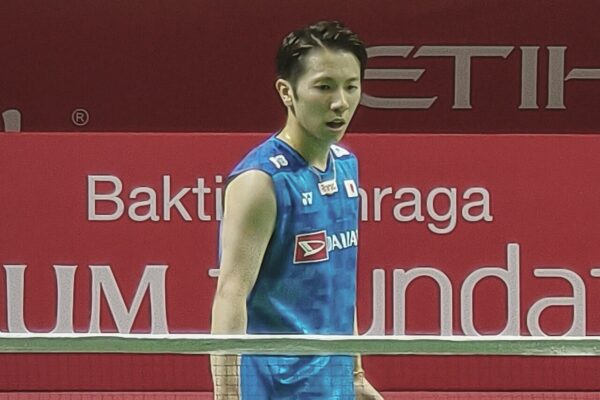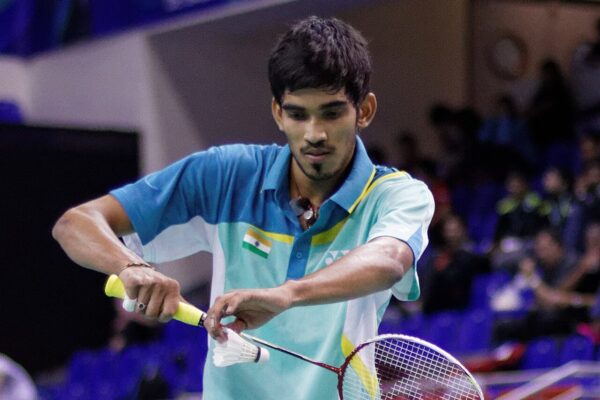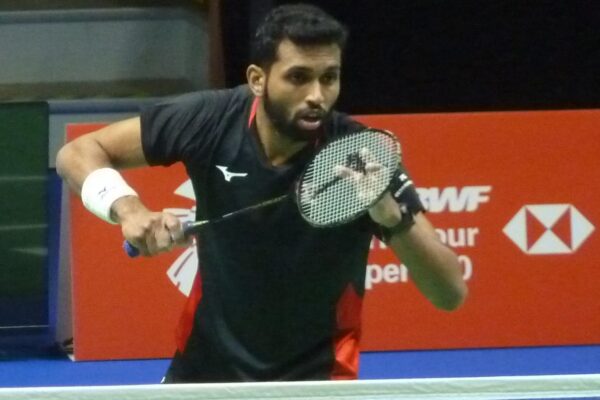

The roar inside Hong Kong Coliseum told the story before the scoreboard did. In 2016, Angus Ng Ka Long won the Hong Kong Open and became the first home player to take the men’s singles title at the tournament, a result that turned a strong career into a defining one.
That victory still sits at the center of his profile, but it did not come out of nowhere. The Hong Kong shuttler had already built a reputation as a difficult opponent: disciplined, stubborn in rallies, and capable of unsettling bigger names on the draw sheet. His path was not the straight line of a teenage prodigy. It was a slower climb, shaped by junior doubles success, a deliberate move into singles, and years of work at the Hong Kong Sports Institute.
From Hong Kong junior to international prospect
Born on June 24, 1994, in Hong Kong, Angus Ng Ka Long grew up in the system that would later carry him onto the world stage. The Hong Kong Sports Institute became the base of his development, and family played a major part too. His father is widely described in local coverage as the key influence on his badminton life. Another biographical detail that appears in profiles is that his maternal grandmother was Chinese-Indonesian.
Early on, he was known less as a singles specialist than as a doubles player with promise. He made his senior international debut for Hong Kong in 2009, and around the same period he was recognized with the Hong Kong Youth Sports Star Award, an honor he received again in 2012.
His junior results backed that promise up. At the 2010 BWF World Junior Championships in Guadalajara, he won bronze in boys’ doubles. Two years later, at the 2012 World Junior Championships in Chiba, he went one better and took gold in boys’ doubles. He also won bronze in boys’ doubles at the 2012 Asian Junior Championships in Gimcheon.
Those medals mattered for more than the record book. They showed a player learning how to compete deep into tournaments, how to handle pressure, and how to win on an international stage. But the bigger decision was still ahead: leaving doubles behind as his main route and committing to men’s singles.
The move into singles
That switch became the turning point of his career. Former coach Liu Zhiheng has been credited with steering him toward singles, and the change demanded more than a tactical adjustment. It meant building a game around movement, endurance and patience.
Ng has spoken in the past about not being a naturally complete athlete as a child. Reports in Chinese-language media have noted that he worked specifically on weak leg strength and footwork from his early teens, adding extra exercises from around age 13. That detail fits the player he became. His badminton was never only about flair. It was about repetition, control and the willingness to stay in rallies long enough to make opponents uncomfortable.
By the middle of the decade, the results began to catch up with the work. In 2015 he won the Bitburger Open, his first Grand Prix title, and his name started to travel more widely on the circuit.
The giant-killer reputation takes shape
Some players become known for a stack of titles. Others become known because seeded opponents do not enjoy seeing their name in the draw. Ng fell into that second category for a while, and 2015 was the year that image really took hold.
At the Hong Kong Open that season, he beat Lin Dan in one of the most eye-catching wins of his career to that point. During the same Hong Kong campaign, he also defeated Chou Tien Chen. He did not win the title that week, but he left with something almost as important: proof that he could trouble the sport’s established names on a big stage.
That mattered in men’s singles, where reputation often follows results by a few months. Once top players know they may have to grind for every point, the dynamic changes. Ng was no longer just a home hopeful. He was a dangerous early-round opponent with enough pace, control and nerve to flip a match.
2016: the breakthrough at home
Then came the week that still defines him.
At the 2016 Hong Kong Open, then part of the BWF Superseries, Ng put together the best run of his career and won the men’s singles title on home soil. It was not simply another tournament win. It was a first for a local player in that event, and it gave Hong Kong one of its most memorable badminton moments.
Home titles can burden players as much as they lift them. In his case, it seemed to confirm that the previous year’s upset wins were not isolated flashes. He had the level to win a major event, and he had done it under the kind of attention that can tighten a player’s arm.
That same season also brought his Olympic debut at the Rio Games. He did not reach the medal rounds, but qualifying for the Olympics was another marker of where he now stood: not just a spoiler, but an established figure on the senior circuit.
Ranking peak and titles that followed
The ranking high point arrived the next year. On November 9, 2017, he reached a career-best world No. 6 in men’s singles, the highest ranking of his career.
That number captured what his best period looked like. He was not dominating the tour every week, but he was consistently relevant, capable of deep runs, and hard to dismiss in any draw.
In the World Tour era, he added more titles to his résumé. He won the Thailand Masters in 2020 and the German Open in 2023, two victories that showed his game still had enough bite to deliver at international level well after the first surge of his career. Alongside the 2016 Hong Kong Open, those wins form the core of his biggest singles titles.
His record in team events also deserves a mention. At the 2013 East Asian Games in Tianjin, he won silver in the men’s team event and bronze in men’s doubles. Later, in 2019, he was part of the Hong Kong side that took bronze at the Badminton Asia Mixed Team Championships.
Setbacks, injuries and staying power
Like most long singles careers, his has not been a clean upward arc. There were interruptions.
During the 2019 Badminton Asia Mixed Team Championships, he suffered a knee injury that later forced withdrawals from the India Open and Malaysia Open. For a player whose game depends so much on repeated movement and court coverage, that kind of setback hits at the center of the craft.
Yet one of the more telling things about his career is that he kept finding his way back into contention. He remained a familiar presence on the international circuit long after his breakthrough years, which says something about both his physical discipline and his understanding of how to manage matches.
Playing style: pressure, rhythm and persistence
Ng is a right-handed singles player, listed at 1.81 meters, and his game has usually been built less on one overwhelming weapon than on accumulation. He presses with pace, changes rhythm well, and is willing to make rallies physical.
Descriptions of his style in Chinese-language coverage have emphasized control, repeated pressure and the ability to drag opponents into uncomfortable patterns. There is also an old phrase attached to his game that roughly points to “wearing down” opponents through continuous running and tactical persistence. That sounds inelegant in translation, but the meaning is clear enough on court: he makes players work.
Earlier in his career, some media comparisons linked his movement and rhythm to Ye Zhaoying, and that reportedly led to the unusual nickname “Male Black Girl.” The nickname is better treated as a period media label than as a central fact of his career, but it does hint at how distinctive his movement once looked to observers.
Life away from the court
Off the court, the outlines are more modest and should be handled carefully.
He has long been associated with Hong Kong not just as a representative player but as a local sports figure shaped by the city’s training system. The family thread remains the clearest personal detail in public reporting, especially the role of his father in his development.
As for his relationship status, there is no broad, well-sourced public record to lean on. One profile-style report from PlayersRamp, published in 2020, said he was dating Charlotte Chau. Because that claim rests on limited sourcing, it is best treated as a reported detail rather than an established public fact.
Financial estimates should also be read cautiously. Public prize-money databases can give a rough sense of earnings from tournaments, but net-worth figures published by third-party sites are estimates, not verified disclosures.
A career defined by one title, and more than one moment
The easiest way to summarize Angus Ng Ka Long is to point to the 2016 Hong Kong Open, and that is fair enough. It was the biggest title of his career and one of the landmark wins for Hong Kong badminton.
But that tells only part of the story. His career also includes a world junior doubles title, a climb to world No. 6, wins over players such as Lin Dan, and enough longevity to remain relevant across different phases of the modern men’s singles game. He was not built as a headline machine. He was built as a competitor, and that is what comes through most clearly when you follow the story from junior doubles to the home-court breakthrough.
FAQ
What is Angus Ng Ka Long’s full name?
His full name is Angus Ng Ka Long.
Where is Angus Ng Ka Long from?
He is from Hong Kong.
What is Angus Ng Ka Long’s highest world ranking?
His career-high ranking in men’s singles is world No. 6, reached on November 9, 2017.
Has Angus Ng Ka Long won the Hong Kong Open?
Yes. He won the men’s singles title in 2016 and became the first home player to do so.
What are Angus Ng Ka Long’s biggest titles?
His most notable singles titles include the 2016 Hong Kong Open, the 2020 Thailand Masters and the 2023 German Open.
Who has coached Angus Ng Ka Long?
He has been coached within the Hong Kong system, and Wong Choong Hann has been listed as his coach in recent years.
Photo: Exploringlife, CC BY-SA 4.0, via Wikimedia Commons