One week in Birmingham changed the way many fans saw Li Shifeng. On his first appearance at the All England Open, he beat countryman Shi Yuqi in the final and walked away with one of badminton’s most prestigious men’s singles titles.
That result did not come from nowhere. Long before the All England win, Li had already built a reputation inside the Chinese system as a composed, technically clean singles player who rarely looked hurried. He had won Youth Olympic gold as a teenager, climbed through provincial and national squads step by step, and turned junior promise into senior results without much noise around him.
Born in Nanchang, Jiangxi, on January 9, 2000, Li Shifeng grew into one of the key names in Chinese men’s singles through patience rather than spectacle. His game is built on control, balance and timing, and his career has followed a similar pattern.
From Nanchang to China’s national pathway
Li started playing badminton at around six, encouraged by his father. In a country with a deep and highly competitive development structure, that early start mattered. He trained with the Jiangxi provincial team during his school years, then moved to the Bayi team in Fuzhou at 12. By 14, he was training at the National Youth Team Training Center in Shenyang.
The progression was steady, not dramatic. In 2017, he entered China’s national second team, another important checkpoint in a system that tends to reward repetition, discipline and reliability as much as raw talent.
Those who followed his junior years saw a player with strong basics and unusual calm. Li has cited Lin Dan and Lee Chong Wei as idols, and he has also spoken admiringly of Kento Momota. That influence showed in the shape of his own game: measured rallies, smart shot selection and a willingness to build points instead of forcing them.
Junior titles that pointed to something bigger
His junior record quickly backed up the promise. Li was part of China’s mixed team gold-medal runs at the BWF World Junior Championships in 2017 and 2018, and he also helped China to team gold at the 2018 Asian Junior Championships.
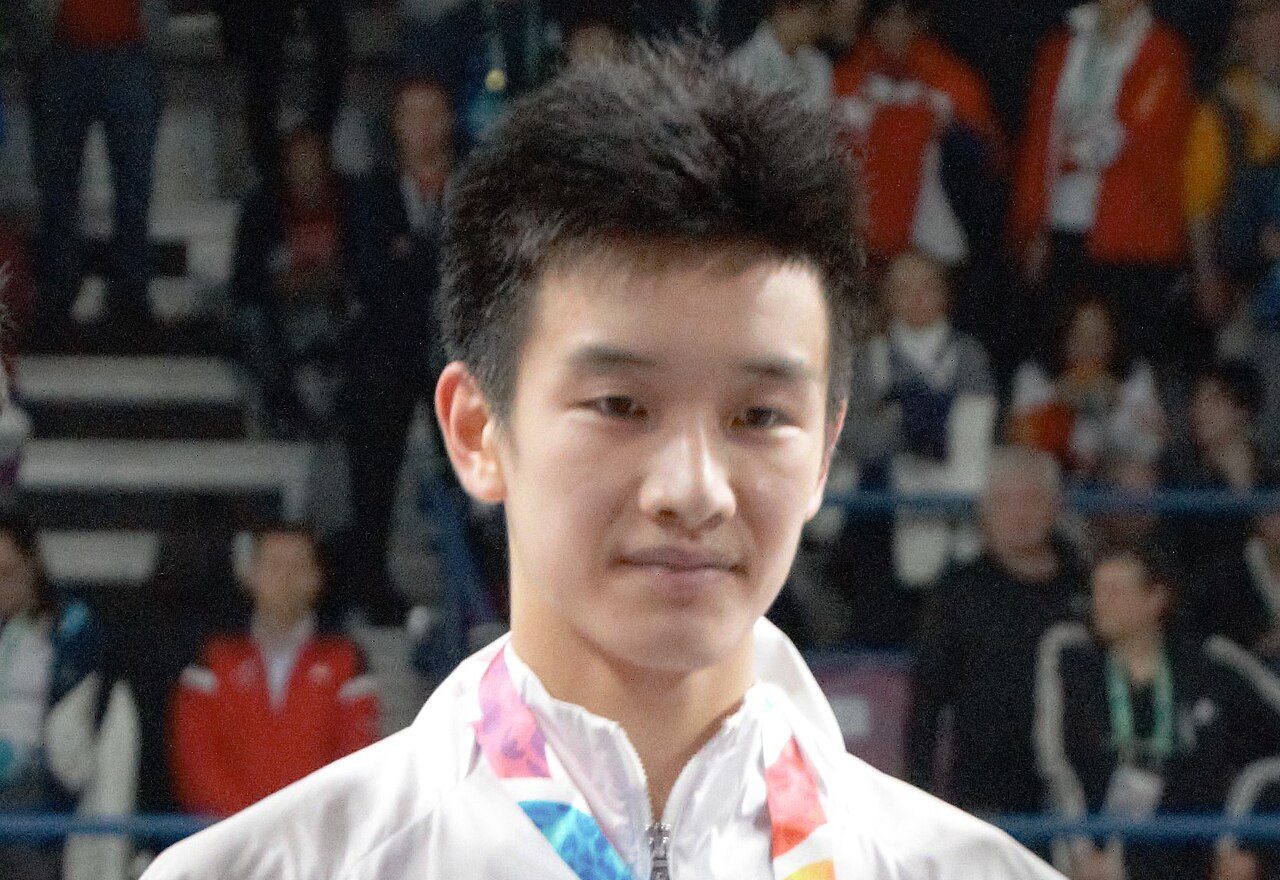
The clearest early headline came at the 2018 Youth Olympic Games in Buenos Aires, where he won boys’ singles gold. For many players, junior success remains just that. For Li, it looked more like a preview. He was not simply winning with youthful pace; he was already playing with the kind of structure and patience that tends to translate well into senior badminton.
First senior steps and a title in Canada
The move from junior events to the senior tour is often where promising careers stall. The rallies are heavier, the draws deeper, and the pressure less forgiving. Li handled that transition well.
In 2019, he won the Canada Open, his first BWF World Tour title at senior level. It was not yet the kind of victory that changes a player’s global profile, but it mattered. It showed that his game could survive outside junior competition and that his development was moving in the right direction.
There were still the usual fluctuations that come with a young singles player learning the top level, but the pattern was clear: Li was becoming a regular factor in international events rather than just a prospect with a strong junior résumé.
The 2023 season that changed his standing
Then came the year that lifted him into the sport’s front rank.
At the 2023 All England Open, Li Shifeng won the men’s singles title on debut, beating Shi Yuqi in the final. For any player, an All England crown carries weight. For a Chinese men’s singles player, it carries history too. Winning it at a first attempt made the run stand out even more.
He backed that up later in the season by winning the US Open, where he defeated Kunlavut Vitidsarn in the final. He also reached the final of the French Open, losing to Jonatan Christie, and finished runner-up at the Canada Open after a loss to Lakshya Sen.
The season was not built on one week alone. It was a collection of deep runs, title matches and wins over elite opponents. By late October, he had climbed to a career-high world ranking of No. 3.
That rise made sense if you watched how he was winning. Li was not overwhelming opponents with constant attack. He was taking matches away from them gradually, controlling pace, moving the shuttle with precision and choosing his moments to accelerate.
Staying in the mix at the top level
The next stretch of his career showed something slightly different: not the surprise of a breakthrough, but the harder task of staying relevant near the top of men’s singles.
In 2024, Li reached the final of the Badminton Asia Championships, where he lost to Jonatan Christie. He also finished runner-up at the Singapore Open after another final defeat to Shi Yuqi. At the Indonesia Open, he made the semifinals, again running into Shi.
He represented China at the Paris Olympics in men’s singles, where he did not make a medal run. That was a disappointment by the standards set a year earlier, but it also reflected the depth and volatility of the discipline, where margins between the top contenders are often small.
One of his best results that season came at the Japan Masters, where he won the title. The standout match of that run was his semifinal victory over Viktor Axelsen, the kind of win that carries real weight in men’s singles because it requires both tactical discipline and nerve.
Li has also been an important part of China’s team success. He was on China’s Sudirman Cup-winning squads in 2021, 2023 and 2025, and he helped the team win the Thomas Cup in 2024. At the Asian Games in Hangzhou, he was part of the Chinese team that took men’s team gold.
Some versions of his biography have also listed him as the men’s singles gold medalist at the Asian Games, but that is incorrect. In the individual men’s singles event at Hangzhou, Li did not win the title.
How Li Shifeng plays
Some players announce themselves with one obvious weapon. Li is not really that type. His strength lies in how neatly the whole game fits together.
He is a right-handed men’s singles player with a balanced style: solid defense, reliable movement, a good attacking finish when the opening comes, and a calm court presence that can make long rallies look less frantic than they really are. At around 1.85 meters, he has the reach to control the rear court, but he is just as comfortable stepping forward to take the net early.
The most distinctive part of his badminton is his rally management. He tends to stay patient, hold shape and wait for the right ball rather than chasing winners too early. When he does speed things up, it often comes through sharp front-court pressure or a well-timed change of direction. His around-the-head attack, especially into a right-hander’s backhand side, is one of the patterns that can open a rally quickly.
That style helps explain why he has been able to compete with very different opponents. Against attackers, he can absorb and redirect. Against more methodical players, he can match them for discipline and then raise the pace first.
Rivalries and the matches that define him
Shi Yuqi sits at the center of several important chapters in Li’s career. Li’s win over Shi in the 2023 All England final remains one of his signature victories, but the rivalry has not moved in only one direction. Shi also beat him in the 2024 Singapore Open final and in the semifinals of the Indonesia Open.
Jonatan Christie has been another recurring obstacle. Christie defeated him in the finals of both the 2023 French Open and the 2024 Badminton Asia Championships. Those losses were frustrating, but they also underlined how often Li was reaching the final stages of major events.
His win over Kunlavut Vitidsarn in the 2023 US Open final and his defeat of Viktor Axelsen at the 2024 Japan Masters are equally useful markers. They show the level of player he can beat when his control game is working at full strength.
Off the court: measured, then suddenly memorable
Away from tournaments, Li’s public image has mostly matched his style on court: reserved, disciplined and shaped by years inside China’s training structure. Reports in Chinese media have long linked his development closely to his father’s support in his early years, and that family backing is a consistent part of his origin story.
He has spent key phases of his development in Jiangxi, Fuzhou, Shenyang and within China’s national setup in Beijing. That path says a lot about the environment that produced him: highly organized, demanding and built for long-term progress.
Then there was the moment that briefly broke the calm image. After winning the All England Open in 2023, Li celebrated with a shirtless side flip, a rare burst of emotion from a player better known for composure. It became one of the most replayed images of his career.
He is sometimes nicknamed “Li Shifu,” or “Master Li,” a playful label that fits the controlled feel of his game.
As for sponsorships and equipment, publicly available reports have linked him with major badminton brands, but such arrangements can change and are not always fully detailed by the player or federation. Specific earnings figures are also often estimated rather than officially confirmed, so they are best treated with caution.
FAQ
Who is Li Shifeng?
Li Shifeng is a Chinese badminton player who competes in men’s singles and is known for winning the 2023 All England Open.
When was Li Shifeng born?
He was born on January 9, 2000.
What is Li Shifeng’s biggest title?
His biggest individual title is the 2023 All England Open men’s singles crown.
Did Li Shifeng win Youth Olympic gold?
Yes. He won boys’ singles gold at the 2018 Youth Olympic Games in Buenos Aires.
What is Li Shifeng’s playing style?
He is an all-round singles player known for patience, rally control, strong footwork and well-timed attack.
Did Li Shifeng win the Asian Games men’s singles title?
No. He was part of China’s men’s team gold-medal campaign at the Asian Games, but he did not win the individual men’s singles title.
Photo: BugWarp, CC BY-SA 4.0, via Wikimedia Commons