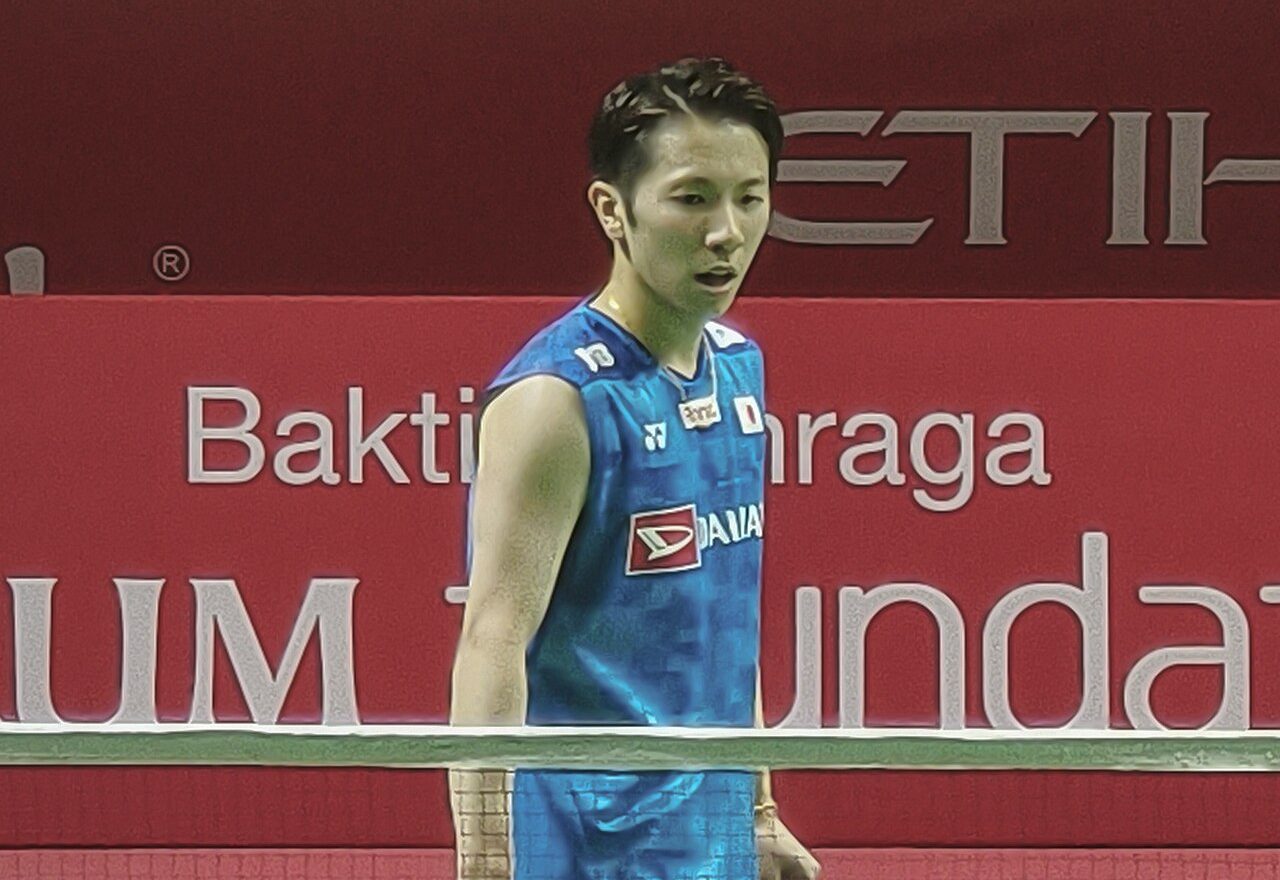
Watanabe was born in Koshigaya, in Saitama Prefecture, and picked up badminton at a very young age after being influenced by his older sister. The sport stayed with him quickly. In elementary school, he won the Saitama school championships three years in a row, an early sign that this was more than a family pastime.
His development continued through Saitama Sakae Junior and Senior High School, one of the better-known routes for Japanese badminton prospects. There he won a national junior singles title and built a reputation as a player with sharp movement and unusual discipline for his age.
Internationally, his junior results gave that promise some weight. At the 2015 BWF World Junior Championships, he took bronze in boys’ singles. He also won team bronze medals at the Asian Junior Championships and World Junior Championships across 2015 and 2016. Those were not yet the results of a finished player, but they showed he could compete outside Japan as well as inside it.
Even then, his game was already taking its recognizable shape. He was not going to dominate through size or easy winners. He had to build points, absorb pressure and trust his legs.
From school standout to the senior circuit
In 2017, he joined the corporate team then known as Nihon Unisys, later rebranded as BIPROGY. That structure matters in Japanese badminton. It gave him a professional base, regular high-level training and a long-term home as he moved from prospect to senior player.
His first notable senior run came in 2018, when he reached the final of the Russian Open, a BWF World Tour Super 100 event. He finished runner-up, but the week was important. It showed that his junior pedigree could carry into the professional game.
A year later came the first title. Watanabe won the Orléans Masters in 2019, also at Super 100 level, claiming his first BWF World Tour crown. He was also nominated for the Eddy Choong Most Promising Player of the Year award, recognition that he was becoming more than a useful domestic player in a deep Japanese system.
Around this stage, discussion about him often centered on height. He was frequently described as one of the shortest men’s singles players near the top level, which was true enough, but also incomplete. The more revealing point was how he turned that reality into a style: quick first steps, stubborn defense, clean retrievals and a willingness to stay in rallies until opponents had to force the issue.
Building upward on the World Tour
The next clear jump came with the 2023 Swiss Open. Watanabe won the title, his first at Super 300 level, and the result carried more weight than his earlier breakthrough. It was a sign that he was not just collecting points at smaller events but learning how to win deeper, tougher weeks on tour.
By then, he had also started to build a useful record against bigger names. Lee Zii Jia, one of the tour’s most explosive shot-makers, was among the players he beat more than once. Those matches suited Watanabe’s strengths. He could redirect pace, extend exchanges and make attacking players hit one extra winner.
His best stretch came the following season. At the 2024 Canada Open, he won his first Super 500 title, the biggest of his career. Later that year, he reached the final of the Denmark Open, a Super 750 event, and finished runner-up after a run that underlined his ability to trouble elite fields, not just mid-tier draws.
That season also brought a career-high world ranking of No. 11, reached in October. The ranking fit the broader picture. He was no longer simply a difficult opponent; he was becoming a regular factor in major tournaments.
There were several eye-catching wins along the way. At the India Open, he beat Li Shifeng. At the Denmark Open, he defeated Kunlavut Vitidsarn during his run to the final. He also put together strong performances at the All England Open, reaching the quarter-finals there in 2024, a result that carries weight in any badminton biography.
How his game changed
Watanabe’s badminton did not stay static as he moved through the senior ranks. Early in his development, he was seen as a more aggressive player, but over time his style became leaner and more efficient. Japanese reports have linked part of that shift to advice he received in his younger days from former international Kenichi Tago, who encouraged him to simplify his play.
That simplification suited him. He became less interested in forcing the spectacular point and more interested in controlling the shape of the rally. His best matches are often built on footwork and timing rather than volume hitting. He covers the forecourt quickly, defends with balance and waits for the right short lift or loose block before accelerating.
The attacking side is still there. He can finish sharply when the opening appears. But his identity is built on movement, patience and concentration. In long matches, those qualities become a kind of pressure of their own.
Coaches, setbacks and another reset
His coaching setup evolved as his career moved forward. Kazumasa Sakai became part of his coaching picture in 2024, and Sho Sasaki joined later. Around that period, Watanabe also spoke about adopting more of a challenger’s mindset after a difficult spell, with advice from Kento Momota helping him reset mentally.
That detail says something about him off the court as well as on it. Momota was not just a senior figure in Japanese badminton; he was also a player Watanabe has openly admired. The influence was personal, but it also became practical when he needed perspective.
The results after that reset included another notable win over a top opponent when he beat Jonatan Christie at the French Open. In team competition, he was also part of Japan’s bronze-medal run at the Sudirman Cup, adding to a steady body of work in national colors.
Team events and consistency
Although his individual World Tour titles draw most of the attention, Watanabe has also contributed regularly in team events. Japan won bronze at the Badminton Asia Team Championships and also reached the podium in other major men’s team competitions during his era. Those results matter because they reflect trust: he has repeatedly been used in pressure settings for a country with no shortage of singles options.
His later seasons continued to show consistency rather than a dramatic leap. He reached another major final at the Japan Open, finishing runner-up in a Super 750 event, and added more deep runs at top tournaments, including another All England quarter-final. Wins over leading players such as Anders Antonsen helped sustain his place in the upper tier of the rankings.
That is the thread running through his career. Not a sudden takeover, but a series of smart climbs: Super 100 finalist, Super 100 champion, Super 300 champion, Super 500 champion, then finals and quarter-finals at bigger stops.
Life away from the court
Off court, Watanabe has a lighter public image than his match style might suggest. He is often described in Japanese coverage as bright and humorous, a contrast to the stubborn, point-by-point competitor seen during long singles battles. The contrast works. Many athletes are one thing in competition and another once the racket is down.
One small moment captured that side well. During a match, when a line judge fainted, Watanabe was reported to be the first player to rush over and call for medical help. It was not a career-defining incident, but it was a revealing one.
His professional setup has been fairly straightforward. He has long been associated with Yonex for equipment, while BIPROGY has remained the team base around his senior career. There is little public drama around him, and where personal details are scarce, it is better to leave them that way than fill the gaps with rumor.
What Koki Watanabe has made of his career
A Koki Watanabe profile can easily get stuck on the obvious detail: the height, the defensive skill, the idea of the undersized fighter. All of that is real, but it is not the whole picture.
What stands out more is the progression. He turned a strong junior career into a credible senior one. He won titles at three different World Tour levels. He climbed into the top 15 and reached world No. 11. He became the kind of player seeded opponents do not enjoy drawing, because his matches are rarely comfortable and almost never quick.
In men’s singles, where power often grabs the first impression, Watanabe built his place through persistence, precision and a refusal to let rallies end on anyone else’s terms.
FAQ
Who is Koki Watanabe?
Koki Watanabe is a Japanese badminton player who competes in men’s singles and has won BWF World Tour titles at Super 100, Super 300 and Super 500 level.
How tall is Koki Watanabe?
He is listed at 1.66 m.
What are Koki Watanabe’s biggest titles?
His biggest World Tour titles include the Orléans Masters, the Swiss Open and the Canada Open.
What is Koki Watanabe’s highest world ranking?
His career-high ranking is world No. 11.
Which team does Koki Watanabe play for?
He has been part of the corporate team now known as BIPROGY since joining when it was still called Nihon Unisys.
What is Koki Watanabe known for on court?
He is known for speed, defense, footwork and his ability to stay effective in long rallies against bigger hitters.
Photo: Griff88, CC BY-SA 4.0, via Wikimedia Commons