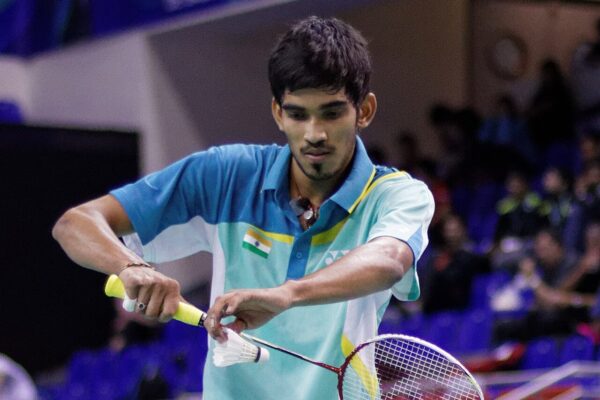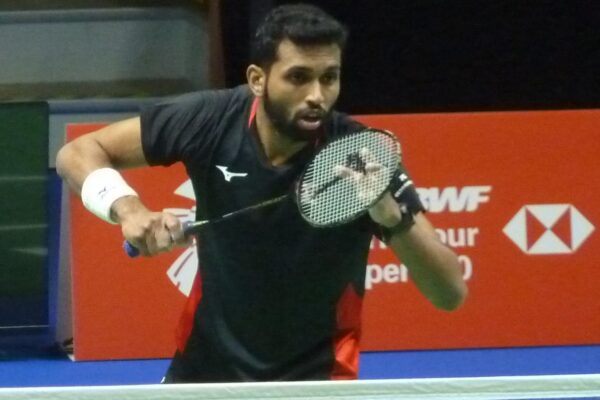
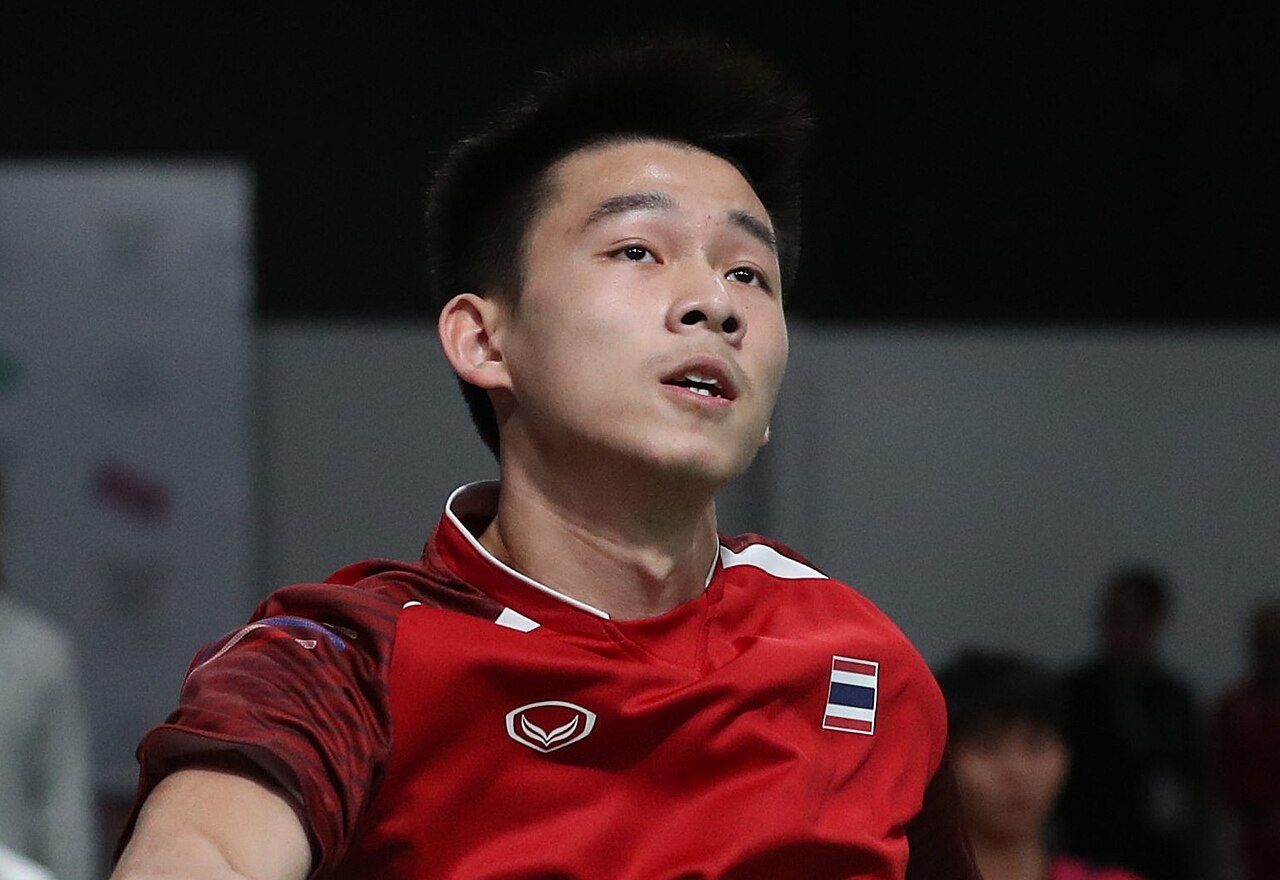
Three straight world junior titles put Kunlavut Vitidsarn in rare company before he was old enough to order a senior career around him. What followed was not a rush built on noise or power, but a steadier climb: long rallies, unreadable changes of pace, and a habit of staying calm while matches tilted his way.
Kunlavut Vitidsarn: from Chonburi prospect to Thailand’s leading men’s singles player
Born on May 11, 2001, in Chonburi, Kunlavut Vitidsarn grew up close to the sport. His father, Nattawat Vitidsarn, worked as a badminton coach, and the game entered family life early. According to widely repeated biographical accounts, he first took up badminton as a child partly because exercise helped with nasal allergy problems. The sport also quickly became more than recreation.
He began playing young and developed through Thai club badminton before joining Banthongyord Badminton School, the academy that shaped much of his rise. By his early teens, the results were already coming. He won the Thailand Youth Championship in the under-14 category, an early sign that he was moving faster than most players in his age group.
Those first junior seasons were not yet the full breakthrough, but they showed range. He picked up international age-group results, including a boys’ doubles silver at the White Nights Junior tournament, and gained experience in team events. Then the bigger pattern emerged.
The junior run that made people pay attention
From 2017 through 2019, Kunlavut Vitidsarn won the BWF World Junior Championships three years in a row in boys’ singles. No one had done that before in the event. That streak remains the foundation of his reputation because it was not a one-off title or a hot month. It was sustained control over an entire age group.
He backed up those world junior crowns with other strong results. He took bronze at the Asian Junior Championships in 2017, silver there in 2018, and then won the Asian Junior title in 2019. At the Youth Olympics in Buenos Aires, he was part of the mixed-team event that finished with silver.
By the end of his junior career, Thailand did not just have another promising singles player. It had a prospect with a record that stood out globally. He was later recognized with the Eddy Choong Most Promising Player award, a fitting marker for that stage of his development.
Learning the senior game
The transition to senior badminton is where many decorated juniors get exposed. The pace is heavier, the physical demand sharper, and opponents are far less willing to give away rallies. Kunlavut’s early senior years were about learning how to make his style work against older, stronger players.
What made him different was clear quite quickly. He was not trying to overpower the court. He defended with balance, moved smoothly into the corners, and used variation well enough to make opponents hit one extra shot, then another. His matches often stretched, and he rarely looked rushed inside them.
That patient style helped produce the nickname “Three-Game God,” a label that says something real about how he plays. He is comfortable in long matches. He does not mind if momentum swings. In fact, that is often where he becomes most awkward to beat.
The first senior title that truly announced his arrival came at the 2022 German Open, where he won the men’s singles crown. It was a Super 300 event, not the biggest stop on the tour, but it mattered because it showed his junior pedigree was turning into senior silverware.
Later that same year, he made a much louder statement at the BWF World Championships in Tokyo. He reached the men’s singles final and finished with silver after losing to Viktor Axelsen. Even in defeat, the run changed his standing. He was no longer just a former junior star with potential. He was a serious contender on the biggest stages in badminton.
World champion in Copenhagen
The next season brought the title that reshaped his career. In 2023, Kunlavut won the India Open, one of the strongest events on the calendar, and added the Thailand Open on home soil. Those were important titles, but the defining week came at the World Championships in Copenhagen.
There, he won the men’s singles gold medal and became the first Thai man to claim a world title in singles. For Thai badminton, that was a landmark result. For Kunlavut himself, it was confirmation that his game could survive and then prevail over the course of a major championship draw.
His rivalry with Axelsen became a useful measure in this period. Axelsen had beaten him in the 2022 world final, but Kunlavut defeated the Dane at the 2023 India Open. That win mattered less as a symbolic upset than as proof that he could solve the sport’s toughest problems in real time.
By then, his place among the elite was secure. He had moved from prospect to title threat to world champion in a relatively short span, but the path still looked consistent with his personality: patient, controlled, and built rally by rally.
Olympic silver in Paris
At the Paris Olympics, Kunlavut Vitidsarn added another major line to his record by reaching the men’s singles final and taking silver. He became the first Thai badminton player to win an Olympic medal, a result that carried obvious national significance.
The final brought another meeting with Axelsen, and again the Dane won. Even so, the tournament deepened Kunlavut’s standing in the sport. Olympic badminton has a different kind of pressure, and his run showed that his style could hold up under it.
By this stage, he had become one of the reference points in men’s singles: a player top seeds had to prepare for carefully, because rallies against him rarely followed a simple pattern.
Why Kunlavut Vitidsarn is so difficult to play
Some singles players impose themselves with steep attack and obvious speed. Kunlavut does it in subtler ways.
His footwork is one of the keys. He gets into position early, which gives him options, and that makes his shot selection harder to read. He can absorb pressure, but he is not passive. He changes pace well, redirects the shuttle neatly, and keeps opponents from settling into one rhythm.
That is why describing him as merely defensive misses part of the point. His defense is active. It creates openings. He extends rallies until the other player has to force something, then he takes over the exchange.
He also tends to stay composed. In deciding games, when many matches become frantic, he often looks as if he is still working through a plan. That calm has become part of his identity on court.
Life away from the court
Off court, the outlines are quieter but still revealing. Kunlavut is widely known by the nickname “View,” while “Three-Game God” belongs more to the badminton world that has watched him wear opponents down.
He has long trained at Banthongyord, one of Thailand’s most important badminton schools, under coaches including Patapol Ngernsrisuk, Udom Luangphetcharaporn and Xie Zhihua. That stable training base matters. His game looks individual, but it was built in a system that values discipline and repetition.
There are also small details that make him easier to picture as a person rather than a results sheet. He has been reported as a Liverpool supporter. He has also spoken admiringly of Lee Chong Wei, while Boonsak Ponsana is another Thai figure often mentioned in connection with his development and inspiration.
Some personal-life details circulate online, including reports about a relationship with Pim Aphisara. Because private matters are not central to his badminton career and can be unevenly sourced, they are best treated cautiously unless confirmed directly by him or by reliable public reporting.
What is clear is that his public image has never depended on theatrics. He tends to let matches do the talking. That fits the player people see on court: measured, durable, and difficult to shake.
A career built on patience
Kunlavut Vitidsarn’s story makes more sense when read in sequence. First came the child from Chonburi who entered badminton early and developed inside a family close to the sport. Then came the junior champion who kept winning long enough to make history. After that came the harder stage, when he had to prove that a patient, tactical game could survive in senior men’s singles.
It did more than survive. It produced a world title and an Olympic silver medal, and it established him as one of the central figures in Thai badminton. Not because he arrived with the loudest game, but because he learned how to control matches on his own terms.
FAQ
What is Kunlavut Vitidsarn’s nickname?
He is commonly known as “View,” and badminton fans also call him the “Three-Game God.”
How many World Junior Championships did Kunlavut Vitidsarn win?
He won three straight boys’ singles titles, in 2017, 2018 and 2019.
Did Kunlavut Vitidsarn win an Olympic medal?
Yes. He won silver in men’s singles at the Paris Olympics.
Has Kunlavut Vitidsarn won the World Championships?
Yes. He won the men’s singles title at the 2023 BWF World Championships.
What is Kunlavut Vitidsarn known for on court?
He is known for his footwork, defensive strength, tactical variation and ability to win long three-game matches.
Where is Kunlavut Vitidsarn from?
He was born in Chonburi, Thailand.
Photo: bad crop by Leonprimer, CC BY-SA 4.0, via Wikimedia Commons