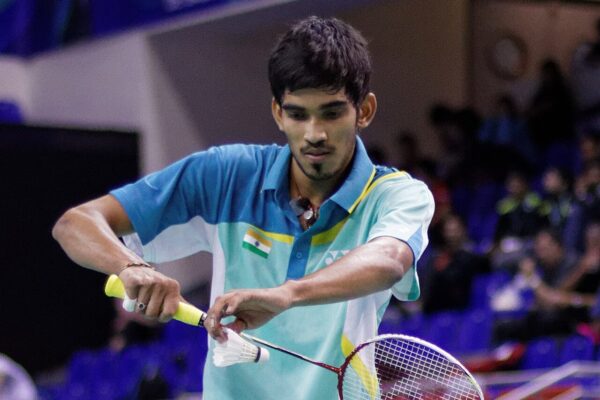

A backhand clocked at 305 km/h can turn into a career-long calling card. For Taufik Hidayat, though, that number tells only part of the story. The Indonesian men’s singles star was not simply a power player with a famous shot. He was an Olympic champion, a world champion, a former world number one, and one of the most distinctive stylists of his generation.
From Bandung prodigy to Indonesia’s next big singles hope
Taufik Hidayat was born on August 10, 1981, in Bandung, West Java, Indonesia, to Aries Haris and Enok Dartilah. He started young, joining the SGS club in Bandung as a child, and his talent moved quickly from local promise to national attention.
By the mid-1990s, he was already on Indonesia’s fast track. He made his senior international debut in 1996 and entered Pelatnas, the national training center, in the same period. Junior titles soon followed. He won the Asian Junior Championships in 1997, then took the Brunei Open in 1998, early signs that Indonesia had another serious men’s singles prospect on its hands.
He was still a teenager when he became part of Indonesia’s wider team success. At the 1998 Asian Games in Bangkok, Indonesia won the men’s team gold medal. Hidayat was not yet the finished article, but the pace of his rise was obvious.
The teenage breakthrough
Some players announce themselves gradually. Hidayat did it on one of the sport’s biggest stages.
In 1999, at just 17, he reached the All England final. He lost there to Sun Jun, but the run mattered. It showed that his game already worked against the best in the world: the soft hands at the net, the sudden acceleration, the disguise, and the unusual confidence to attack from awkward positions.
That same year, he won the Indonesia Open, the home tournament that would become a recurring part of his story. He also claimed the Southeast Asian Games singles title in 1999, adding another marker to a season that pushed him firmly into the elite.
His style stood out immediately. He was right-handed, yet many of his most memorable shots came from the backhand side. Opponents could not treat that wing as a safe target. He could drive through it, slice from it, or turn defense into attack in a single movement. The famous Taufik Hidayat backhand smash became a spectacle in its own right, but the deeper quality was timing. He seemed to play with an extra fraction of a second.
World number one before 20
The next season confirmed that the breakthrough was no fluke.
Hidayat reached another All England final in 2000, this time losing to Peter Gade. He also won the Malaysia Open and the Asian Championships that year. On August 24, 2000, he climbed to world No. 1, still not yet 20.
That ascent placed him at the center of a strong men’s singles era. Peter Gade was one major reference point. So were China’s Xia Xuanze and, later, Lin Dan. Hidayat’s record against the very best could swing with form and temperament, but he belonged in that company for more than a decade.
He also helped Indonesia win the Thomas Cup in 2000, adding a major team title to his individual rise. Another Thomas Cup triumph followed in 2002.
Big titles, home wins and the Athens peak
For all his flair, Hidayat’s career was built on more than highlight reels. He won major events consistently, especially in Asia and especially at home.
He captured the Indonesia Open six times: 1999, 2000, 2002, 2003, 2004 and 2006. That remains one of the strongest tournament records of his career and one reason his name stayed so closely tied to badminton in Indonesia.
He also won the Asian Championships three times, in 2000, 2004 and 2007, and took Asian Games singles gold twice, first in Busan in 2002 and again in Doha in 2006. At the Southeast Asian Games, he won men’s singles gold in 1999 and 2007.
Then came the title that defines almost every badminton player’s career: Olympic gold.
At the Athens Games in 2004, Hidayat won the men’s singles tournament and gave Indonesia one of its most important badminton victories. In the final, he beat South Korea’s Shon Seung-mo in straight games, 15-8, 15-7, under the old scoring system. It was the cleanest possible answer to any doubts about whether his talent would translate into the sport’s biggest individual prize.
The following year brought the other crown that completed his résumé. At the 2005 World Championships in Anaheim, he won the men’s singles title, beating Lin Dan in the final, 15-3, 15-7. He did not drop a game all tournament.
That run in Anaheim remains one of the sharpest stretches of badminton of his career: controlled, inventive and ruthless when openings appeared. With Olympic gold and a world title on his record, Taufik Hidayat secured his place among the most accomplished men’s singles players of his era.
Longevity beyond the peak
Many players burn brightly and fade early. Hidayat did not stay at his very highest level forever, but he remained dangerous deep into his career.
He won another Indonesia Open in 2006 and another Asian Championships title in 2007. At the World Championships, he collected bronze in 2001, another bronze in 2009, and silver in 2010. That 2010 final in Paris, nearly a decade after his first world medal, said a lot about his staying power.
In team events, he was part of Indonesian squads that won Thomas Cup silver in 2010 and Sudirman Cup silver in 2001, 2005 and 2007. Indonesia also took Sudirman Cup bronze in 1999, 2003 and 2011 during his years around the team.
He officially retired on June 16, 2013. By then, he had been relevant at the top level for far longer than many early prodigies manage.
Rivalries, rhythm and the famous backhand
A player like Hidayat is easiest to remember through motion. The glide into the forecourt. The delayed racket preparation. The way a neutral rally could suddenly become an attack.
His rivalries helped define the period. Peter Gade represented one kind of challenge: tactical patience and control. Lin Dan brought relentless pace and pressure. Against both, Hidayat’s best badminton looked different from the standard power game. He relied on deception, touch and shot quality as much as speed.
And then there was the backhand.
The fastest recorded backhand smash in badminton, measured at 305 km/h, has long been associated with him. Whether fans first discover him through Olympic highlights or by searching for the Taufik Hidayat backhand, they usually end up at the same conclusion: this was a player who made difficult technique look natural.
Still, reducing him to one shot misses the point. His net game was elite. His feel for angles was exceptional. He could hold the shuttle, show one direction and play another, often without seeming to rush. That was the real thread through his best years.
Fire on court, friction off it
Hidayat’s career was not smooth in every sense. He had a reputation for a fiery temper, and several incidents fed that image.
In 2001, published reports said he was involved in an altercation with a spectator at the Indonesia Open. At the 2002 Asian Games, he walked off during a team match against South Korea after a line-calling dispute; the issue became one of the tournament’s talking points before he later went on to win the singles gold. During the 2004 Thomas and Uber Cup in Jakarta, reports also linked him to a scuffle in a parking area. In 2006, he again protested line judging during the Hong Kong Open and left the court before play had properly concluded.
Those episodes became part of his public image: brilliant, combustible, not always easy for officials or administrators to manage.
There were also tensions with PBSI, the Indonesian badminton association. At one stage, he trained outside the national system and spent time based in Singapore. Later in his career, some commentary in the Indonesian press questioned his conditioning and fitness standards. Those criticisms were part of the conversation around him, though they never erased the scale of his achievements.
Life away from competition
Off court, the picture is more settled.
He married Ami Gumelar on February 4, 2006. She is the daughter of Indonesian public figure Agum Gumelar. The couple have two children: daughter Natarina Alika Hidayat, born in 2007, and son Nayutama Prawira Hidayat, born in 2010.
After his playing days, badminton remained central to his work. The Taufik Hidayat Arena in Jakarta became his most visible post-retirement project, serving as a training venue and a base for developing younger players. He has also remained active in badminton-related public life in Indonesia, including coaching, mentoring and promotional work tied to the sport.
He was often known by nicknames such as “Mr Backhand” and “Opik,” labels that reflected both his signature shot and his familiarity to Indonesian fans. But the more lasting image is simpler: a player who could make a rally feel improvised without ever losing control of it.
FAQ
What is Taufik Hidayat famous for?
He is best known for winning Olympic gold in Athens in 2004, taking the 2005 World Championships title, and for his exceptional backhand.
Did Taufik Hidayat ever become world number one?
Yes. He reached world No. 1 on August 24, 2000.
Did Taufik Hidayat win the All England Open?
No. He finished runner-up twice, in 1999 and 2000.
When did Taufik Hidayat retire?
He officially retired on June 16, 2013.
What is the Taufik Hidayat Arena?
It is his badminton training center in Jakarta, established as part of his work in the sport after his playing career.
Who is Taufik Hidayat’s wife?
He is married to Ami Gumelar.
Photo: Fharys, CC BY-SA 4.0, via Wikimedia Commons