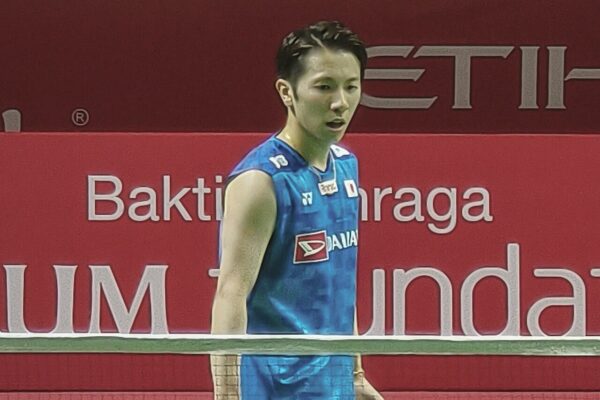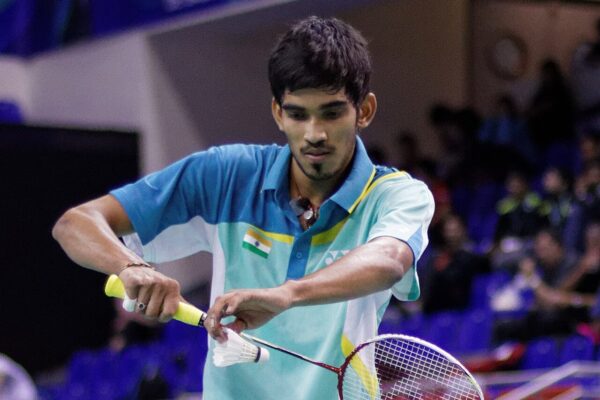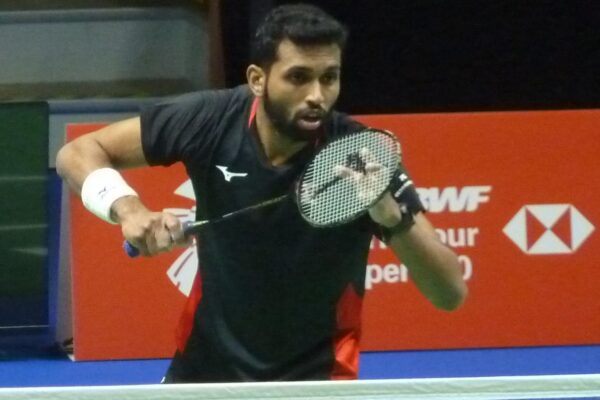

Three games in Wuhan told the story in miniature: Anthony Sinisuka Ginting, one of the quickest attackers in men’s singles, outdueling Shi Yuqi to win the 2023 Badminton Asia Championships. It was not his first big title, and it would not be his last deep run, but it captured what has defined his career for years, speed, nerve, and a habit of unsettling players with bigger frames and longer reaches.
From Cimahi to the national team
Ginting was born in Cimahi, West Java, on October 20, 1996, and badminton arrived early. He learned the game as a child from his father, Edison Ginting, then entered a more serious pathway at PB SGS PLN Bandung, a club also associated with his idol Taufik Hidayat. In Indonesia, that kind of club grounding matters. It is where talent is tested daily, long before television cameras show up.
The results came young. He won the MILO School Competition boys’ singles title in the elementary-school category in 2008 and added the junior-high category in 2012. Those were domestic youth events, but they hinted at the same qualities that would later define him on the world stage: fast feet, early racket preparation, and a willingness to take the shuttle early.
At 16, he was called into Indonesia’s national setup. In 2013, he began appearing in senior international events, including the Vietnam International Challenge, an early marker of his move out of the junior ranks.
His junior résumé quickly gained international weight. In 2014, he took bronze in boys’ singles at the Youth Olympic Games in Nanjing. Later that year, at the BWF World Junior Championships in Alor Setar, he won bronze in boys’ singles and silver with Indonesia in the mixed team event. By then, he was no longer simply a promising local talent. He had proof against the best players of his age group.
The first senior titles and a bigger stage
The senior breakthrough did not arrive all at once, but 2017 was a clear turning point. Ginting won his first BWF Superseries-level title at the Korea Open, beating compatriot Jonatan Christie in the final. It was the kind of week that changed how opponents viewed him. He was no longer just dangerous; he was a title winner.
Then came 2018, the season that pushed him into the sport’s front rank. He won the Indonesia Masters in Jakarta, delighting a home crowd that had already taken to his all-out style. Later that year he claimed the China Open, one of the most prestigious stops on the calendar, beating Kento Momota in the final.
That same season also brought medals at the Asian Games in Jakarta and Palembang. In men’s singles, he won bronze. In the men’s team event, Indonesia took silver. For an Indonesian player, performing at a home Asian Games carries its own pressure, and Ginting handled it well enough to leave the tournament with two medals.
The “giant killer” label attached itself around this period, and unlike many nicknames, it had evidence behind it. He had the game to trouble the biggest names: Chen Long, Lin Dan, Viktor Axelsen, Kento Momota. Not because he overpowered them physically, but because he could rush them, change the tempo, and turn rallies into sprints.
Team success and Olympic bronze
Indonesia’s team tradition in badminton is so strong that individual careers are often measured by what happens in those red-and-white lineups too. Ginting became a regular part of that story.
He helped Indonesia win the Badminton Asia Team Championships in 2016, 2018 and 2020. At the SEA Games, he was part of the Indonesian men’s team that won gold in 2015 and again in 2019. Indonesia also finished with bronze at the 2019 Sudirman Cup.
The biggest team moment came at the Thomas Cup. Ginting was part of the Indonesian squad that reached the final in 2016 before settling for silver. Then, at the 2020 Thomas Cup finals, held in Aarhus in 2021 because of the pandemic delay, Indonesia won the title and ended a long wait for one of the sport’s most prized team trophies. He later added Thomas Cup silver medals in 2022 and 2024.
His signature individual medal came at the Tokyo Olympics. In the bronze-medal match of the men’s singles event, Ginting beat Kevin Cordón of Guatemala in straight games. That result made him the first Indonesian men’s singles player to win an Olympic medal since Taufik Hidayat took gold in Athens in 2004.
It also completed a neat arc in his career: youth medalist, then Olympic medalist. He had been marked early, and unlike many gifted juniors, he carried that promise into the senior game.
Ranking peak, major titles and the All England run
The next phase of Anthony Ginting’s career mixed consistency with flashes of top-end brilliance. He defended his status as one of the world’s most dangerous draw opponents by winning the Indonesia Masters again in 2020. In 2022, he added the Singapore Open and the Hylo Open.
Then came one of his strongest stretches. In 2023, he won the Badminton Asia Championships and the Singapore Open. The continental title was especially significant: he became the first Indonesian men’s singles player to win the Asian crown since Taufik Hidayat in 2007.
His ranking climbed accordingly. Ginting reached a career-high of world No. 2 on January 24, 2023. That number reflected more than one hot run. It showed how often he was going deep at major events and how difficult he had become to handle across a full season.
Another major final followed at the All England Open, where he finished runner-up in 2024 after losing to Jonatan Christie. Even in defeat, it was another reminder of his staying power. The All England remains one of badminton’s defining tournaments, and reaching the final there is a serious line on any player’s record.
Setbacks that shaped the story
Not every chapter has been smooth. Ginting’s style asks a lot of his body. He plays at high speed, attacks early, and relies heavily on explosive movement. That can produce spectacular winners, but it also creates physical strain.
At the 2021 Denmark Open, he retired because of back pain. It was a brief but telling interruption, the sort of injury scare that follows many players whose game depends on constant acceleration.
A much heavier setback came in 2023, when he withdrew from the World Championships after the death of his mother, Lucia Sriati. Earlier that year, she had watched him during the Indonesia Open while using a wheelchair, a detail widely noted in Indonesian coverage after her passing. It gave that period of his season a more personal, painful context than any result column could show.
Coaching changes followed later in his career. After the Paris Olympic cycle, Irwansyah’s period as men’s singles coach ended. Ginting later worked with Mulyo Handoyo at Indonesia’s national training center in Cipayung.
Why his game troubles elite opponents
At 1.71 meters, Ginting does not fit the template of the tallest modern men’s singles contenders. But height has never been the point. His badminton is built on timing, acceleration and the ability to seize the shuttle early.
He is a right-hander with an attacking instinct, yet his best matches are not just about power. They are about disruption. He likes to speed up exchanges, pressure the forecourt, and force opponents into awkward contact points. When he is sharp, rallies feel rushed even against players who usually control them.
That is why the giant-killer reputation stuck. It was not marketing. It came from repeated wins over leading names, including Momota, Axelsen, Lin Dan and Chen Long. One of the defining rivalries of his era was with Momota, whose control and patience made a fascinating contrast with Ginting’s urgency and attacking bursts.
Off court: family, image and public life
Away from tournaments, family has always been close to his story. He is the son of Edison Ginting and the late Lucia Sriati, and he has several siblings. Those details have often appeared in Indonesian media coverage, especially during major home events and during the difficult period surrounding his mother’s death.
His public image has an interesting split. On court, he can look intense, impatient, even slightly gruff between rallies. Off court, he is more often described in interviews and profiles as reserved and calm. That contrast is common in elite sport, but in his case it is especially noticeable because his playing style is so visibly urgent.
As for his private life, reports in Indonesian media have linked him romantically with Mitzi Abigail before marriage, and published coverage has described them as married. Because personal-life details can be unevenly reported across outlets, it is best to treat that information as reported rather than as a central career fact unless confirmed directly by the player or official family statements.
Commercially, he has also become a familiar face for sponsors. He has worked with major brands, including partnerships in electronics, banking and badminton equipment. Those deals reflect his standing as one of Indonesia’s most recognizable badminton players, especially in men’s singles.
A career built on speed and big moments
Anthony Sinisuka Ginting’s career has never been a straight line. It has moved through junior medals, breakthrough titles, Olympic bronze, team triumphs, injuries, personal loss and another climb back into major finals. What ties it all together is the same thing that first made him stand out as a teenager in Bandung: he plays fast, he plays boldly, and he has spent years making life uncomfortable for the very best in the sport.
FAQ
Who is Anthony Sinisuka Ginting?
He is an Indonesian men’s singles badminton player, Olympic bronze medalist and former world No. 2.
What is Anthony Ginting’s highest world ranking?
His career-high ranking is world No. 2, reached on January 24, 2023.
Did Anthony Ginting win an Olympic medal?
Yes. He won bronze in men’s singles at the Tokyo Olympics.
What are Anthony Sinisuka Ginting’s biggest titles?
Among his biggest individual titles are the Korea Open, Indonesia Masters, China Open, Singapore Open, Hylo Open and the 2023 Badminton Asia Championships. He was also part of Indonesia’s Thomas Cup-winning team.
Why is Anthony Ginting called a giant killer?
Because he built a reputation for beating top stars such as Kento Momota, Viktor Axelsen, Lin Dan and Chen Long despite not having the same physical size as some rivals.
Who coached Anthony Ginting?
He has worked within Indonesia’s national system under several coaches, including Irwansyah and later Mulyo Handoyo.
Photo: Fauziananta, CC BY 4.0, via Wikimedia Commons