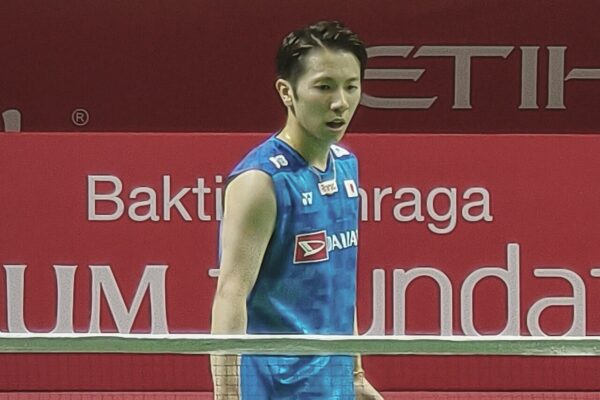

Three Olympic quarterfinals tell part of the story. The fuller picture is harder, and more interesting: Chou Tien-chen built an elite men’s singles career not through noise or swagger, but through repeatable habits, long rallies and a refusal to go away.
For years, the Taiwanese shuttler representing Chinese Taipei has been one of the sport’s most stubborn problems to solve. Opponents know what is coming, pressure, depth, patience, another shot, then another, and still spend whole matches getting dragged into his rhythm. At his best, Chou has made that style good enough for world No. 2, major tour titles and two World Championships bronze medals.
Growing up in Taipei
Chou was born in Taipei on January 8, 1990. Badminton came early. His parents steered him toward the sport as a way to channel his energy, and his school path, Shuanglian Elementary School, Shuanglian Junior High School and Keelung Senior High School, gave him a steady base in the game.
One early marker arrived in elementary school, when he won a national title in sixth grade. It did not make him a star overnight, but it hinted at something that would define his career later: he could stay with the work. Even as a young player, he was building around endurance, discipline and the willingness to keep a rally alive until the opening finally appeared.
He entered senior international competition in 2008. In those first years, he was seen as an energetic, physically strong player who could overwhelm opponents with stamina. What came later was more sophisticated. The engine stayed the same, but the game around it became calmer, smarter and harder to break down.
The first titles and a breakthrough in Europe
Before the biggest wins arrived, Chou put together a useful run in Europe. He won the Bitburger Open three years in a row from 2012 through 2014, a sign that he was becoming more than a dangerous outsider. Repeating titles matters in badminton; it shows a player can handle expectation, different draws and the strain of week-to-week tour life.
The real breakthrough came at the 2014 French Open. There, he won his first BWF Super Series title and became the first Taiwanese men’s singles player to claim one at that level. It was a personal milestone, but it also carried broader weight for badminton in Taiwan, where strong players had emerged before him without quite landing that kind of men’s singles first.
A year later came another symbolic result. At the 2015 Chinese Taipei Open, Chou beat Lin Dan, becoming the first Taiwanese player to defeat the Chinese great in international competition. It was the sort of win that changed how a player was discussed. He was no longer simply durable or awkward to face. He was now a genuine factor in the biggest matches.
Building toward the top
By the middle of the decade, his game had settled into the shape fans now recognize. Chou was not the kind of singles player who needed to dominate every exchange with outright pace. He preferred to stretch points, defend with control, use the net carefully and wait for the right moment to attack. That patience became his competitive identity.
Results followed. He won the Chinese Taipei Open in 2016, 2017, 2019 and 2022, a notable record at home, where expectation can weigh heavily on local contenders. He also contributed to Taiwan’s team efforts at the Asian Games, taking men’s team bronze in 2014 and then, in 2018, winning silver in men’s singles and another bronze in the men’s team event.
The ranking peak came on August 6, 2019, when he rose to world No. 2. That made him the highest-ranked Taiwanese men’s singles player in history. The same season brought one of the biggest titles of his career: the Indonesia Open, one of the tour’s premier events. Winning there underlined that his rise was not built on isolated weeks or favorable draws. He had become one of the central contenders in men’s singles.
Olympics, worlds and the long middle rounds
Chou’s Olympic record is unusual in its consistency. He reached the quarterfinals at Rio 2016, Tokyo 2020 and Paris 2024. There is no medal line attached to those appearances, but three straight last-eight finishes in the sport’s toughest discipline still say plenty about his level and longevity.
At the BWF World Championships, he twice finished with bronze, first in 2022 and again in 2023. Those runs mattered because they confirmed he could still go deep at the biggest individual events even after the ranking peak of 2019. He was not hanging on to a reputation; he was still producing results.
Team badminton brought another landmark. At the 2024 Thomas Cup, Chinese Taipei reached the semifinals for the first time, the nation’s best finish in the event. Chou was central to that campaign and also beat Viktor Axelsen during the tournament, a reminder that even late in his career he remained dangerous against the very best.
The list of rivals across his era is a strong one: Lin Dan, Lee Chong Wei, Chen Long, Kento Momota, Viktor Axelsen. Chou was rarely the player wrapped in the most mythology among that group. He was, instead, the one who kept turning up, kept extending rallies and kept making elite opponents earn every point.
What makes his game work
Some players are difficult to describe because their strengths are spread thinly across everything. Chou is easier to read, though not easier to play.
His badminton is built on rally discipline. He likes to pull opponents into long exchanges, hold a solid defensive base and change the pace without looking rushed. The net game is important in that structure. So is timing. He does not attack constantly, but when he does, the shot usually comes after he has already nudged the rally in his direction.
That style requires more than fitness. It needs balance and body control, and Chou has long been known for taking movement training seriously. He has spoken about using the Gyrotonic Method, and reports about his training have also noted belly dancing as part of his work on flexibility and coordination, an unusual detail, but one that fits the way he moves on court.
Another distinctive part of his career is coaching. Since 2019, he has effectively operated as a self-coached player, using the phrase “God is my coach.” His support team has still been important, including physiotherapist Victoria Kao in training and recovery. He has also been associated with Taiwan Cooperative Bank.
A serious health scare, then a return
Early in 2023, Chou revealed that he had been diagnosed with early-stage colorectal cancer. He underwent surgery and returned to competition the same year. In a sport that demands relentless movement and conditioning, it was the kind of interruption that can alter a career for good.
Instead, it became another chapter in his record for resilience. The comeback did not turn him into a different player. It simply reinforced what had always been obvious in his badminton: he is comfortable with hard routines, patient rebuilding and long roads back.
Off the court
Away from matches, Chou has generally kept a lower public profile than many players of similar stature. He has not built his image around constant self-promotion, and that reserve fits the way he competes.
There is, though, some personality around the edges. He has been noted for bringing small gifts in what has been described as a form of people-to-people diplomacy with fellow players, a modest habit, but a revealing one for someone who spent years sharing the same circuit with the same rivals.
He is also connected to a 2021 book, The World Cannot Shake It: The Life Testimony of Badminton Warrior Chou Tien-chen. Public reporting has also linked him to charitable causes, including support for children with rare diseases, education in remote parts of Taiwan and migrant workers’ rights.
One nickname story needs careful handling. According to online fan discussion, including posts on Reddit, some Chinese fans referred to him as the “Shadow King,” tied to the perception that he looked exhausted in matches while still finding a way to keep going. That is fan chatter rather than a formal, verifiable nickname record, so it belongs in the rumor category, not as established fact.
How Chou Tien-chen fits in badminton history
His career is not defined by one giant title or one untouchable peak. It is defined by accumulation and firsts.
Chou was the first Taiwanese men’s singles player to win a BWF Super Series title. He became the first from Taiwan to beat Lin Dan in international play. He rose higher in the world rankings than any Taiwanese man before him, reaching No. 2. He made three Olympic quarterfinals, won two World Championships bronzes and stayed relevant across multiple generations of rivals.
That is a substantial body of work in men’s singles, where careers are often shortened by the physical demands of the event. Chou’s game has never depended on fashion. It has depended on discipline, shape and nerve. That is why it lasted.
FAQ
What is Chou Tien-chen’s highest world ranking?
His career-high ranking is world No. 2, reached on August 6, 2019.
Has Chou Tien-chen won an Olympic medal?
No. He reached the men’s singles quarterfinals at Rio 2016, Tokyo 2020 and Paris 2024.
Did Chou Tien-chen win a World Championships medal?
Yes. He won bronze at the BWF World Championships in 2022 and 2023.
What is Chou Tien-chen’s playing style?
He is known for long rallies, strong defense, patient point construction, tight net play and well-timed attacks.
Did Chou Tien-chen have cancer?
Yes. He disclosed an early-stage colorectal cancer diagnosis in 2023, underwent surgery and returned to competition.
Is Chou Tien-chen self-coached?
Since 2019, he has largely operated as a self-coached player and has used the phrase “God is my coach.”
Photo: 教育部體育署, Attribution, via Wikimedia Commons