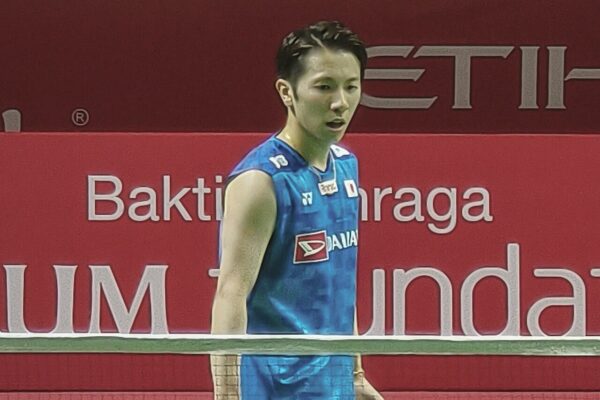
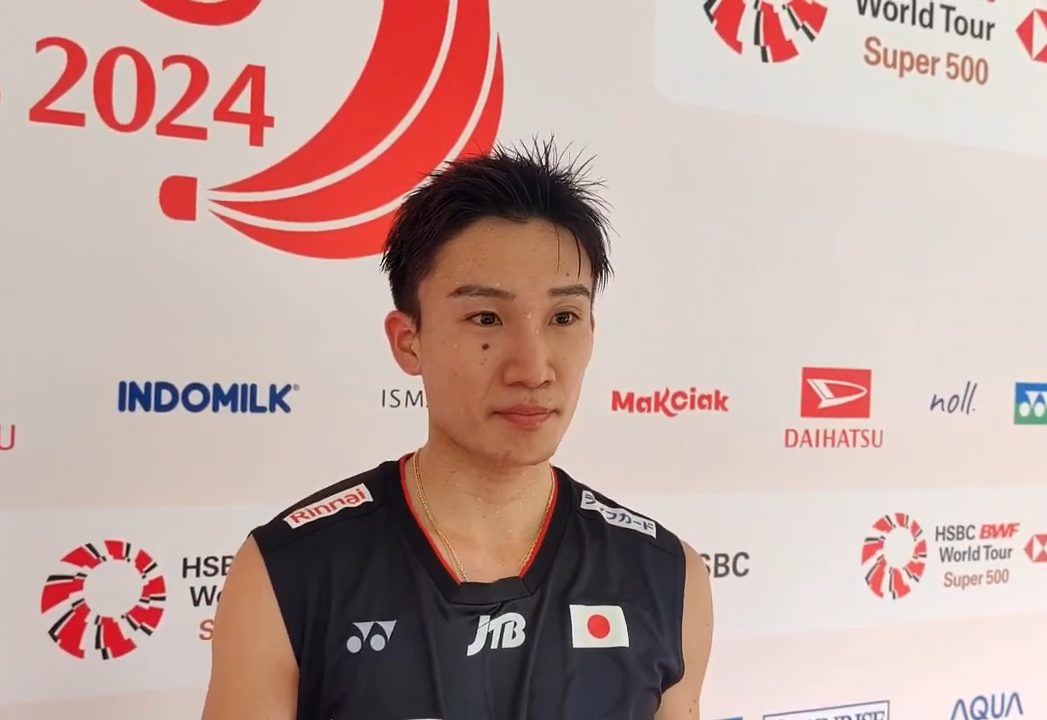
Eleven titles in one season is the kind of number that changes how a career is remembered. For Kento Momota, that record-setting run sat alongside two world championships, a spell as world No. 1, and a career that kept being pulled off course just as it seemed to settle into full control.
At his best, Momota was the central figure in men’s singles: hard to hurry, hard to read, and even harder to beat. His story, though, is not a straight line from prodigy to champion. It runs through junior titles, a breakthrough on the senior circuit, a gambling suspension that cost him the Rio Olympics, a remarkable comeback, and then a serious road accident that interrupted the peak of his career.
A badminton childhood in Kagawa
Kento Momota was born on September 1, 1994, in Mino, Kagawa Prefecture, an area now part of Mitoyo City in Japan. Badminton arrived early in his life and stayed there. He started playing at seven, helped into the sport by his older sister Meiko, while his parents, Nobuhiro and Michiyo, built a home environment that clearly revolved around practice and improvement.
One detail from those early years still stands out: his father built a homemade court for him. It says plenty about the seriousness around his development before he had won anything of note outside school competition.
Momota followed the well-established Japanese school pathway, attending Tomioka Daiichi Junior High School and then Fukushima Prefectural Tomioka High School, a program known for producing top players. By the time he reached his late teens, he was no longer just a promising domestic talent.
In 2012, he won boys’ singles gold at the Asian Junior Championships and then took the World Junior Championships title the same year. Those victories put him among the best junior singles players in the world. He was already testing himself at senior level too, including a run to the third round of the 2012 Badminton Asia Championships and a quarterfinal at the Vietnam Open Grand Prix.
From junior champion to senior contender
The move into the senior game can be slow, especially in men’s singles, where physical maturity and tactical patience matter so much. Momota crossed that gap quickly.
He joined NTT East in 2013, the corporate team that became the base of his professional career. A left-hander with sharp control and excellent movement, he began to look like a player who could shift expectations for Japanese men’s singles.
That became clearer in 2014 and 2015. He was part of Japan’s Thomas Cup-winning team in 2014, a landmark result for the country, and helped Japan reach the Sudirman Cup final in 2015.
Then came the individual breakthrough. At the 2015 BWF World Championships in Jakarta, Momota won bronze, becoming the first Japanese man to medal in men’s singles at the event. It was an important marker: not yet the top of the sport, but no longer an outsider to it either.
His title results that season underlined the point. He won the Singapore Open and the Indonesia Open, and later took the Dubai World Superseries Finals. The Singapore title made him the youngest Japanese man to win a Superseries event at the time. By then, Kento Momota was no longer just a prospect. He was a genuine force on tour.
The 2016 suspension that changed everything
Just as his rise was gathering speed, it stopped.
In April 2016, Momota was suspended by the Nippon Badminton Association after he admitted visiting illegal casinos in Tokyo. The punishment cost him a place at the Rio Olympics and removed him from competition at a moment when he looked ready to contend for the biggest titles in the sport.
He had already won the India Open that year, and his form suggested more was coming. Instead, his career went into pause. The suspension lasted until May 2017.
Some reporting at the time linked the casinos to organized crime. That point should be treated carefully: it was reported in Japanese media, but it is not something that should be stated as established fact beyond those reports.
The public fallout was significant in Japan, where athletes are often expected to show visible contrition. One small but telling detail from that period was that Momota dyed his hair black, a gesture widely read as part of that public apology.
A comeback that turned into total control
When he returned, he did not ease back into the circuit. He came back winning.
From mid-2017 into early 2018, Momota put together a long unbeaten run on the international circuit and quickly rebuilt his ranking. He won the US Open, the Bitburger Open in Germany, the Korea Masters and the Macau Open in 2017, a sequence that made it obvious his level had survived the ban.
Then 2018 turned into the season that restored him fully to the top tier. He won the Indonesia Masters, the Indonesia Open, the Japan Open, the Denmark Open and the Fuzhou China Open. More importantly, he won the BWF World Championships in Nanjing, beating Shi Yuqi in the final to take his first senior world title.
That victory mattered beyond the medal itself. It completed the journey from suspended player to world champion in little more than a year.
On September 27, 2018, he became the first Japanese men’s singles player to reach world No. 1. For Japanese badminton, that ranking was a milestone. For Momota, it was proof that the comeback had become something larger than redemption. He was now the standard in the discipline.
The 2019 season that entered the record book
Some seasons are excellent. A few become reference points.
Momota’s 2019 campaign belongs in the second category. He won the German Open, All England Open, Singapore Open, Japan Open, Chinese Taipei Open, Korea Open, Denmark Open, China Open, Fuzhou China Open, Hong Kong Open and the BWF World Tour Finals. That made 11 titles for the year, a total recognized by Guinness World Records as the most men’s singles titles won in a season.
He also defended his world title in Basel, beating Anders Antonsen in the 2019 World Championships final. Two straight world championships and the All England crown in the same stretch gave that period its shape. This was the peak of Kento Momota’s career: relentless results, tactical authority, and a sense that most matches were being played on his terms.
He was named the BWF Male Player of the Year for 2019, a straightforward reflection of what the results already showed.
The crash in Kuala Lumpur and the difficult years after
A few hours can change the feel of a career. In January 2020, just after winning the Malaysia Masters, Momota was involved in a serious road accident in Kuala Lumpur when the van carrying him crashed. The driver was killed. Momota suffered facial injuries, including a broken nose and damage around the eye area.
He returned to competition, but the timing was cruel. The accident came immediately after the best season of his life, and he never quite recovered the same sustained command that had defined 2018 and 2019.
There were still notable results. He won the Indonesia Masters in 2021 and the Korea Masters in 2023. He also represented Japan at the Tokyo Olympics, though his campaign ended earlier than expected with a group-stage loss to Heo Kwang-hee.
In team events, he remained an important figure as Japan took Sudirman Cup silver in 2019 and 2021, and Thomas Cup bronze in 2022. But the version of Momota that had once seemed almost impossible to break down appeared only in flashes.
In May 2024, he announced that he was stepping away from the Japanese national team setup. That decision did not amount to a full retirement from badminton, but it did mark the end of a major chapter in his international career.
Why he was so difficult to play
Plenty of top singles players are fast. Plenty defend well. Momota’s game was more unsettling than that.
He built rallies with patience, but not passivity. His footwork was economical, his defense absorbed pressure without looking desperate, and his shot selection kept opponents from settling into rhythm. Because he was left-handed, he could create awkward angles naturally, and one of his most distinctive tools was the cut slice, which changed the shuttle’s path late and forced opponents into hesitation.
At his best, he made rallies feel longer than they were. Opponents often had the sense that they needed to hit one more winner than usual, then another after that.
His rivalry with Viktor Axelsen captured that dynamic for a time. Before the balance of the matchup shifted later, Momota held a strong head-to-head advantage during his prime years and repeatedly found ways to blunt Axelsen’s attack with control, depth and variation.
Life away from the court
Off court, Momota has generally kept a low public profile. He has long been associated with NTT East and with Yonex, the equipment brand tied closely to his professional image. In 2021, he also signed a sponsorship deal with Herbalife, according to published reports.
Family details have remained part of his story because they connect so directly to the player he became. The homemade practice court, his sister’s early influence, and even the story behind his first name, his parents named him after Clark Kent, all add texture without changing the central fact: this was a career built on structure and repetition as much as talent.
As for his private life, Japanese media reported that Momota announced his marriage in early 2026 and said the marriage had been registered at the end of the previous year. Since that concerns his personal life, it is best framed as his own public announcement rather than expanded beyond that.
What Kento Momota’s career amounts to
The record is clear enough without embellishment. Kento Momota won the World Championships twice, reached world No. 1, took the All England title, and produced one of the most dominant single seasons men’s badminton has seen.
It is also a career marked by interruption. The 2016 suspension cost him one Olympic cycle. The 2020 accident arrived just after his peak. Those breaks matter because they shaped not only what he achieved, but also what his career felt like while it was unfolding: brilliant, complicated, and never entirely settled.
For a stretch, though, men’s singles revolved around his control of space, tempo and nerve. That remains the lasting picture.
FAQ
Is Kento Momota retired?
He stepped away from the Japanese national team in May 2024. That is not the same as a full retirement from badminton.
How many world titles did Kento Momota win?
He won the BWF World Championships twice, in 2018 and 2019.
Why was Kento Momota suspended?
He was suspended in 2016 after admitting he had visited illegal casinos in Tokyo, which cost him a place at the Rio Olympics.
What happened to Kento Momota in 2020?
He was injured in a serious road accident in Kuala Lumpur in January 2020, shortly after winning the Malaysia Masters.
Was Kento Momota world No. 1?
Yes. He became world No. 1 on September 27, 2018, the first Japanese man in singles to do so.
Is Kento Momota married?
According to his own public announcement reported in Japanese media, he said he had married, with the registration completed at the end of the previous year.
Photo: Jurnal Bulutangkis, CC BY 3.0, via Wikimedia Commons