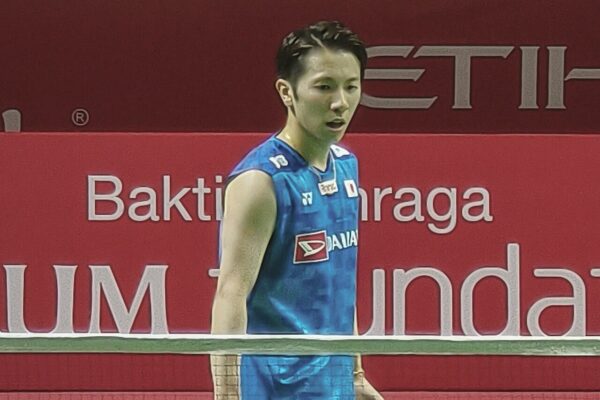
A rally against Kodai Naraoka can start to feel repetitive in the worst possible way for the man on the other side of the net. One more clear comes back. Then one more lift. Then one more retrieval from a corner that looked open. By the time frustration sets in, the match is often already being played on his terms.
That has been the defining thread of Naraoka’s rise in men’s singles. The player from Aomori built his career less on spectacle than on endurance, discipline and an unusual comfort in long, draining exchanges. From a strong junior record to a world championship final and a climb to world No. 2, his progress has been steady, distinctive and hard-earned.
Growing up in Aomori
Kodai Naraoka was born on June 30, 2001, in Aomori City, in northern Japan. Badminton entered his life early. He started playing as a small child, with his father Hiroshi Naraoka, a coach and instructor, playing a central role from the beginning.
That father-son link is more than a biographical detail. It shaped the way he learned the sport: repetition, structure and a tolerance for hard work that would later become visible in his matches. As a boy, he was already building the habits that now define him on court.
His junior results came quickly. Naraoka won Japan’s national junior high school title three years in a row, a sign not just of talent but of unusual consistency at a young age. On the international stage, he took bronze in boys’ singles at the 2017 BWF World Junior Championships, then improved to silver in 2018. At the Youth Olympic Games in Buenos Aires that same year, he won bronze in boys’ singles and another bronze in the mixed team event.
Even then, the outline of the future player was easy to spot. He was not the kind of junior who overwhelmed opponents with one huge weapon. He wore them down, extended rallies and kept asking for another shot.
The senior step-up
The move from promising junior to senior-level contender did not happen all at once. Naraoka’s early years in the adult game were built through smaller international events and team competitions, the kind of stretch where players learn whether their habits can survive against stronger, smarter opponents.
He was attached to NTT East as his career developed, while continuing to work under the guidance of his father. The style that would later make him one of the most recognizable men’s singles players on tour became clearer in this period: right-handed, quick around the court, patient in construction, and unusually willing to turn matches into tests of concentration and legs.
Japan also used him in team events early in his rise. He was part of the Japanese squad that won bronze at the 2020 Asia Team Championships in Manila. He also contributed to Japan’s bronze-medal runs at the Thomas Cup, first in Aarhus in 2021 and again in Bangkok in 2022. Those results mattered. Team tournaments often show how much trust a federation places in a player, and Naraoka was increasingly part of Japan’s plans.
Breakthrough in 2022
His first BWF World Tour title came at the Vietnam Open in 2022, a Super 100 event that gave his senior career a clear marker. It was not one of the biggest tournaments on the calendar, but it was the kind of win that changes a player’s status from dangerous prospect to established tour presence.
That season also brought a notable milestone: he qualified for the BWF World Tour Finals, the only Japanese men’s singles player to do so that year. It was a strong indication that his week-to-week consistency was beginning to match his reputation.
At the 2022 Asian Games, held in Hangzhou in 2023 after postponement, he added two bronze medals: one in men’s singles and one in the men’s team event. By then, his game was no longer a curiosity. It was producing results at major events.
The year he reached the very top tier
The real jump came in 2023. Naraoka reached the final of the BWF World Championships in Copenhagen, beating several high-level opponents on the way before taking silver. For any men’s singles player, a world championship final is a dividing line. It means your game has held up over a full week against the deepest field in the sport.
Later that year, he won the China Masters, a Super 750 title and the biggest title of his career so far. That victory carried extra weight because it confirmed that his world championship run was not a one-off peak. He could go deep at the biggest events and finish the job at elite World Tour level too.
In December 2023, he reached a career-high ranking of world No. 2.
That climb was especially striking because of the way he did it. Men’s singles often celebrates speed, steep attack and first-strike pressure. Naraoka’s version of top-level badminton is different. He drags opponents into uncomfortable patterns, keeps the shuttle in play and turns patience into pressure.
Results after the breakthrough
After his run to the top of the rankings, Naraoka remained a major factor on tour, even if the results naturally ebbed and flowed. He represented Japan at the Paris Olympics, another important step in a leading singles career, though he did not leave with a medal.
He also continued to collect medals in major team and continental events. Japan won bronze at the 2023 Sudirman Cup, and Naraoka took men’s singles bronze at the 2024 Badminton Asia Championships. Those results fit the broader picture of his career: regularly present in the late stages, difficult to beat, and trusted in both individual and team settings.
Some claims that circulate online about later titles and medals are less clear-cut or not consistently documented across reliable sources. For that reason, it is safer not to state unverified results as fact. The firmly established landmarks in his career remain his junior medals, the 2022 Vietnam Open title, the 2023 world silver and the 2023 China Masters crown, along with his rise to No. 2 in the world.
Why his playing style stands out
There are faster players. There are bigger hitters. Few, though, are as committed to making a rally last as long as necessary.
A typical Kodai Naraoka match is built on retrieval and denial. He covers the court well for a player listed at 1.73 m, gets behind the shuttle quickly and uses high, deep defensive shots to reset points. From there, he nudges rallies into patterns that ask opponents to keep creating, again and again, without overreaching.
That is why reactions to his game can be so split. To some viewers, it looks attritional. To coaches and opponents, it is easy to see the value. He is not simply defending; he is controlling tempo, lengthening exchanges and testing decision-making under stress.
The style also demands huge physical and mental reserves. Naraoka’s best matches are often the ones in which the scoreline starts to feel secondary and the contest becomes about who is still willing to stay patient after 60, 70 or 80 shots.
Life away from the court
Off the court, the most important relationship in his badminton story remains the one with his father. Hiroshi Naraoka has long been part of his development as both parent and coach, a dynamic that gives his career a more personal shape than many top-level profiles.
One anecdote that has been widely repeated says that, as a teenager, Naraoka once practiced so intensely that he damaged a wall at home. Whether told with a smile or as a sign of obsession, it fits the image of a player built on repetition and stubborn persistence. Still, as with many family stories that circulate in sports coverage, it is best treated as a reported anecdote rather than a formally documented milestone.
A more serious detail concerns his hearing. Japanese media have reported that Naraoka has dealt with hearing loss. He has not turned that into a public narrative around himself, and it should not be used to explain away his results. But it does add context to the concentration and resilience often noted in his game.
In terms of equipment and sponsorship, he has been associated with Victor.
FAQ
Where is Kodai Naraoka from?
He is from Aomori City, Aomori Prefecture, Japan.
How old is Kodai Naraoka?
He was born on June 30, 2001.
What is Kodai Naraoka’s highest ranking?
His career-high ranking is world No. 2 in men’s singles, reached in December 2023.
What are Kodai Naraoka’s biggest results?
His standout results include silver at the 2023 BWF World Championships and the 2023 China Masters title, plus the 2022 Vietnam Open title.
What is Kodai Naraoka’s playing style?
He is known for defense, stamina, long rallies, court coverage and patient point construction.
Who coaches Kodai Naraoka?
His father, Hiroshi Naraoka, has been a key coach in his development.
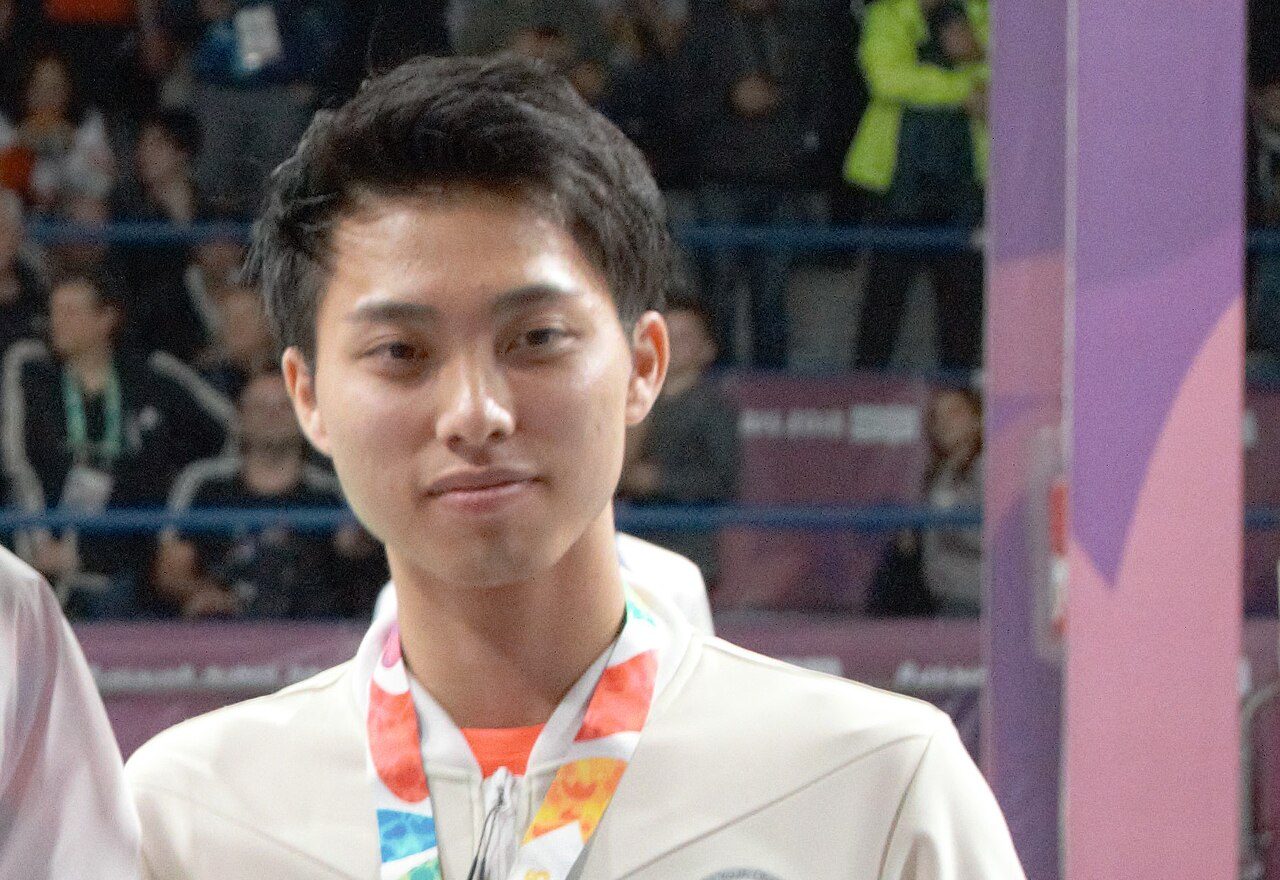
Photo: BugWarp, CC BY-SA 4.0, via Wikimedia Commons