At 16 years and a little over three months, Akane Yamaguchi walked into the 2013 Japan Open and left with a record. She became the youngest winner of a BWF Super Series title, a result that said almost everything about the player she was becoming: small in stature, relentless in movement, and unusually calm in long, punishing rallies.
That win did not come out of nowhere. It was the early public breakthrough of a career built in Katsuyama, Fukui, where Yamaguchi was born on June 6, 1997, and introduced to badminton by her family. The youngest of three children, she grew up hitting with her two older brothers and learning the game under her father at Heisenji Sports Club. Losing to her brothers, she has said, pushed her to improve. So did a health challenge. As a child, she was diagnosed with asthma, and she took swimming lessons, especially backstroke, through elementary school to strengthen her body and improve balance.
From Fukui prospect to junior world champion
She started playing competitively at a very young age, and the junior results arrived quickly. In 2012, still only 15, she joined Japan’s national team and announced herself on the junior circuit with a silver medal at the BWF World Junior Championships. That same season, she won bronze in girls’ singles at the Asian Junior Championships and helped Japan take mixed team gold there.
The next two years confirmed that this was more than a promising run. Yamaguchi won back-to-back World Junior Championships in 2013 and 2014, a rare feat in girls’ singles. She also claimed the 2014 Asian Junior title and took silver at the Youth Olympic Games in Nanjing. The BWF named her Most Promising Player of the Year in both 2013 and 2014, recognition that matched what coaches and opponents were already seeing: extraordinary speed, unusual balance, and a competitive stubbornness that made rallies feel longer than they should have been.
The teenage breakthrough on the senior tour
Her senior international debut came in 2012, but the real shift happened a year later. At the Japan Open in Tokyo, Yamaguchi beat more established players and became the youngest Super Series champion in history at the time. For Japanese women’s singles, it was a landmark moment. Japan had produced strong players before, but this felt different. Here was a teenager who could take control of matches without overwhelming power, relying instead on anticipation, retrieval and timing.
That style would become her signature. At 1.56 meters, she was never going to dominate with reach alone. Instead, she made the court feel smaller for herself and larger for everyone else.
Turning promise into a title-winning career
The next stage of her career was about proving that one breakthrough title was not the ceiling. She began stacking wins on the senior circuit and, just as importantly, learning how to stay near the top.
In 2016, she won the Korea Open and the Denmark Open, two titles that showed she could handle different conditions and different kinds of opponents. She also reached the quarterfinals at the Rio Olympics, a strong run even if it stopped short of a medal.
Then came a particularly rich spell. In 2017, she won the German Open, the China Open and the Dubai World Superseries Finals. She also helped Japan win the Asia Mixed Team Championships. By then, she was no longer the teenager surprising the field. She was one of the players others had to plan for.
In 2018, she reached the All England final and won bronze at the World Championships. On April 19 of that year, she became the first Japanese singles player to reach world No. 1. That ranking milestone mattered well beyond her own résumé. It marked a shift in what Japanese singles badminton had shown it could produce.
Team success ran alongside the individual rise. Yamaguchi was part of Japan’s Uber Cup-winning squad in 2018 and also contributed to medal-winning Sudirman Cup campaigns, including silver finishes in 2015 and 2019 and bronze in 2017. She was also on Japan’s gold-medal teams at the 2018 Asian Games mixed team event and the 2018 Asia Team Championships.
Her individual title list kept growing. She won the French Open in 2018, then added the German Open, Japan Open and Indonesia Masters in 2019. In early 2020, she took the Thailand Masters.
World champion, and then again
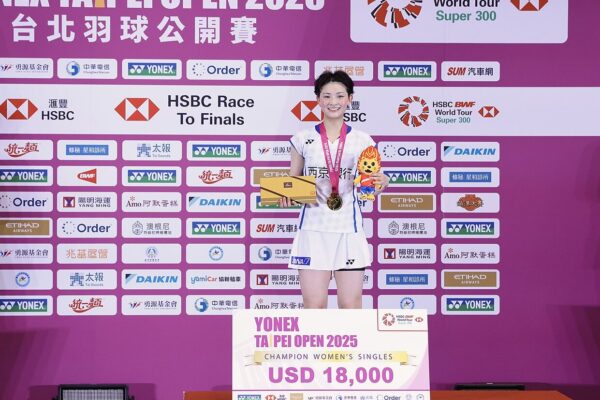
The defining section of the Akane Yamaguchi career came at the World Championships. In 2021, she won the women’s singles title in Huelva, beating Tai Tzu-ying in the final. A year later in Tokyo, she defended the title by defeating Chen Yufei. Those back-to-back gold medals placed her in a different category: not just a regular title contender, but a player who could peak on the sport’s biggest individual stage.
She was strong elsewhere in that period too. In 2021, she won the Denmark Open and French Open, and Japan finished runner-up in both the Uber Cup and Sudirman Cup. In 2022, she captured the All England Open and the BWF World Tour Finals, then was named BWF Female Player of the Year.
What stood out in those seasons was not only the silverware. It was the consistency. Yamaguchi kept reaching the late rounds of major events, week after week, in a discipline where margins are thin and styles clash sharply. She could outlast attacking players, absorb pressure from power hitters, and still find ways to change pace when a match needed it.
At the 2023 World Championships, she added another bronze medal, further underlining how long she had stayed in the medal conversation.
Later titles and the Olympic gap in the record
Even after the two world titles, the tournament wins kept coming. In 2023, she won the Malaysia Open, German Open, Malaysia Masters, Canada Open and Hong Kong Open. In 2024, she lifted the Japan Open and Kumamoto Masters Japan titles.
Her Olympic record, though, has remained slightly separate from the rest of her achievements. She reached the quarterfinals in Rio in 2016 and again at the Tokyo Olympics, held in 2021 after postponement. For many players, two Olympic quarterfinals would be a defining line on the résumé. For Yamaguchi, they sit beside a body of work that is even stronger at the World Championships and across the World Tour.
Rivalries, numbers and the shape of her era
Every top player is partly defined by the opponents who keep appearing across draws, and Yamaguchi’s era has been rich in those matchups. PV Sindhu was one of the most significant. Their meetings often turned into tests of patience versus reach, defense versus steep attack.
Another important rivalry developed with An Se-young. In 2023 alone, they met repeatedly in major finals, a sign of how women’s singles had shifted into a contest between players who could combine endurance with precision. Those matches were rarely simple. They asked for clean movement, tactical discipline and the ability to stay composed deep into a third game.
The broader numbers back up her place among the leading players of her generation. Her title haul includes multiple Japan Open crowns, victories at the Denmark Open and French Open, an All England title, World Tour Finals success and two World Championship gold medals. She also became the first Japanese singles player to reach world No. 1, a milestone that remains one of the clearest markers of her impact.
Why her game works
The easiest way to describe Yamaguchi is to start with movement. She is right-handed, but that detail matters less than how she covers the court. Few players have matched her ability to retrieve one more shot, reset a rally and then turn defense into attack almost without warning.
Her game is built on speed, balance and timing. She can stay patient through long exchanges, then take the shuttle early at the net or redirect a rally with a disguised angle. Because she is shorter than many of her rivals, her footwork has always had to be exact. It usually is. She gets low quickly, recovers fast, and rarely looks rushed even when the rally is moving at full pace.
That is why the discussion around Akane Yamaguchi height has always felt slightly beside the point. Yes, she stands 1.56 m, or 5 ft 1 in. But her career has long been a rebuttal to the idea that women’s singles belongs only to taller, heavier hitters. She built an elite record through anticipation, stamina and technical discipline.
Off the court: quiet habits, clear identity
Away from tournaments, her story remains closely tied to Fukui. She has trained there under coach Harutoshi Kobayashi, and her badminton roots are still strongly associated with the place where she grew up.
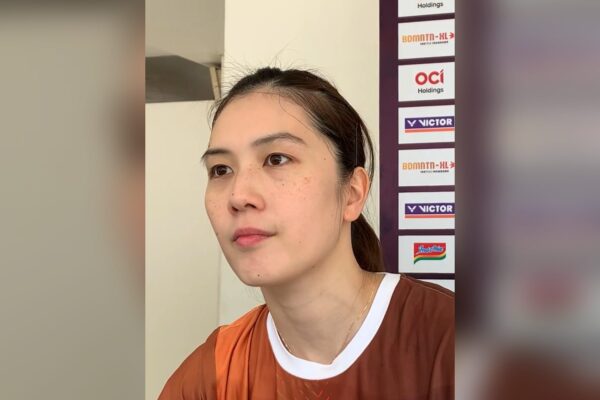
Publicly, Yamaguchi has often come across as reserved rather than showy. Reports and profile pieces have described her as shy on camera and interested in anime, manga, games and nanoblocks. Those details are not central to her results, but they do help fill out the picture of someone whose public image has usually been understated.
The same is true of her on-court manner. She is widely noted for being tidy and composed between points, not given to taunting or excessive celebration. In badminton, where rhythm and temperament can shape a match, that calm has become part of how people recognize her.
Her equipment sponsor has long been Yonex.
FAQ
How old is Akane Yamaguchi?
Akane Yamaguchi was born on June 6, 1997.
What is Akane Yamaguchi’s height?
She is 1.56 meters tall, or 5 feet 1 inch.
Has Akane Yamaguchi been world No. 1?
Yes. She first reached world No. 1 in women’s singles on April 19, 2018, becoming the first Japanese singles player to do so.
How many World Championships has Akane Yamaguchi won?
She has won two BWF World Championship women’s singles titles, in 2021 and 2022.
What is Akane Yamaguchi’s playing style?
She is known for exceptional court coverage, speed, balance, strong defense and the ability to extend rallies until openings appear.
Where is Akane Yamaguchi from?
She was born in Katsuyama, in Fukui Prefecture, Japan.
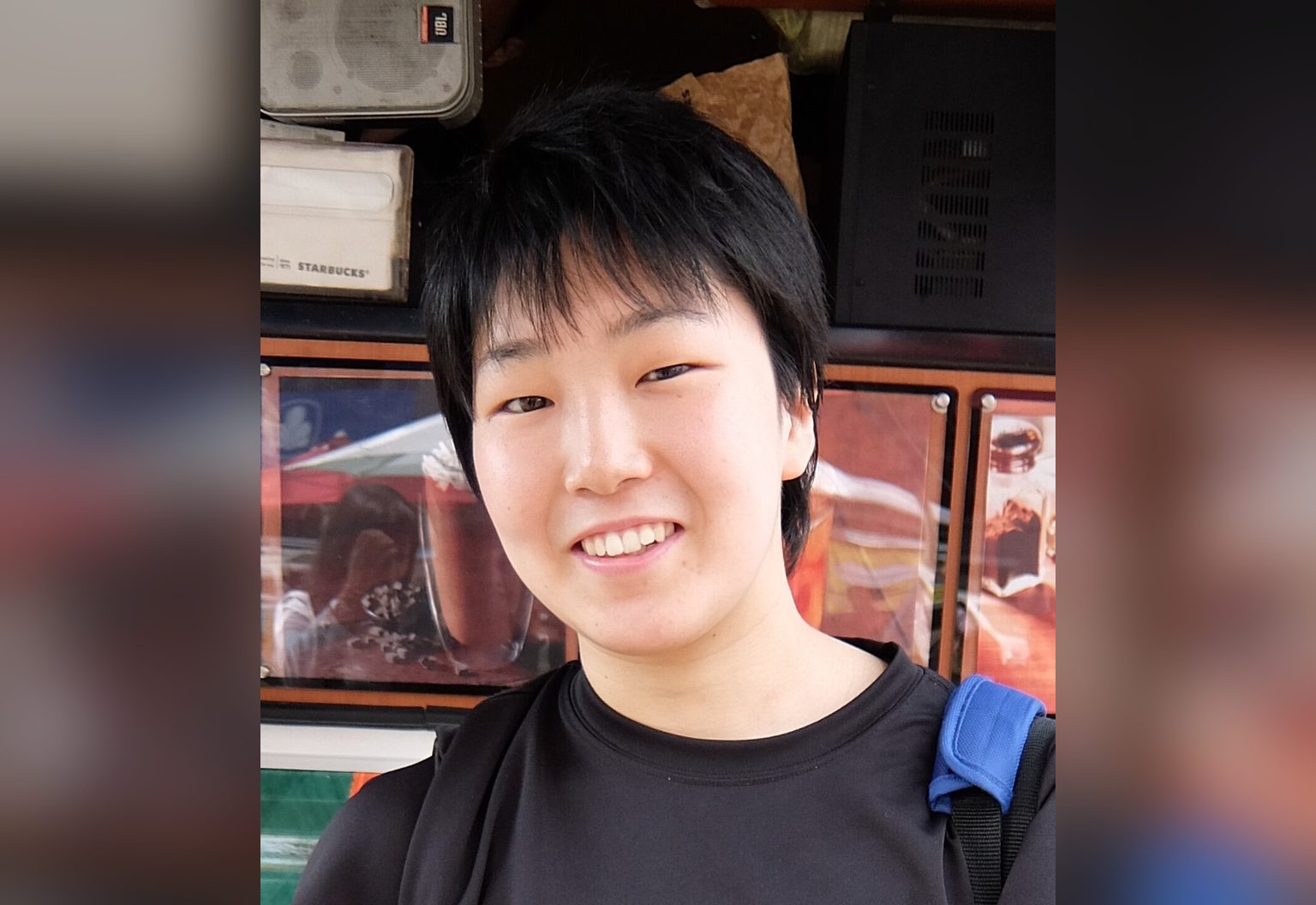
Photo: Tan (14 15 puzzle), CC BY-SA 4.0, via Wikimedia Commons