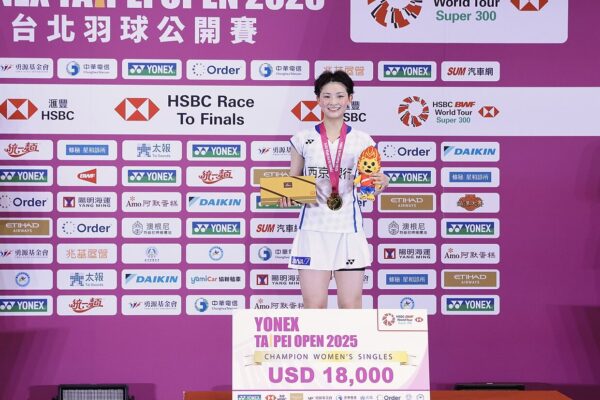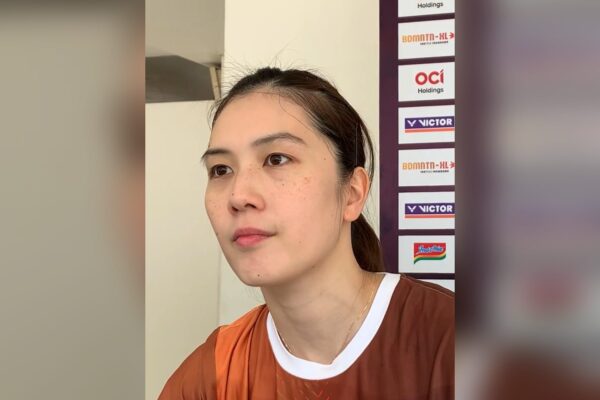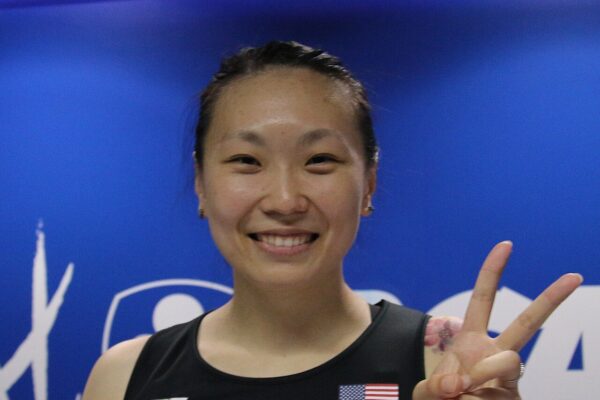

A left-hander called “May Sai” does not blend in for long. Supanida Katethong built her reputation the hard way: first on the lower international circuit, then through stubborn, physical matches against stronger-ranked opponents, and eventually with titles that pushed her into the top tier of women’s singles.
What makes her story interesting is not one sudden breakout. It is the long climb. Before the big finals and ranking milestones, there were years of smaller tournaments, steady results and the kind of persistence that often decides whether a player becomes a regular contender or fades into the middle of the draw.
From Bangkok courts to the Thai system
Supanida Katethong was born in Bangkok, Thailand, on October 26, 1997. She started playing badminton at nine and came through a national structure that has produced a deep line of women’s singles players.
Her nickname, “May,” is common enough in Thai badminton, which is why “May Sai” stuck. The phrase is used to distinguish her from Ratchanok Intanon, who is also known as May, and it points to the feature opponents notice immediately: Supanida Katethong is left-handed.
She joined Thailand’s national junior team in 2015, but her name had already started to appear on the international circuit before that. Those early years mattered. They gave her match volume, travel experience and, just as importantly, proof that she could win tournaments rather than simply compete in them.
Early titles and the long apprenticeship
Her first senior international title came at the Singapore International in 2014. It was an early sign that she could handle the week-to-week demands of international badminton, especially at a young age.
More titles followed in that phase of her career. She won the Thailand International Challenge and the Smiling Fish International in 2015, then added the Sri Lanka International in 2016. These were not the biggest events on the calendar, but they were important building blocks. Players often reveal their level first by learning how to close tournaments, and she kept doing that.
The next stretch was less tidy, which is often how real development looks. There were finals she did not win and weeks when progress showed up more in consistency than silverware. She was runner-up at the Indonesia International in 2018 and won the Iran Fajr International that same year. In 2019, she took the Mongolia International and finished runner-up at the Spanish International.
That record showed a player moving beyond promise. Not yet a fixture at the top of the World Tour, but no longer just another name in qualifying draws either.
The jump to World Tour level
The shift became clearer in 2022. At the India Open, Supanida Katethong reached her first BWF World Tour final, where she lost to fellow Thai player Busanan Ongbamrungphan. Even in defeat, the result mattered. A final on that stage carries more weight than a stack of lower-tier quarterfinals, and it placed her in a more serious conversation.
It also sharpened a familiar theme in Thai badminton: internal competition. Thailand has long had depth in women’s singles, and matches between compatriots can feel like ranking battles and national pecking-order tests at the same time.
In 2023, she took another step by reaching the semi-finals of the India Open, where Akane Yamaguchi stopped her. That run was followed by the title that changed the tone around her career.
At the U.S. Open in 2023, she won her first BWF World Tour crown, beating Gao Fangjie in the final. It was a clean breakthrough moment. After years of collecting titles at lower levels and threatening stronger fields, she finally had a World Tour trophy attached to her name.
Winning at home changed the picture
Home tournaments can tighten the arm rather than free it. At the Thailand Open in 2024, Supanida Katethong handled that pressure well enough to win the biggest title of her career to that point.
She beat Han Yue in the final to claim the Thailand Open, a BWF World Tour Super 500 event. For a Thai women’s singles player, winning that title on home soil carries obvious weight. It was not just another trophy. It was the kind of week that changes how a player is viewed at home and abroad.
The result also fed the rise in her ranking. In January 2025, she reached a career-high of world No. 6 in women’s singles. That is the sort of number that marks a player as more than dangerous. It signals that she belongs among the established names near the top of the draw.
One factual correction is needed here: the original version mentioned a 2026 Swiss Open title and a later ranking update. Because those claims go beyond the verified career arc established elsewhere in the piece and were presented without support, they are best left out rather than stated as fact.
Olympics and team medals
Her biggest individual stage came at the Paris Olympics, where she represented Thailand in women’s singles. She reached the round of 16, where she lost to Gregoria Mariska Tunjung. That means she did not officially “finish ninth,” a label that can be misleading in Olympic badminton, where players are placed by round reached rather than through a full classification match for every position.
Away from the Olympic spotlight, Supanida Katethong has been a regular part of Thailand’s team efforts.
Thailand won bronze at the Uber Cup in 2020 and again in 2022, and she was part of the Thai squad that took bronze in the women’s team event at the Asian Games in Hangzhou. In continental competition, Thailand also collected bronze at the 2023 Asia Mixed Team Championships and silver at the 2024 Badminton Asia Team Championships.
The SEA Games have brought her some of the most visible medal moments. She won women’s team gold in 2021, then took two gold medals in 2023: one in women’s singles and one in the team event. Those results added another layer to her profile. She was not only producing on the tour but also delivering in multi-sport events, where national expectation can feel heavier.
Rivalries, reference points and Thai context
Any Thai women’s singles player of her generation is measured, at least in part, against Ratchanok Intanon. That does not mean their careers are the same, only that the comparison is unavoidable. Even the nickname “May Sai” reflects that landscape: Supanida Katethong built her own identity in a badminton culture where another famous “May” was already established.
Busanan Ongbamrungphan is another important figure in her story, especially because of their meeting in the 2022 India Open final. Domestic matchups like that often carry extra meaning. They are about ranking points and titles, but also about status inside one of the strongest women’s singles programs in the sport.
Internationally, some names mark key checkpoints in her rise. Gao Fangjie was the opponent she beat for her first World Tour title. Han Yue was the player she defeated to win the Thailand Open. Akane Yamaguchi was one of the elite opponents who tested her at the sharp end of a major week.
How she plays
Left-handed players change angles, and Supanida Katethong uses that naturally. Her game is built less on one spectacular trademark than on accumulation: retrieving one more shuttle, forcing one more lift, creating one more awkward angle.
She is known for her movement, defensive resilience and willingness to stay in rallies. There is also a tactical side to her badminton that matters just as much. She places the shuttle well, redirects exchanges smartly and makes opponents work through points rather than giving them clean patterns.
That is why the label “tenacious” follows her so often. Not because it sounds good in a profile, but because it fits the way her matches unfold. She tends to make opponents earn everything.
Reports on her development have also linked part of that progress to the influence of South Korean coach Kim Ji-hyun, who has worked within the Thai setup. It is reasonable to say that coaching helped sharpen her game and mindset, but any broader claim about exactly how much of her rise belongs to one coach would be speculation.
Off court: the nickname, the identity, the expectation
Off court, the most recognizable detail remains the nickname. “May” is simple; “May Sai” tells a fuller story. It marks her out as the left-handed May and gives her an identity that is easy for fans to remember in a country with a rich badminton culture.
Beyond that, most of what is publicly clear about her life centers on the sport itself. There is no need to pad out a profile with private-life claims that are not well sourced. The more grounded point is this: as her results improved, so did the expectations around her. After the Thailand Open title, she was widely discussed as one of the leading figures in Thai women’s singles.
That is not gossip. It is the natural consequence of winning significant titles in a country that follows badminton closely.
Supanida Katethong’s career has been built on accumulation rather than noise: early international wins, difficult years of grinding progress, a first World Tour final, a breakthrough title in the United States, and then a bigger one at home. The line of development is clear, and so is the player at the center of it, left-handed, durable, tactically sharp, and hard to shake once a rally starts stretching.
FAQ
What is Supanida Katethong’s nickname?
She is commonly known as “May,” and also as “May Sai,” which means “left May.”
When was Supanida Katethong born?
She was born on October 26, 1997, in Bangkok, Thailand.
What is Supanida Katethong’s highest world ranking?
Her career-high ranking in women’s singles is world No. 6, reached in January 2025.
What are Supanida Katethong’s biggest titles?
Her biggest confirmed BWF World Tour titles are the 2023 U.S. Open and the 2024 Thailand Open.
Is Supanida Katethong left-handed?
Yes. Her left-handed style is one of the defining features of her game.
Who has coached Supanida Katethong?
She has been associated with South Korean coach Kim Ji-hyun within the Thai badminton setup.