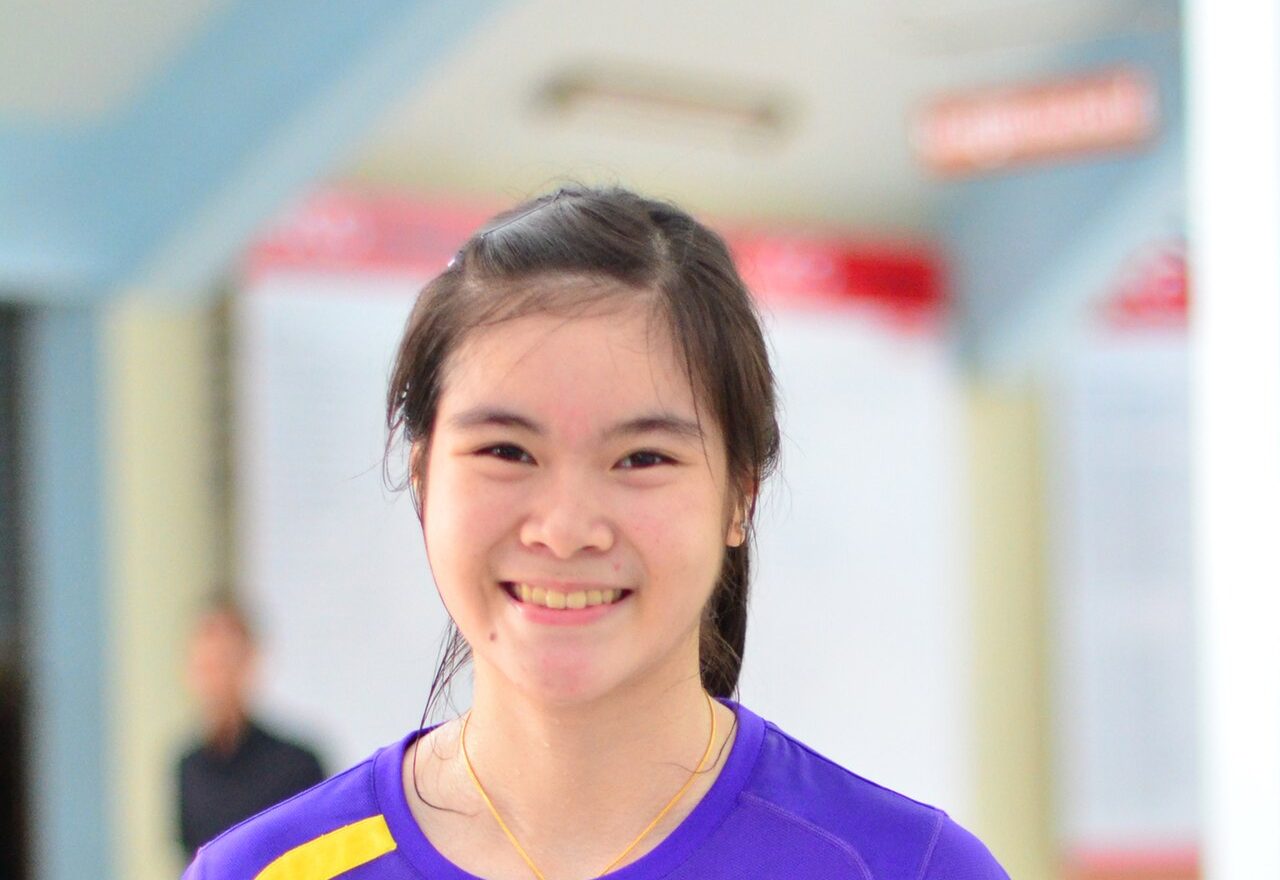
A title arrived almost before the introductions were over. In 2012, still a teenager, Busanan Ongbamrungphan stepped into senior international badminton and won the Malaysia Grand Prix Gold, a result that immediately marked her out as more than another promising junior from Thailand.
That first splash did not turn into overnight stardom, and that is part of what makes her career interesting. Busanan has built it the hard way: over seasons, not headlines. Her story is one of steady accumulation, titles in different countries, long runs in team events, a place in Thailand’s deep women’s singles tradition, and eventually a rise into the world’s top 10.
Early years in Nonthaburi
Born on March 22, 1996, in Nonthaburi, Busanan grew up in a badminton culture strong enough to sharpen talent early and test it often. She started playing as a child, and by the time she moved into serious competition, the outlines of her game were already visible: clean timing, patient construction, and a preference for control over chaos.
Her nickname, Cream, is widely used in badminton circles, but on court there has usually been little softness about the way she competes. Even as a junior, she was known less for dramatic flair than for structure and composure.
Before her senior breakthrough, she had already put together a solid junior record. She won bronze in girls’ singles at the Asian Junior Championships in 2012, then added silver at the 2013 Asian Youth Games and bronze at the 2013 BWF World Junior Championships. Those results did not make her the only young Thai hope, but they did place her firmly in the conversation.
Around that same period, she moved into the national-team setup, an important step in a country where women’s singles has rarely lacked internal competition.
The debut that changed the tone
Some players spend their first senior seasons learning how large the gap is. Busanan crossed that line with a trophy in her hands.
Her win at the 2012 Malaysia Grand Prix Gold remains one of the sharpest opening statements of any Thai women’s singles career in that era. It suggested not just talent, but readiness. She was not arriving to make up numbers; she was arriving with a game sturdy enough to survive full tournament weeks against experienced opposition.
That title was followed by another at the 2013 Dutch Open, and later by wins at the 2016 Indonesian Masters and the 2017 Thailand Masters. Those four Grand Prix-level titles gave shape to the first phase of her career. They also showed a pattern that would stay with her: she was often at her best when matches became tactical and required discipline over several rounds.
There was some doubles activity early on too. In women’s doubles, she partnered Porntip Buranaprasertsuk, and the pair reached a ranking high of No. 107. But singles was clearly where her long-term future sat.
Finding her place in Thailand’s singles depth
Thai women’s badminton has produced wave after wave of high-level players, which can be both an advantage and a burden. The standards are high, the competition for major events is constant, and even established names have to keep proving themselves.
Busanan’s answer was consistency.
At the SEA Games, she won women’s singles gold in 2015, one of the most important individual titles of her career. She was also part of Thailand teams that took women’s team gold at the 2015, 2017 and 2019 SEA Games. Those medals matter because they place her not only as an individual tour player, but as a reliable piece in the national program over several cycles.
Her contribution in major team events continued beyond Southeast Asia. Thailand won bronze at the Sudirman Cup in 2017 and 2019, silver at the Uber Cup in 2018, and bronze at the Uber Cup in 2020 and 2022. At the Asian Games, the Thai women’s team took bronze in 2018 and 2022.
That list says something simple but important: Busanan stayed relevant. In a discipline where form can swing quickly and younger challengers arrive every season, she remained trusted in the biggest team weeks.
World Tour wins and a late-career climb
The next chapter of her career came on the BWF World Tour, where she added a new layer to her résumé.
She won the Orléans Masters in 2021, then the Hylo Open later that same year. In 2022, she took the India Open title. In 2024, she added the US Open, another reminder that her game traveled well and that she could still turn strong weeks into trophies well beyond her breakthrough years.
Those wins helped drive her to the highest ranking of her career: world No. 9 in women’s singles, reached in January 2025. For a player whose reputation has often been built on steadiness rather than noise, that top-10 rise felt earned in exactly the same way the rest of her career has, through accumulation, resilience and repeated deep runs.
She also appeared at the Tokyo Olympics, held in 2021 after the delay from 2020. She did not win a medal there, but the appearance itself placed her on the sport’s biggest stage and underlined her standing within Thai badminton.
Adjusting the setup
A significant change came when she moved into an independent training arrangement in 2022. Reports around Thai badminton linked that shift to a more focused push within the Olympic qualification cycle. She has also been associated with Bangpho Badminton Club and coach Ice in that phase of her career.
For established players, changes like that are rarely cosmetic. They usually reflect a search for sharper details: workload, match preparation, recovery, or simply a different daily environment. In Busanan’s case, the move coincided with a period in which she remained competitive at a high level and continued to collect strong results, including the 2024 US Open.
The matches that framed her level
Every long singles career is partly told through recurring opponents. For Busanan, Akane Yamaguchi is one of those names.
They have met often enough for the matchup to become part of her competitive landscape, and two finals stand out. Busanan finished runner-up at the 2024 Japan Open, losing to Yamaguchi, and she was also runner-up at the 2024 Arctic Open, again with Yamaguchi on the other side of the net.
Those defeats are worth noting not because they diminish her record, but because they show the level she kept reaching. To make finals against one of the era’s most accomplished players is its own measure of staying power.
How Busanan Ongbamrungphan plays
At 1.68 m, Busanan Ongbamrungphan has never depended on a single overwhelming physical trait. Her badminton is built more carefully than that.
She is a right-handed women’s singles player whose game leans on timing, placement and defensive control. She absorbs pressure well, uses the full court intelligently, and is comfortable extending rallies until the opening appears. When she attacks, it is often through construction rather than sudden recklessness.
That makes her a difficult opponent to rush. She tends to keep matches on her terms when she is playing well: measured tempo, clean length, and enough touch at the net to stop rallies from becoming one-dimensional. Her on-court manner fits that style. She is usually calm, rarely theatrical, and often looks as if she is solving a match point by point rather than trying to overpower it.
In a sport that often celebrates explosive force, her game has long offered another model, one based on order, feel and persistence.
Off the court
Away from tournaments, the outline is quieter but still distinctive. Busanan has studied at Chulalongkorn University, where she completed a bachelor’s degree in sport science, a detail that fits neatly with the thoughtful, technical shape of her career.
She has also been linked in public profiles to an interest in Lego, a small but memorable detail that gives some personality to a player often seen in the highly structured world of elite competition. It is the kind of hobby that suggests patience and focus, two qualities that have never been hard to spot in her badminton.
Commercially, her public sponsorship footprint has been relatively modest compared with some bigger global names, though she has appeared in branded badminton content, including Uber’s “Performance of the Day” feature.
As for her private life, there is no widely confirmed public statement from Busanan herself about a partner or relationship status. Any claims on dating-profile websites should be treated as unverified secondary reports rather than established fact.
FAQ
What is Busanan Ongbamrungphan’s highest world ranking?
Her career-high ranking in women’s singles is world No. 9, reached in January 2025.
Did Busanan Ongbamrungphan win an Olympic medal?
No. She competed at the Tokyo Olympics in 2021 but did not win a medal.
What are Busanan Ongbamrungphan’s biggest titles?
Her key titles include the 2012 Malaysia Grand Prix Gold, the 2017 Thailand Masters, the 2021 Orléans Masters, the 2021 Hylo Open, the 2022 India Open and the 2024 US Open.
Where is Busanan Ongbamrungphan from?
She was born in Nonthaburi, Thailand.
What is Busanan Ongbamrungphan’s playing style?
She is known for a controlled, balanced women’s singles game built on timing, rally management, defense and precise placement.
Is Busanan Ongbamrungphan still active?
Yes. She remains an active international player.
Photo: B20180, CC BY-SA 3.0, via Wikimedia Commons