At 14, Yeo Jia Min was already walking into the Singapore Open qualifying draw, still young enough to be grouped with school-age prospects but already testing herself against senior professionals. That early exposure says a lot about her career. Nothing about it was rushed, but very little of it was hidden either. Her development happened in public, step by step, from precocious junior to established presence on the international circuit.
Born in Singapore on February 1, 1999, Yeo picked up badminton as a child, first hitting with her parents before the game turned serious. She later trained under Tan Eng Han at Assumption English School, joined the national intermediate squad in 2011 and moved up to the senior team in 2014. She also spent a short period at Nanyang Girls’ High School before transferring to Singapore Sports School, a move that placed badminton at the center of her daily routine.
There was early evidence that she was ahead of her age group. She won the national under-11 title in 2008 and followed it with the under-11 singles crown at the Li-Ning Youth International in 2009. In 2012, still only in her early teens, she captured the Singapore national under-19 title. A year later, she won the girls’ singles title at the Badminton Asia U15 Championships, another sign that she was moving faster than the usual junior timetable.
A junior career that kept accelerating
The pattern through Yeo’s teenage years was clear: each season brought a stronger field and a bigger test. In 2015, she won the Badminton Asia U17 girls’ singles title and also took the doubles title with Crystal Wong. By then she was no longer just a promising local player. She was building a junior résumé with real continental weight.
Her best junior season came in 2017. She won the Dutch Junior Open, claimed bronze at the Asian Junior Championships, and rose to world junior No. 1 in girls’ singles in June. That made her the first Singaporean to top the junior world ranking in the discipline, a milestone that mattered in a country where women’s singles had rarely produced sustained global contenders.
Even then, the interesting part of her story was not simply the results list. She was balancing two tracks at once: still eligible for junior events, but already spending time in senior tournaments where the rallies were longer, the pace heavier and the punishment for loose play immediate.
First senior title, then proof it was no fluke
Her senior international debut came in 2013, when she entered the Singapore Open qualifiers. The breakthrough title arrived three years later at the 2016 Vietnam Open Grand Prix. For many young players, the first senior trophy is a hint. In Yeo’s case, it looked more like confirmation. She had the patience to construct points and enough nerve to finish close matches.
She returned to the Vietnam Open in 2018 and won again, this time under the BWF World Tour structure as a Super 100 event. In 2019, she added another World Tour title at the Hyderabad Open, also a Super 100. Those wins did not instantly place her among the elite, but they did establish a pattern: she was no longer a junior standout trying to adapt. She was becoming a reliable senior tournament winner.
The 2019 World Championships changed the conversation
One week can alter how a player is viewed, and for Yeo that week came at the 2019 BWF World Championships in Basel.
She reached the quarter-finals, becoming the first Singaporean woman to do so in the tournament’s history. The standout result was her win over Japan’s Akane Yamaguchi, who arrived as the reigning world champion and one of the sport’s most difficult players to break down. Yeo did not stumble into that run. She played with control, took her chances early in rallies and handled the occasion with unusual calm.
That quarter-final finish remains one of the defining results of her career because it showed something more than upset potential. It showed that on a major stage, against top-level opposition, she could impose a match rather than simply survive one.
Olympic disappointment first, then Olympic progress
The Olympic story took longer.
At the Tokyo Games, held in 2021 after the pandemic delay, Yeo exited in the group stage. The aftermath was raw. She became emotional in front of the media and apologized, a moment that revealed how heavily she carried expectations. It was not a career-defining defeat, but it did strip away the polished language athletes often use after losses. The disappointment was plain.
She responded with a steadier period that included a medal at a major multi-sport event. At the 2022 Commonwealth Games in Birmingham, she won bronze in women’s singles and also took bronze in the mixed team event. Those results mattered for Singapore, and for Yeo they were a reminder that progress in badminton is not always linear. Sometimes it comes as recovery, not surge.
Her contribution to team events has also been consistent across the region. She was part of Singapore sides that won SEA Games women’s team bronze multiple times, including in 2015, 2017, 2019, 2021 and 2023. She also represented the country at the Sudirman Cup.
Rebuilding momentum and pushing higher
The seasons after Tokyo were less about one dramatic leap and more about accumulation. She won the Polish Open in 2023, not the biggest title of her career but a useful marker that her level remained intact between larger championship targets.
Then came another Olympic step forward. At Paris 2024, Yeo reached the round of 16, making her the first Singaporean women’s singles player to reach the Olympic knockout stage since 2012. It was not a medal run, but it was a meaningful advance from Tokyo and a fair reflection of where she had moved in the sport: dangerous, seasoned and difficult to dismiss early.
Around that period she also produced another headline win by beating P. V. Sindhu at the China Masters. Results like that fit the shape of her career. She has not built her reputation on dominating the tour week after week, but she has repeatedly shown she can trouble, and beat, major names when her game clicks.
Ranking peak and a title that matched it
Rankings can flatter or mislead, but Yeo’s rise to world No. 11 in women’s singles in May 2025 reflected a genuine body of work. By then she had been a junior world No. 1, a World Championships quarter-finalist, a Commonwealth Games medallist and an Olympic last-16 player. The ranking was not a sudden spike. It was the scoreboard catching up with the career.
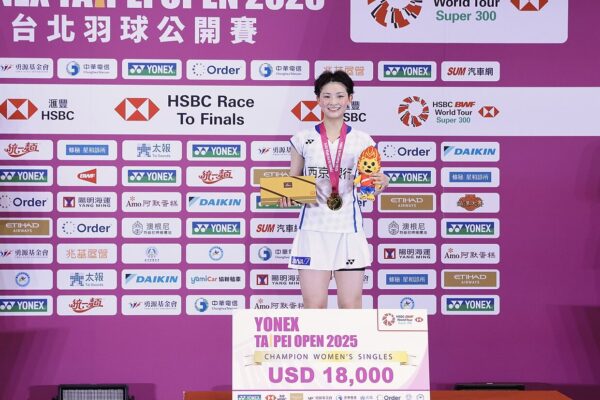
She added another important title that year by winning the German Open, a BWF World Tour Super 300 event. That was one of the strongest senior titles of her career and a useful measure of her staying power. Plenty of players break through young; fewer keep adding meaningful results after the first wave of attention has passed.
Her senior title list includes the Vietnam Open Grand Prix in 2016, the Vietnam Open Super 100 in 2018, the Hyderabad Open Super 100 in 2019, the Polish Open in 2023 and the German Open Super 300 in 2025.
How Yeo Jia Min plays
Her game is often described as consistent, but that only tells half the story. What makes Yeo awkward to face is the way she mixes control with variation. She is not the tallest player on tour at 1.64m, so her badminton has never been built around simple physical intimidation. Instead, she relies on timing, changes of pace and the ability to adjust to different opponents.
That adaptability helps explain some of her best wins. Against players who want long, structured rallies, she can disrupt rhythm. Against heavier hitters, she can redirect play and force them to generate one more attack. The victories over Akane Yamaguchi and P. V. Sindhu did not come from one fixed pattern; they came from reading the match and changing with it.
Off court: family roots, faith and life beyond tournaments
Away from competition, Yeo’s story remains closely tied to Singapore’s sports system. Although her parents are Malaysian permanent residents, she grew up in Singapore and became a Singapore citizen as a child. Her badminton life started at home, then moved through school competition, national squads and the high-performance structure that shaped much of her career.
Faith is part of her public profile too. Yeo has spoken about being a Christian and about how faith helps her deal with setbacks, a detail that adds context to some of the more emotional moments in her career without turning them into drama.
In her personal life, she married former Singapore national swimmer Pang Sheng Jun. Because this is a private-life detail, it is best kept simple: the marriage has been publicly reported, and both come from Singapore’s national sports scene.
Commercially, she has been associated with Yonex for equipment and apparel and has also had a partnership with MARIGOLD. Like many Singapore athletes, her development has been supported through a wider network that includes national sports bodies and private funding. Prize money offers only a partial picture of a badminton career, but it underlines the reality of the sport: progress is built through constant travel, repeated tournament weeks and years of incremental gains rather than one life-changing payday.
She has also twice received The Straits Times’ Star of the Month award.
FAQ
Who is Yeo Jia Min?
Yeo Jia Min is a Singaporean badminton player who competes in women’s singles.
What is Yeo Jia Min’s highest world ranking?
Her career-high ranking is world No. 11 in women’s singles, reached in May 2025.
Did Yeo Jia Min win a medal at the Olympics?
No. Her best Olympic result is reaching the round of 16 at Paris 2024.
When did Yeo Jia Min become world junior No. 1?
She reached world junior No. 1 in girls’ singles in June 2017.
What are Yeo Jia Min’s biggest career results?
Among the biggest are her 2019 World Championships quarter-final run, bronze at the 2022 Commonwealth Games, and the 2025 German Open title.
Is Yeo Jia Min married?
Yes. Her marriage to former national swimmer Pang Sheng Jun has been publicly reported.
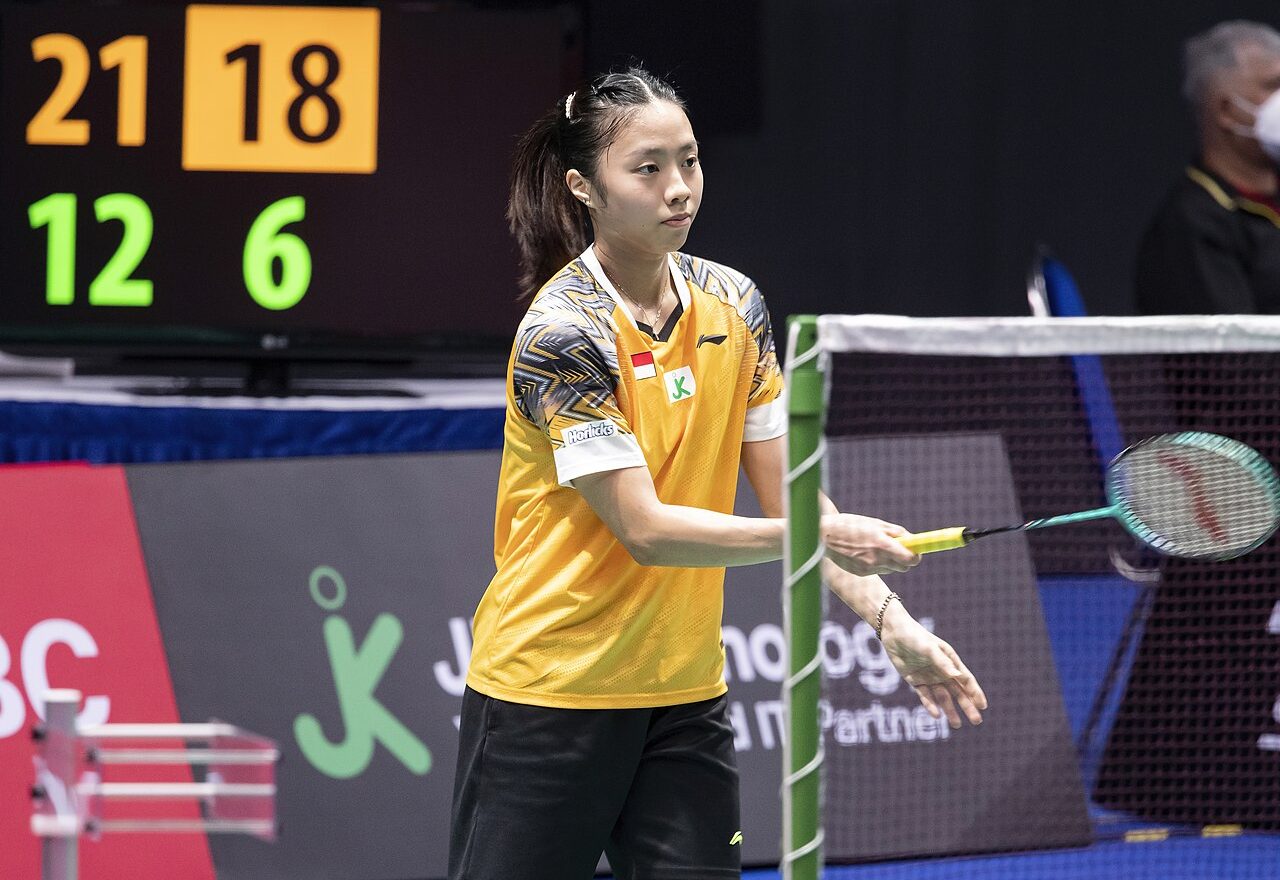
Photo: Chensiyuan, CC BY-SA 4.0, via Wikimedia Commons