A jump smash, a public split with the national association, and an Olympic bronze: Lee Zii Jia’s career has rarely moved in a straight line. That is part of what makes him such a compelling figure in Malaysian badminton. He has won on some of the sport’s biggest stages, climbed as high as world No. 2, and chosen a path that few elite singles players from major badminton nations take, building his own independent setup under Team LZJ.
From Alor Setar to the national pathway
Born on March 29, 1998, in Alor Setar, Kedah, Lee grew up in a family where sport was already part of daily life. His parents, Lee Chee Hin and Leow Siet Peng, were school teachers and former basketball players, and that athletic background showed early. He first picked up badminton as a child and developed quickly enough in Kedah to move into Malaysia’s structured development system.
A key step came when he entered the Bukit Jalil Sports School pathway, long one of the country’s main production lines for elite players. By his mid-teens, he was already being discussed as one of the more promising boys in Malaysian singles.
His junior years brought results that backed up that reputation. In 2015, he won the boys’ singles title at the Perak and Selangor Opens. In 2016, he reached the podium at the BWF World Junior Championships with bronze in boys’ singles and also helped Malaysia to silver in the mixed team event. That same season, he began making appearances on the senior international circuit, including at the Belgium International.
The first senior breakthrough
For a while, Lee looked like what many top prospects look like: talented, dangerous, but still searching for a result that would move him into a different bracket. That changed in 2018 at the Chinese Taipei Open.
He beat Chou Tien-chen in the final to win the title, his first major senior crown at BWF World Tour level. The result mattered beyond the week itself. It made him the first Malaysian men’s singles player other than Lee Chong Wei to win a top-tier international title in that discipline in several years, and it gave Malaysian badminton a fresh name to follow in a category long defined by one man.
That early stage of his senior career also included medals in team competition. At the SEA Games, he was part of Malaysian squads that won men’s team silver, and he later added a men’s singles gold at the regional level.
All England and a bigger stage
The tournament that truly changed the scale of the conversation around him was the 2021 All England Open.
Lee arrived in Birmingham as a dangerous outsider and left as champion. On the way, he beat Kento Momota in the quarter-finals, then overcame Viktor Axelsen 30-29, 20-22, 21-9 in the final. It was a high-level, high-pressure performance, and it remains one of the clearest statements of his career: he could beat the best players in the world over a full week at one of badminton’s most prestigious events.
For Malaysia, the win carried extra weight. The men’s singles title at the All England has a special place in the country’s badminton history, and Lee’s victory inevitably brought comparisons with earlier standard-bearers. He has generally pushed back against being cast as anyone’s successor, which is understandable. His game, temperament and career choices have always pointed in a direction of his own.
Leaving BAM and going independent
The next major chapter had little to do with a scoreline.
In January 2022, Lee resigned from the Badminton Association of Malaysia, choosing to continue as an independent player rather than remain inside the national setup. In a sport where federation structures still shape most elite careers, especially in Asia, it was a significant move.
The split quickly became public and tense. BAM initially imposed a two-year ban on him from competing in international tournaments under the Malaysian banner. Later that month, after discussions involving BAM officials and Lee’s family, the ban was lifted. The reversal allowed him to continue his international career without a prolonged stand-off, but the episode showed how unusual and sensitive his decision was.
From there, Team LZJ became more than a label. It was the framework for a new phase of his career: independent, more exposed, and more personally accountable. Every result, good or bad, now sat more directly with him and the people around him.
Career-high ranking and more titles
The independent route did not slow him down immediately. In 2022, he won the Badminton Asia Championships, becoming the sixth Malaysian men’s singles player to take that title. He followed that with victory at the Thailand Open, adding another World Tour crown to his record.
That run of results helped lift him to a career-high ranking of world No. 2 in men’s singles in October 2022. For any player in this era, with Viktor Axelsen, Kento Momota, Anthony Sinisuka Ginting, Kodai Naraoka, Kunlavut Vitidsarn and others in the mix across different stretches, reaching that spot is a marker of sustained elite level rather than one isolated week.
There were setbacks too. His 2022 World Championships ended earlier than hoped, a reminder that his career has often mixed big peaks with abrupt disappointments. That pattern continued to shape the seasons that followed.
In 2023, he won the Arctic Open, showing again how dangerous he is when his attack is flowing and his movement is sharp. He was also part of the Malaysia team that claimed bronze at the Sudirman Cup, another solid contribution in team competition.
The Olympic medal in Paris
His biggest medal so far arrived at the Olympic Games in Paris.
Lee won bronze in men’s singles, giving Malaysia another Olympic medal in the discipline and placing himself alongside Rashid Sidek and Lee Chong Wei as Malaysian men’s singles players to reach the Olympic podium. For a player whose career had already included title runs, ranking highs and public controversy, the medal added something different: a result that travels beyond the regular badminton audience.
He also collected more tour titles in the same broad phase of his career, including another Thailand Open crown and the Australian Open, reinforcing the point that his best level remained high enough to trouble anyone.
How Lee Zii Jia plays
Some players are recognized by patterns. Lee is recognized by impact.
His game is built around attack, especially from the rear court. The jump smash is the obvious headline shot, but what makes him so awkward to face is not just raw power. He can generate steep angles, strike suddenly off balance, and turn neutral rallies into attacking positions very quickly. His backhand hitting, including the backhand smash, has long drawn attention because it gives him options from positions where many players are simply trying to survive the rally.
At his best, he plays fast without looking rushed. He takes the shuttle early, covers the forecourt well for a tall singles player, and can switch from defense to offense in one exchange. When his timing is right, he puts opponents under pressure not only with pace but with the threat of pace.
There has also been an effort over time to add more control to the attack-first identity. Rather than going for the big shot at every opening, he has shown stretches of more patient construction, using variation and rally management to create better chances. That balance has often been central to his form: when the aggression is disciplined, he is one of the most dangerous men’s singles players in the draw.
Life away from the court
Off the court, Lee has never fit neatly into the standard athlete profile.
He has shared an interest in music, including singing, rapping and playing guitar, and has posted song covers on social media. It is a small detail, but it helps explain why his public image has often extended beyond match results. He is not just visible in badminton circles; he has also been marketed as a personality.
That commercial appeal became especially clear after he went independent. He signed a major equipment deal with Victor, and his profile has been used in campaigns that reached beyond the usual badminton audience. Reports have also noted his appearance on a Times Square billboard, a rare kind of visibility for a Malaysian badminton player.
In business, he has been linked with Urban Wallstreet, a platform focused on sneakers, streetwear and collectibles, in collaboration with entrepreneur Bryan Loo. Public reporting has described him as involved in the venture, though the exact scope of his role has not always been detailed in the same way across sources.
Family has remained a visible part of the story too, especially during the BAM dispute, when his parents were publicly involved in the discussions that helped resolve the ban. That episode said a lot about the way his career has unfolded: not quietly, not conventionally, and rarely without scrutiny.
Lee Zii Jia in context
There is a temptation with players like Lee to tell the story only through comparison: the next Malaysian hope, the independent star, the shot-maker, the mercurial talent. All of those labels contain some truth, but none quite covers the whole picture.
What his career shows instead is a player of real top-end quality who has already produced several landmark results: the Chinese Taipei Open title that announced him, the All England triumph that elevated him, the rise to world No. 2 that confirmed his level, and the Olympic bronze that gave his résumé another layer. The route has not been smooth, but it has been unmistakably his.
FAQ
How old is Lee Zii Jia?
He was born on March 29, 1998.
What is Lee Zii Jia’s highest ranking?
His career-high ranking in men’s singles is world No. 2, reached in October 2022.
Did Lee Zii Jia win the All England Open?
Yes. He won the men’s singles title in 2021, beating Viktor Axelsen in the final after defeating Kento Momota earlier in the tournament.
Is Lee Zii Jia an independent player?
Yes. He left the Badminton Association of Malaysia in January 2022 and continued his career as an independent professional under Team LZJ.
What are Lee Zii Jia’s biggest titles?
Among his biggest results are the 2021 All England Open, the 2022 Badminton Asia Championships, multiple BWF World Tour titles, and an Olympic bronze medal in Paris.
What is Lee Zii Jia known for on court?
He is known for an attacking style, a powerful jump smash, strong backhand hitting, quick movement and the ability to turn defense into attack quickly.
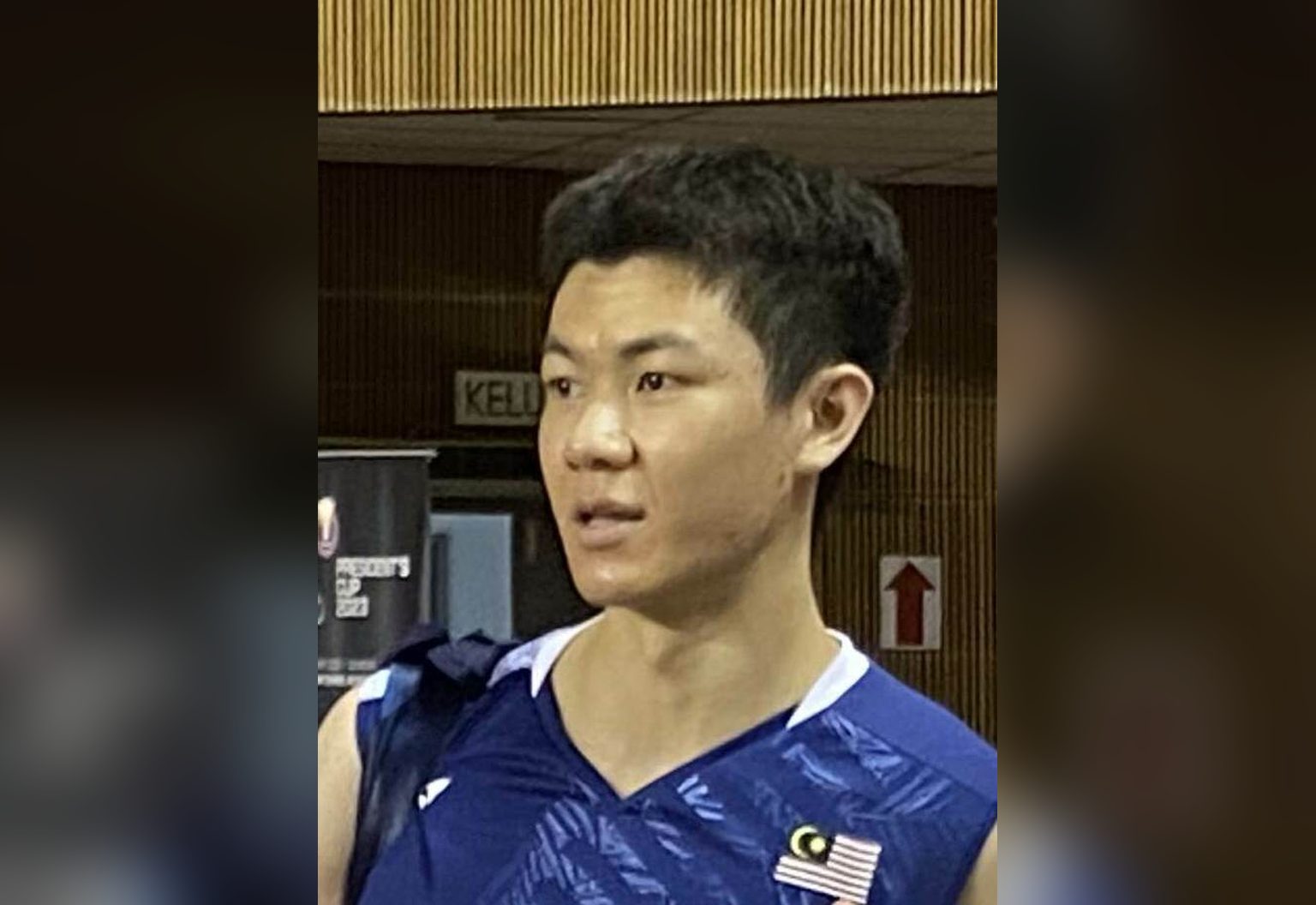
Photo: Hiroki.loh.st, CC BY-SA 4.0, via Wikimedia Commons