The Paris Olympic final ended 22-20, 21-15, and Chen Qingchen finally had the gold medal that had escaped her in Tokyo. Alongside Jia Yifan, she had beaten Chinese teammates Liu Shengshu and Tan Ning to complete the most important missing piece in their partnership’s record.
Four world titles had already established their consistency. Paris supplied a different kind of satisfaction: victory on the stage where, three years earlier, they had watched another pair celebrate.
For Chen, the route there began in Guangdong, passed through world No. 1 in two disciplines and involved years of making an attacking game work against taller opponents.
From Guangdong sports schools to junior titles
Born on June 23, 1997, in Xingning, Guangdong province, Chen first picked up a racket at four, playing with her grandmother. By seven, casual games had given way to organised training at Meizhou City Amateur Sport School. In 2005, she moved to Shunde Sports School.
At 1.64 metres, she did not fit every coach’s idea of a future international player. Early doubts about her height became part of her development story, but strength and speed gave her other ways to compete. The compact, right-handed youngster learned to produce considerable power without the reach of a taller attacker.
She admired Chinese doubles champion Yu Yang. Her own progress soon suggested that doubles, rather than singles, would be her route into the senior game.
A mixed doubles bronze at the 2012 World Junior Championships offered an early indication. By 2014, she was winning junior world gold in both women’s and mixed doubles, developing the quick decisions and positional awareness needed to switch between disciplines.
Those junior seasons also helped establish two partnerships that would shape her early international career: Jia Yifan in women’s doubles and Zheng Siwei in mixed.
Two partnerships take her to the top
The breakthrough into the senior elite came in 2016. Chen and Jia won the women’s doubles title at the Dubai World Superseries Finals, while Chen also claimed the mixed doubles trophy with Zheng.
Winning both events at the same season-ending tournament demonstrated her range. With Jia, she could help build sustained attacking pressure; with Zheng, the speed and positioning of mixed doubles demanded a different balance.
The BWF named her Most Promising Player of the Year. On December 22, 2016, she and Zheng reached mixed doubles world No. 1.
The following season brought a particularly demanding World Championships in Glasgow. Chen reached two finals, winning mixed doubles silver with Zheng and women’s doubles gold with Jia.
In the women’s final, the Chinese pair defeated Japan’s Yuki Fukushima and Sayaka Hirota 21-18, 17-21, 21-15. It was their first senior world title, earned over three games against opponents who would become familiar rivals.
On November 2, 2017, Chen and Jia reached world No. 1. In less than a year, she had topped the rankings in two disciplines with different partners. The BWF’s Female Player of the Year award followed.
Her partnership with Zheng ended as China reorganised its mixed doubles combinations. Women’s doubles became her main international focus, giving her and Jia more room to develop the partnership that would define their careers.
All England victory, then disappointment in Tokyo
The 2019 All England title added another major championship to their record. Against a women’s doubles field strengthened by several leading Japanese pairs, Chen and Jia had shown they could win beyond the World Championships.
Team competition mattered, too. Chen helped China win the Sudirman Cup in 2019, then contributed to further victories at the Sudirman Cup and Uber Cup in 2021. Those events placed her within a wider national-team effort, where even established champions had to deliver in individual ties.
The Tokyo Olympics, postponed from 2020 to 2021, brought a more personal test.
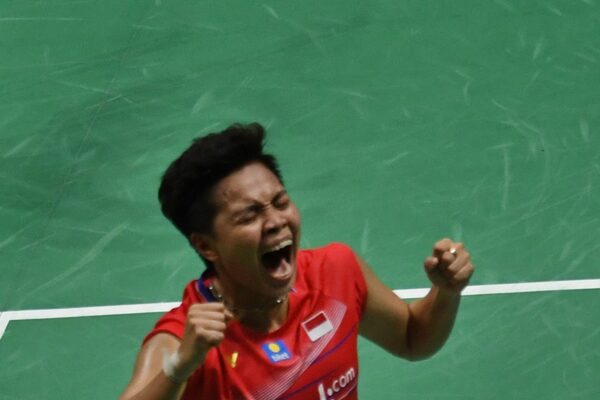
Chen and Jia reached the women’s doubles final but lost 21-19, 21-15 to Indonesia’s Greysia Polii and Apriyani Rahayu. Their first Olympic medal was silver. It was a substantial achievement, but for a pair accustomed to winning major titles, the final also exposed the narrow distance between reaching the biggest match and controlling it.
Chen’s vocal presence drew attention during the tournament. Her repeated use of a Chinese slang expression, widely interpreted as an expletive, prompted South Korea’s badminton association to say it would lodge a complaint with the BWF. She described the calls as self-encouragement and said her pronunciation had caused confusion.
The controversy accompanied her Olympic campaign, but the sporting outcome was clear: she and Jia would have to wait for another chance at gold.
Three more world titles and a second Olympic final
Their response came before the end of 2021. At the World Championships in Huelva, Chen and Jia defeated South Korea’s Lee So-hee and Shin Seung-chan to regain the title they had first won four years earlier.
They retained it in 2022, beating Kim So-yeong and Kong Hee-yong in the final, and won again in 2023 against Apriyani Rahayu and Siti Fadia Silva Ramadhanti.
Those victories made them the first women’s doubles pair to win four World Championship titles: 2017, 2021, 2022 and 2023. The sequence also showed their ability to stay ahead of changing opposition. Japanese, Korean and Indonesian combinations all challenged them, without any single rivalry accounting for the whole story.
By Paris 2024, the outstanding question was Olympic rather than world-championship success.
Their opponents in the final, Liu Shengshu and Tan Ning, represented a younger generation of Chinese doubles. Familiarity offered neither side much protection from the occasion. The opening game went beyond 20-20 before Chen and Jia took it 22-20; they then closed out the second 21-15.
Tokyo silver had become Paris gold.
Chen retired from international badminton on October 26, 2025, with two Olympic medals, four women’s doubles world titles and a separate World Championship silver in mixed doubles.
How Chen Qingchen made her game work
Chen’s power was conspicuous, but describing her simply as a hard hitter misses much of her value.
Her cross-court smash could change the direction of an attack abruptly. Just as important were the short exchanges: intercepting a reply, taking the shuttle early and keeping opponents from lifting comfortably. At the net, small movements could create the opening for a much heavier shot behind her.
With Jia, she operated within a fluid partnership rather than a rigid front-court/back-court arrangement. Both players could attack, defend and rotate, making it harder for opponents to isolate one of them.
Her intensity was equally recognisable. Calls between rallies and animated reactions made her emotions visible. That energy was part of her competitive manner, though her best badminton depended on precision as much as aggression.
Away from the match court
Known by the nicknames Dora and Baobao, Chen has listed singing among her interests. It is a modest but useful glimpse beyond the tightly framed television image of a player shouting encouragement between points.
Her grandmother’s involvement gives the beginning of her story a similarly personal scale. Before sports schools and national-team selection, badminton was something they did together.
Much of her publicly documented life has remained connected to the sport: training, travel, teammates and the long working relationship with Jia. Their partnership required more than complementary strokes. They had to recover together from the Tokyo defeat, manage the expectations attached to world No. 1 and keep finding ways to win against opponents studying their every rotation.
That shared history gives the Paris result its weight. It was not simply another title added to a list, but the resolution of a campaign that had ended one match short three years earlier.
FAQ
How many Olympic medals did Chen Qingchen win?
She won two, both with Jia Yifan: women’s doubles silver at Tokyo 2020, held in 2021, and gold at Paris 2024.
How many world titles did she win?
She won four senior women’s doubles world titles with Jia, in 2017, 2021, 2022 and 2023. They were the first women’s pair to reach that total.
Did she play mixed doubles?
Yes. She reached world No. 1 with Zheng Siwei in December 2016 and won World Championship silver with him in 2017.
How tall is she?
She is 1.64 metres tall, approximately 5 feet 5 inches, and plays right-handed.
When did she retire from international badminton?
Her international retirement came on October 26, 2025.
Who was her long-term women’s doubles partner?
Jia Yifan. Together they won four world titles, the 2019 All England championship and Olympic gold and silver.
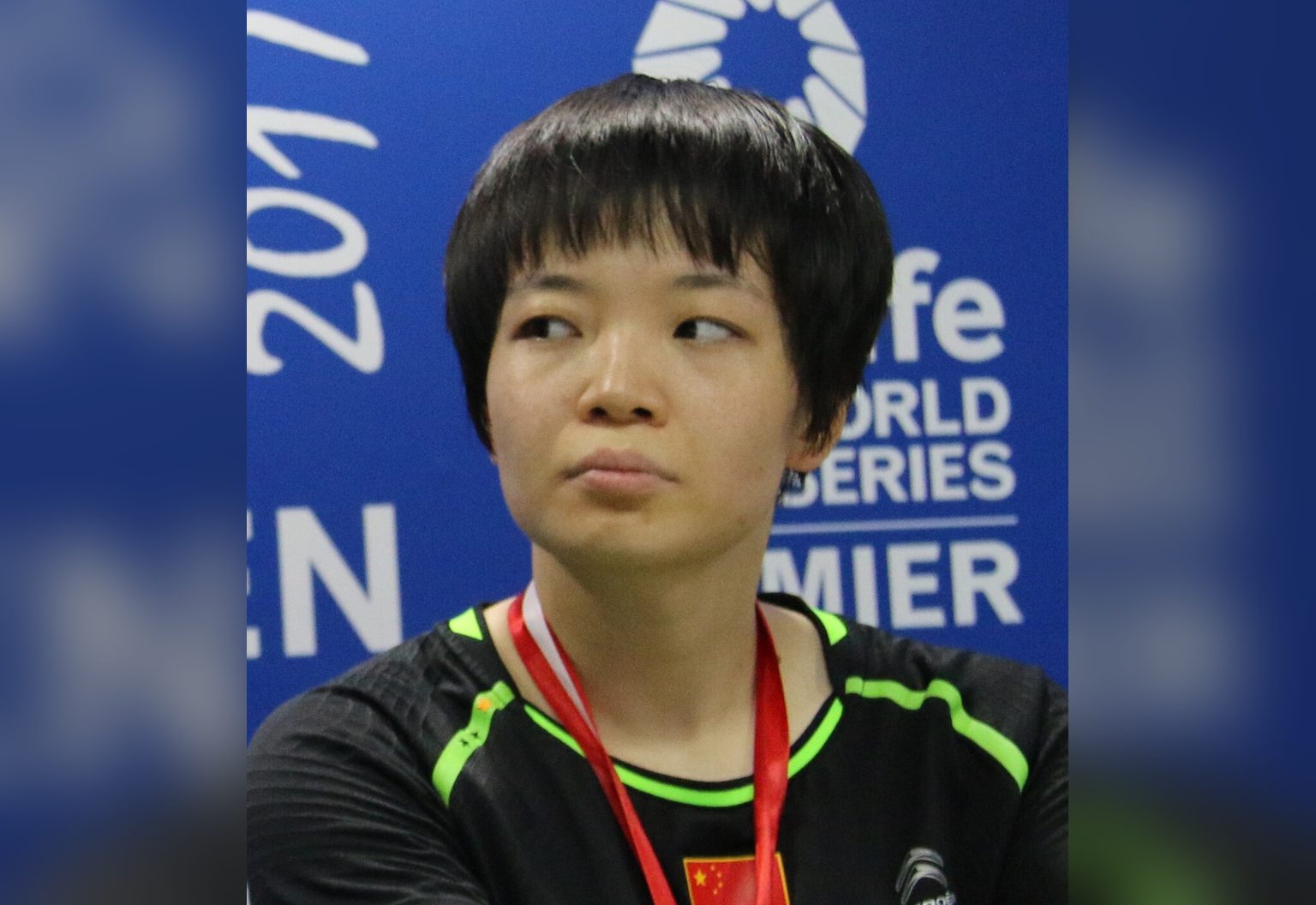
Photo: Fauziananta, CC BY 4.0, via Wikimedia Commons