On 2 August 2021, Apriyani Rahayu and Greysia Polii beat China’s Chen Qingchen and Jia Yifan 21-19, 21-15 in the Olympic women’s doubles final. Indonesia had won badminton gold before, but never in that event. Rahayu, who had first learned to play with a homemade racket in Southeast Sulawesi, was now an Olympic champion.
That result was the centrepiece of a partnership built remarkably quickly. Four years earlier, she had joined Polii as a teenager with junior medals and a powerful game, but little experience at the highest senior level. By Tokyo, they could withstand the pressure of an Olympic final together.
A wooden racket in Lawulo
Born on 29 April 1998 in Lawulo village, Konawe, Rahayu grew up far from Indonesia’s main badminton training centres. She was the youngest of four siblings, and her father, Ameruddin Pora, became her first coach.
In accounts of her childhood, she has described a makeshift wooden racket strung with fishing line. It was a practical solution for a family without much money to spare, and enough to get her playing. Her mother, Sitti Jauhar, also enjoyed badminton and supported her interest.
The sport gave a competitive child somewhere to direct her energy. What began around home became structured training, then a move into Indonesia’s club system. She joined PB Pelita Bakrie in 2011 and later PB Jaya Raya in Jakarta.
Moving away meant more than finding better courts. It put her among players competing for the same opportunities, with selection and tournament results replacing childhood games as the measure of progress.
Junior medals opened the door
Rahayu’s early results came in both doubles disciplines. With Jauza Fadhila Sugiarto, she rose through Indonesia’s junior girls’ doubles ranks and won the Jaya Raya Junior International title in 2014.
That year also brought her first World Junior Championships final. Partnering Rosyita Eka Putri Sari, she won girls’ doubles silver, an early indication that she could compete beyond the domestic circuit.
More junior medals followed. At the 2015 World Junior Championships, she took bronze in mixed doubles with Fachryza Abimanyu. She also won Asian junior mixed doubles bronze with Abimanyu that season.
Her senior career was beginning alongside those age-group events. In 2015, Rahayu and Sugiarto won the Singapore International women’s doubles title. Another Asian junior mixed doubles bronze, this time with Rinov Rivaldy in 2016, underlined her versatility.
She had learned to adjust to different partners and different responsibilities on court. That experience mattered when an established international player needed a new partner.
Greysia Polii and a fast breakthrough
Polii was rebuilding after the retirement of Nitya Krishinda Maheswari when she teamed up with Rahayu in May 2017. There was an eleven-year age gap between them. One brought years of international experience; the other brought speed, power and an appetite for the physical contest.
They did not need a long apprenticeship. In June, they won the Thailand Open. In October, they claimed the French Open, a Superseries title that established them as a serious threat to the leading pairs.
Their progress continued in 2018 with victories at the India Open and Thailand Open. At the World Championships in Nanjing, they won bronze, then took another bronze in women’s doubles at the Asian Games in Jakarta.
For the younger player, the home Games brought a different kind of scrutiny. Indonesian badminton crowds expect results, and every momentum swing is loudly felt. The pair finished with a medal, though the final remained beyond them.
On 20 September 2018, they reached world No. 3. They had gone from a new combination to the upper reaches of the rankings in little more than a year.
Building towards Tokyo
The next seasons brought consistency rather than a single dramatic leap. Rahayu and Polii retained the India Open title in 2019, won another World Championships bronze in Basel and took women’s doubles gold at the SEA Games.
They added the Indonesia Masters in 2020 and the Yonex Thailand Open in January 2021. By then, their roles were well established, although neither player was confined to one area of the court. Rahayu supplied force and explosive movement; Polii helped organise rallies and create openings. Both could defend under sustained pressure.
The postponed Tokyo 2020 Olympics tested that understanding. In the quarter-finals, they beat China’s Du Yue and Li Yinhui in three games. They then defeated South Korea’s Lee So-hee and Shin Seung-chan to reach the gold-medal match.
Waiting were Chen and Jia, the Chinese pair whose attacking quality and control had made them recurring obstacles at major tournaments.
The Olympic final that changed their careers
On 2 August 2021, the Indonesians held their nerve through a close opening game and took it 21-19. They won the second 21-15 to secure the title.
The achievement completed Indonesia’s collection of Olympic badminton golds across all five disciplines. For Polii, it crowned a long international career. For Rahayu, it arrived at 23, only four years after their partnership began.
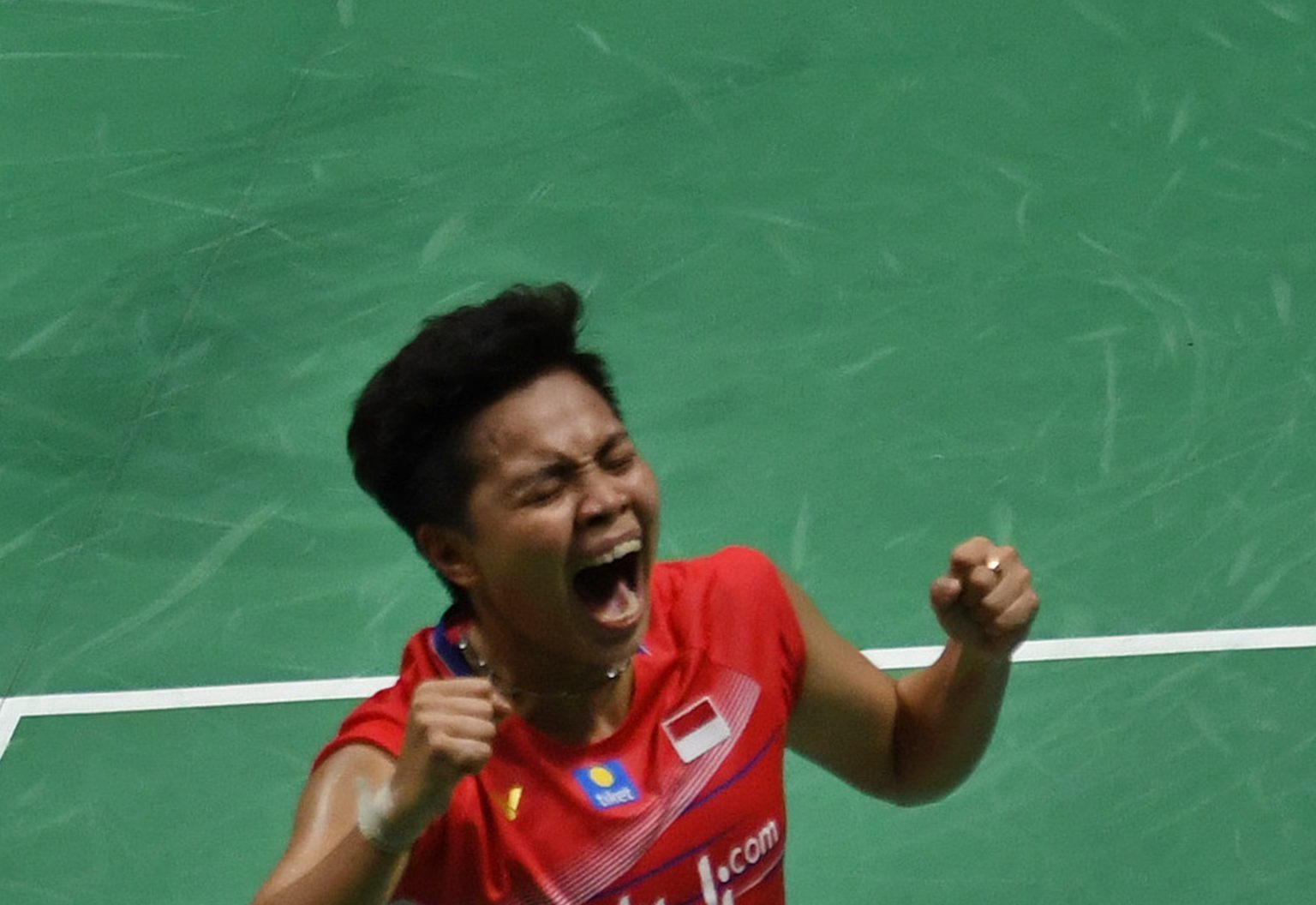
Their celebrations reflected the scale of it: relief, disbelief and the release of a tournament’s accumulated pressure. This was not simply another title added to their record.
The pair continued into 2022 before Polii retired. Rahayu then faced a different assignment. She would no longer be the younger player learning beside an experienced Olympian.
A fresh start with Siti Fadia Silva Ramadhanti
The next partnership began with Siti Fadia Silva Ramadhanti in 2022. Rahayu now had to help set the standard, carrying what she had learned with Polii into a combination with its own rhythm.
Their first major success came at the SEA Games in Vietnam. Although officially called the 2021 SEA Games, the competition was held in May 2022 after a postponement. They won women’s doubles gold.
World Tour success followed quickly. They claimed the Malaysia Open and Singapore Open that July, showing that the Olympic champion could win with a new partner rather than simply reproduce an old formula.
The pair reached world No. 4 in April 2023. Later that year, they advanced to the World Championships final in Copenhagen, where Chen and Jia beat them 21-16, 21-12. Silver gave Rahayu a third World Championships medal, following her two bronzes with Polii.
They also won the Hong Kong Open in September 2023.
Team responsibility became another part of her career. As captain of Indonesia’s women at the 2024 Uber Cup in Chengdu, she helped lead a campaign that ended with silver, the country’s first final in the competition since 2008.
The Paris Olympics were less rewarding. Rahayu and Ramadhanti lost all three group matches and did not reach the quarter-finals-a sharp contrast with Tokyo and a reminder of how little protection an Olympic title offers in the next tournament.
Power, recovery and the smile between rallies
Rahayu is an attacking player, but her game is not just about the smash. Her strength lies in how quickly she can move from applying pressure to surviving it.
She drives flat exchanges, attacks short lifts and commits fully to retrieving shots that appear beyond reach. Diving saves are a familiar feature, although the more important skill is what happens afterwards: recovering quickly enough to stay involved in the rally.
Against pairs such as Japan’s Nami Matsuyama and Chiharu Shida, those qualities have been tested in long, exhausting exchanges. Winning the first attacking chance is rarely enough.
Her broad smile offers a contrast to that physical intensity. It is part of her visible court presence, sometimes appearing between fiercely contested points. It should not be mistaken for a lack of competitive edge.
Away from the court: home, money and public attention
Known as Apri, Rahayu became a much more recognisable public figure after Tokyo. The rewards included a government bonus of 5.5 billion rupiah, alongside gifts and commercial offers reported during Indonesia’s Olympic celebrations.
Those reports need some care. Offers involving property or food businesses are not, by themselves, evidence that she owns or runs a business portfolio.
A clearer commercial connection came in 2023, when she became a brand ambassador for financial-services company Kredivo. In public comments about personal finance, she has emphasised simple living and managing cash flow-a less spectacular subject than Olympic prize money, but a practical one for an athlete whose earnings depend partly on results.
Her childhood remains central to the way her story is told: a father improvising equipment, a move away from Sulawesi and the gradual climb through club badminton. The homemade racket is a memorable detail, but the years between that first experiment and Tokyo explain the career.
FAQ
Where is Apriyani Rahayu from?
She was born in Lawulo village, Konawe, Southeast Sulawesi, Indonesia, on 29 April 1998.
When did she win Olympic gold?
She won women’s doubles gold with Greysia Polii at Tokyo 2020. The final was played on 2 August 2021 after the Games were postponed.
What was the score in the Olympic final?
Rahayu and Polii defeated China’s Chen Qingchen and Jia Yifan 21-19, 21-15.
What is her highest world ranking?
She reached world No. 3 with Polii in September 2018. With Siti Fadia Silva Ramadhanti, she reached No. 4 in April 2023.
Has she won the World Championships?
She won bronze with Polii in 2018 and 2019, then silver with Ramadhanti in 2023. None of those campaigns ended in a world title.
What is her playing style?
She combines powerful attacking shots with fast defensive reactions, committed retrievals and energetic court coverage.
Photo: Adityadandito, CC BY-SA 4.0, via Wikimedia Commons