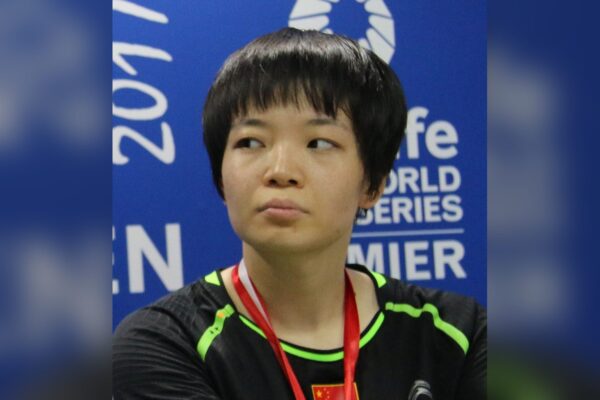
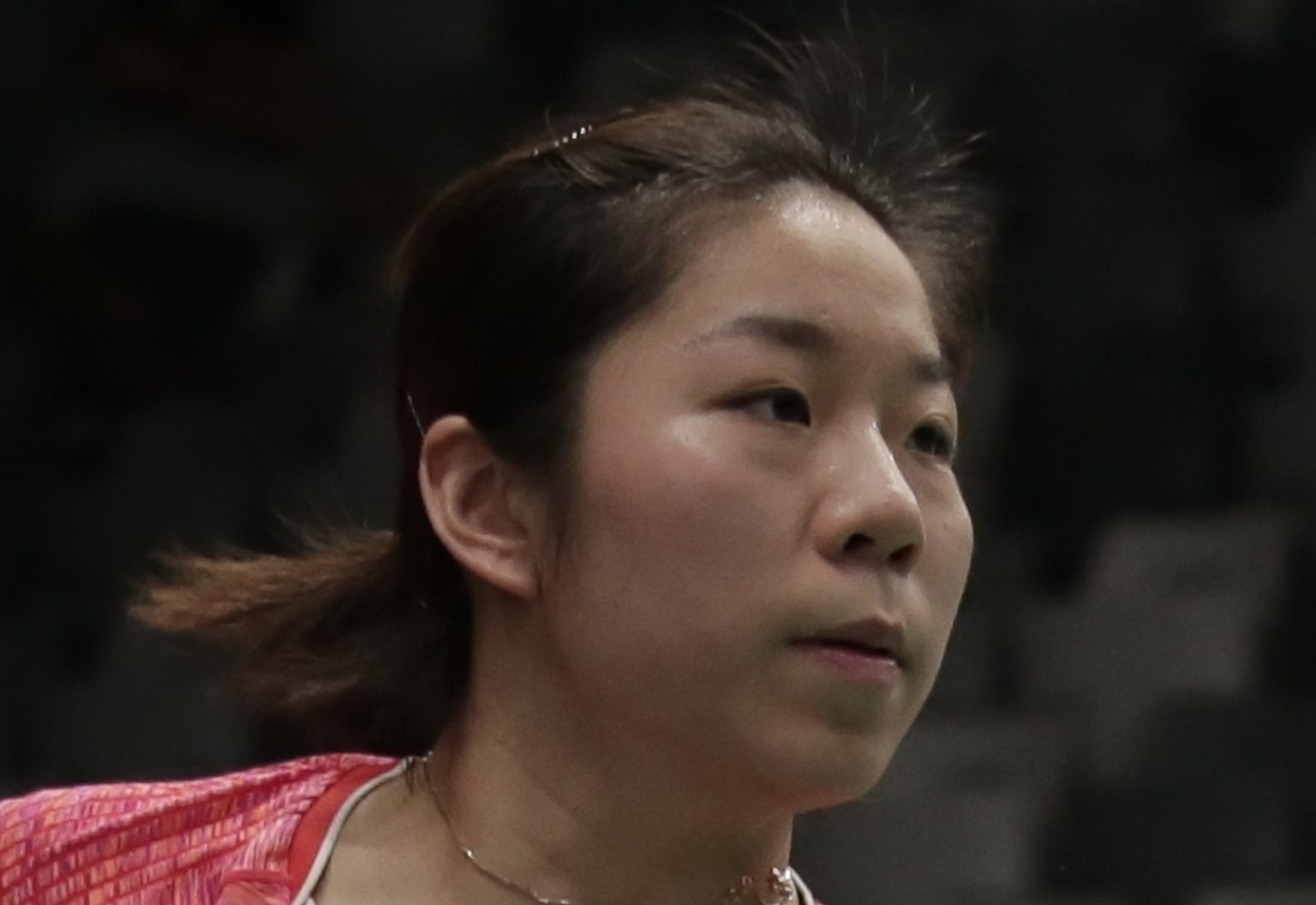
At the Paris Olympics, Jia Yifan and Chen Qingchen took the opening game of the women’s doubles final 22-20. The second was clearer: 21-15 against Chinese teammates Liu Shengshu and Tan Ning. After an Olympic silver medal and four world titles, they finally had gold.
For Jia, that victory completed a pursuit stretching from childhood training in Tianjin to the top of women’s doubles. Her left-handed attack had become one of the defining features of a partnership built over years, not assembled for a single Olympic campaign.
From Tianjin to the junior circuit
Born in Tianjin on June 29, 1997, Jia began playing badminton at about five. Singing, dancing and the arts also interested her as a child, but badminton gradually became the more demanding commitment.
Her development took her through China’s competitive junior system, where earning international opportunities meant first standing out among a deep pool of domestic players. It also introduced her to the teammate who would shape much of her career.
Jia and Chen were already winning together at junior level, including women’s doubles gold at the 2014 World Junior Championships. Their partnership therefore predates the senior breakthrough that brought them wider attention in 2017.
The combination offered a useful contrast. Chen played right-handed and brought sharp interceptions and urgency around the net; Jia’s left-handed hitting provided different attacking angles from behind her. Those roles were never fixed, but the balance gave them a foundation to develop.
By 2016, they were beating the leading senior pairs. Their victory at the season-ending BWF Superseries Finals in Dubai, where they defeated Japan’s Misaki Matsutomo and Ayaka Takahashi in the final, showed that junior promise had become a serious challenge to the established order.
Glasgow brings a first world title
The decisive breakthrough came at the 2017 World Championships in Glasgow.
Facing Japan’s Yuki Fukushima and Sayaka Hirota in the final, Jia and Chen won 21-18, 17-21, 21-15. It was a three-game contest against opponents who would become familiar rivals, and it gave the Chinese pair their first senior world title.
Jia’s recollection of the occasion was less straightforward than the usual account of pre-match nerves. She described feeling tired beforehand rather than especially nervous or excited. After the victory, the emotion arrived: she cried.
Yet she also spoke of the championship as one title, with more work still to do. That response captured something important about the partnership’s trajectory. Glasgow was a breakthrough, but it did not settle their place at the top.
On November 2, 2017, they reached world No. 1 in women’s doubles for the first time. In the same season, Jia was part of the Chinese squad that finished runner-up to South Korea at the Sudirman Cup.
An All England title, then an Olympic disappointment
In 2019, Jia and Chen won their first All England title, defeating Japan’s Mayu Matsumoto and Wakana Nagahara in the final. Victories at the Malaysia Open, Australian Open and China Open added substance to a productive season.
The Japanese pairs were more than occasional obstacles. Fukushima and Hirota, Matsumoto and Nagahara, and Olympic champions Misaki Matsutomo and Ayaka Takahashi helped make women’s doubles fiercely competitive. Winning consistently required the Chinese combination to handle different kinds of pressure: prolonged defensive exchanges, quick interceptions and opponents capable of taking control of the attack.
There was success in national colours, too. Jia helped China regain the Sudirman Cup in Nanning in 2019.
The next major target was the Tokyo Olympics. Although officially named Tokyo 2020, the Games took place in 2021 following the pandemic postponement.
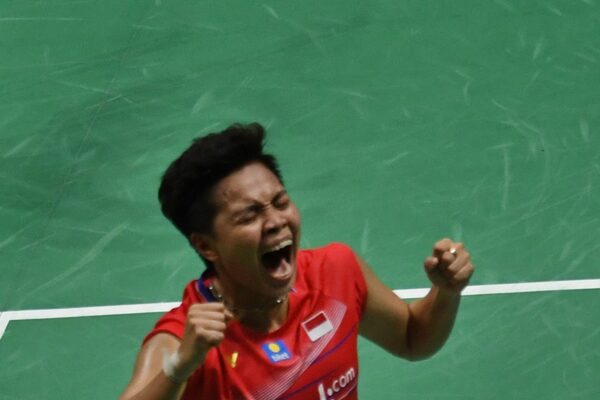
Jia and Chen reached the final but lost 21-19, 21-15 to Indonesia’s Greysia Polii and Apriyani Rahayu. Silver was their first Olympic medal. It was also a clear defeat in the match they most wanted to win.
Their response came within months. At the postponed 2020 Uber Cup, played in Aarhus in October 2021, Jia helped China win the women’s team title. In December, she and Chen claimed their second world championship in Huelva.
Four world crowns, then gold in Paris
The Huelva victory began a run of three consecutive world titles.
Jia and Chen retained the championship in Tokyo in 2022, beating South Korea’s Kim So-yeong and Kong Hee-yong in the final. They won again in Copenhagen in 2023, this time against Indonesia’s Apriyani Rahayu and Siti Fadia Silva Ramadhanti.
Added to Glasgow, those results made them the first women’s doubles pair to win four BWF World Championships titles.
The achievement rested on more than one exceptional tournament. They had won across different venues and against changing opposition, returning to the final stages even as rivals learned their patterns and looked for weaknesses.
Their wider record continued to grow. Tour victories included the Denmark Open and Indonesia Masters in 2022, followed by the Denmark Open, China Open and Singapore Open in 2023. Jia also contributed to China’s Sudirman Cup triumphs in 2021 and 2023.
Paris supplied the missing Olympic title. In the 2024 final, Liu Shengshu and Tan Ning pushed their more experienced teammates through a tight opening game before Jia and Chen completed a straight-games victory.
Seven years separated their first world championship and Olympic gold. The partnership had survived an Olympic final defeat and remained strong enough to take the next opportunity.
A new combination after the Olympics
Jia’s career did not stop with the Paris medal ceremony. She subsequently competed alongside Zhang Shuxian, and the pair won the Swiss Open in 2025.
Playing with a different partner changes the practical details of doubles: who takes the shuttle through the middle, when to rotate and how quickly to follow an attacking shot towards the net. Established habits have to be adjusted rather than simply transferred.
Her results with Zhang added another chapter beyond the combination with Chen, while the four world titles and two Olympic medals remained the central achievements of her best-known partnership.
How Jia Yifan builds an attack
At 1.70 metres tall, Jia brings reach and power to the rear court. Her left-handed overhead shots also create angles that require opponents to adjust their positioning.
But describing her only as a hard hitter misses much of the work. An effective doubles attack depends on placement, recovery and recognising which reply is likely to come next. Jia can use steep hitting to draw a shorter return, then keep the pressure on while her partner closes down the front court.
With Chen, the threat often came from that connection between rear-court pressure and quick interception. Neither player could produce it alone.
Against strong defensive pairs, patience mattered as much as force. Jia had to keep moving, choose when to accelerate and resist trying to finish every rally with one shot. Her best performances combined aggression with enough control to make the next attack possible.
Away from the court
Jia’s childhood interest in singing and dancing offers a different glimpse of someone more often seen preparing for a smash. Her nickname, “Fairy,” is another contrast with the physical demands of her playing style.
Some of the more revealing personal details come from competition itself. After the 2019 All England victory, she described keeping her celebrations restrained so as not to distract teammate Chen Yufei, who was also pursuing a title.
That moment says more than a generic description of team spirit. Her own tournament was finished, but a teammate’s was not.
Likewise, the tears after Glasgow sit alongside her matter-of-fact insistence that more work remained. Neither reaction cancels out the other: a title could be deeply emotional without becoming a finishing point.
Her public profile is largely built around badminton, teammates and competition. There is no need to turn unsupported claims about relationships, earnings or personal wealth into part of the story.
FAQ
Where was Jia Yifan born?
She was born in Tianjin, China, on June 29, 1997, and represents China internationally.
Who is her doubles partner?
Her most successful partnership has been with Chen Qingchen. After the Paris Olympics, she also competed with Zhang Shuxian.
How many world titles has she won with Chen Qingchen?
They won four women’s doubles world titles: in 2017, 2021, 2022 and 2023-the first pair in the discipline to reach that total.
Has she won Olympic gold?
Yes. Jia and Chen won gold at Paris 2024 after taking silver at the Tokyo 2020 Games, held in 2021.
When did she first become world No. 1?
She and Chen first reached No. 1 in the women’s doubles rankings on November 2, 2017.
Is she left-handed?
Yes. Her left-handed attack is a distinctive part of her game, particularly when creating pressure from the rear court.
Photo: Fauziananta, CC BY 4.0, via Wikimedia Commons