Thirty-two years separated India’s Commonwealth Games men’s singles titles. That wait ended in Glasgow in 2014, when Parupalli Kashyap beat Singapore’s Derek Wong in a three-game final. After losing the second game heavily, he recovered to win 21-14, 11-21, 21-19.
Two years earlier, he had become the first Indian man to reach an Olympic badminton quarterfinal. Together, those results defined a career built through several of India’s leading training centres-and sustained while managing asthma.
The medals tell only part of the story. There were injuries, difficult seasons and the daily work of competing in a discipline where even a small loss of movement could change a match.
A childhood shaped by badminton and moving cities
Born on September 8, 1986, Kashyap grew up in Hyderabad. His father’s transferable job took the family between cities, so his badminton education was not confined to one coach or academy.
He began training with S. M. Arif in Hyderabad at around 11. A move to Bengaluru brought him into Prakash Padukone’s academy, before he returned to Hyderabad and worked with Pullela Gopichand.
Those changes exposed him to different approaches during his formative years. By the time he was preparing for senior international competition, he had trained under three important figures in Indian badminton.
Then, in 2004, he was diagnosed with asthma.
For an aspiring singles player, the diagnosis raised practical questions about training, recovery and whether his body could withstand international competition. Treatment allowed him to continue, but managing the condition became part of his working life rather than a problem he could simply leave behind.
Finding his way onto the international circuit
By 2006, Kashyap was making progress in senior tournaments. He reached the last 16 at the Hong Kong Open and the semifinals of the Bitburger Open, results that offered a foothold on a demanding circuit.
Success did not arrive in one uninterrupted climb. He had to establish himself nationally while learning how to compete against opponents with greater experience and different styles.
The Commonwealth Games in New Delhi in 2010 provided his first major multi-sport medals. India won silver in the mixed team event, and he added men’s singles bronze after losing to England’s Rajiv Ouseph in the semifinals.
That bronze matters to the chronology: Delhi was not simply a missed opportunity before Glasgow. It was a podium finish, followed four years later by a chance to improve on it.
Ouseph would be waiting at the same stage again.
London opened a new door
At the 2012 London Olympics, Kashyap advanced through the group stage and defeated Sri Lanka’s Niluka Karunaratne in the last 16. No Indian man had previously reached an Olympic badminton quarterfinal.
His run ended against Malaysia’s Lee Chong Wei, who won 21-19, 21-11 and went on to take silver. The opening game showed how closely the Indian could challenge one of the sport’s leading players; the second underlined the difficulty of sustaining that level.
There was no Olympic medal, but the quarterfinal was a significant result in its own right.
Later that year, he won the Syed Modi India Grand Prix Gold in Lucknow, defeating Thailand’s Tanongsak Saensomboonsuk in the final. This was one title, not two separate victories under the different India Grand Prix Gold names sometimes used in career summaries.
He also received the Arjuna Award in 2012. On April 25, 2013, he reached his career-high world ranking of No. 6-the clearest numerical measure of how far his results had carried him.
Glasgow gold, then another title in Lucknow
The 2014 Commonwealth Games offered a familiar obstacle. Once again, Kashyap faced Ouseph in the semifinals. This time he won, reversing the result from Delhi and reaching his first Commonwealth singles final.
Against Wong, he took the opening game before the Singaporean levelled the match. The deciding game was close, but Kashyap held on to secure India’s first men’s singles gold at the Games since Syed Modi’s victory in 1982.
He was the third Indian man to win the title, following Prakash Padukone and Modi. The connection to Padukone, one of his former coaches, gave the result an additional personal thread.
In January 2015, he returned to Lucknow and won the Syed Modi International Grand Prix Gold again. He beat fellow Indian Kidambi Srikanth 23-21, 23-21 in the final: two tight games against a younger compatriot who was building his own international reputation.
His strongest results were no longer isolated breakthroughs. They included an Olympic quarterfinal, a top-six ranking and titles won under very different kinds of pressure.
Injuries interrupted the next chapter
Kashyap added a men’s team bronze at the 2016 Badminton Asia Team Championships in Hyderabad. But his attempt to reach a second Olympics was disrupted by injury.
A knee injury during the qualification period damaged his chances of making Rio. After London and Glasgow, it was a sharp reminder that ranking points and tournament plans depended on being healthy enough to compete.
Later seasons brought further rehabilitation and attempts to rebuild momentum. He still produced notable runs, including a semifinal appearance at the 2019 Korea Open, but maintaining continuity became harder.
As his playing career wound down, coaching offered another way to stay involved. He began working at the Gopichand academy in Hyderabad, returning in a different role to the training environment that had helped shape him.
How he played: attack backed by movement
A right-hander, Kashyap could attack forcefully from the rear court, but describing him only through his smash misses much of his game.
His best performances combined quick court coverage with patient construction of rallies. He could absorb pressure, keep an opponent working and look for a shorter lift or a change of pace that opened an attacking opportunity.
That balance was essential against the leading men’s singles players. Power alone rarely settled those matches; the challenge was creating a position from which to use it.
His asthma was relevant to the preparation behind those performances, though it should not overshadow the technical quality of his badminton. Medication, conditioning and careful management supported a game that demanded repeated bursts of movement over long matches.
Away from competition: a shared badminton life
Hyderabad remained a recurring base through Kashyap’s years of travel, training and competition. His connection to the city runs from childhood coaching to his later work with developing players.
On December 14, 2018, he married Saina Nehwal. Their relationship grew out of a shared badminton world: academy sessions, tournament travel and the routines of elite competition.
That background gave their marriage a sporting dimension beyond the public attention attached to two prominent Indian players. Both understood the less visible parts of the profession-rehabilitation, selection pressure and the long stretches spent away from home.
Nehwal publicly announced their separation in July 2025. Reports in August, including coverage by The Economic Times, subsequently said they had reconciled. The reported reconciliation should be distinguished from the earlier public announcement, rather than treated as an independently established account of their private relationship.
Online speculation about alimony does not establish that any financial claim or settlement existed. Likewise, widely repeated net-worth estimates are not verified accounts of Kashyap’s earnings.
The more substantial post-playing story is his work on court: moving from solving problems in his own matches to helping other players solve theirs.
FAQ
When was Parupalli Kashyap born?
He was born on September 8, 1986, and grew up in Hyderabad.
What was his highest world ranking?
He reached world No. 6 in men’s singles on April 25, 2013.
Did he win an Olympic medal?
No. He reached the London 2012 quarterfinals, becoming the first Indian male badminton player to reach that stage.
What were his biggest titles?
His leading championship result was Commonwealth Games men’s singles gold in 2014. He also won the Syed Modi Grand Prix Gold tournament in 2012 and 2015.
Is he married to Saina Nehwal?
They married in December 2018. Nehwal announced their separation in July 2025; subsequent media reports said they had reconciled.
Has he moved into coaching?
Yes. He has worked as a coach at the Gopichand academy in Hyderabad, where he previously trained.
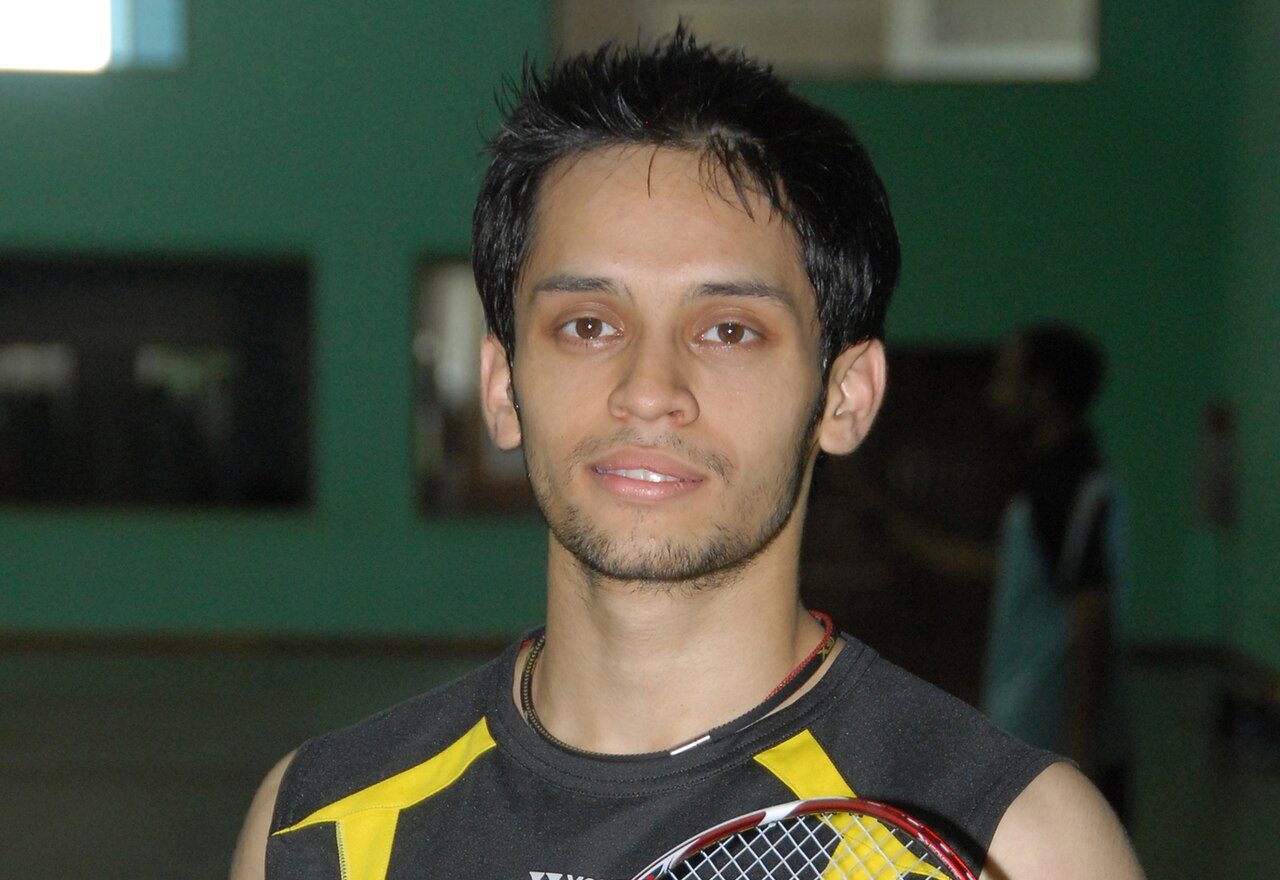
Photo: sportsprince, CC BY-SA 3.0, via Wikimedia Commons